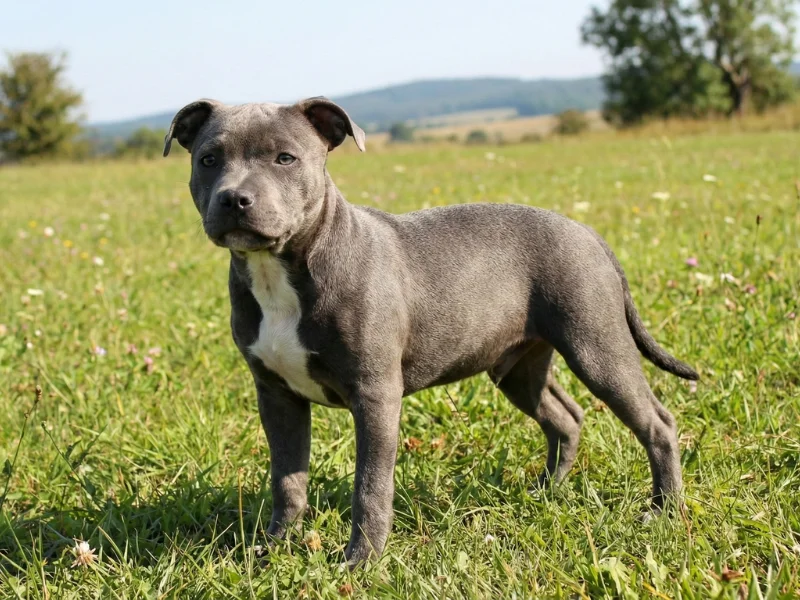

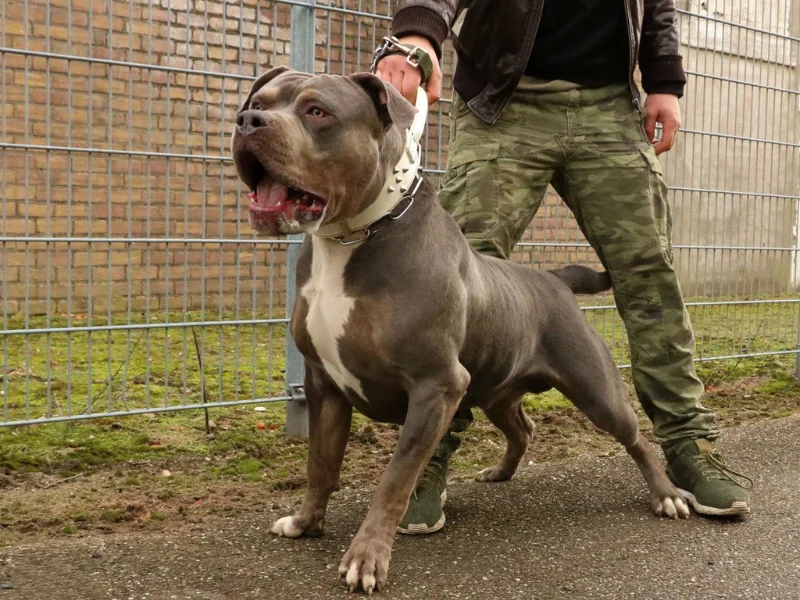
American Bully: Restricted Breed in France and Europe?
Is the American Bully restricted in France and Europe? The answer is more nuanced than most owners expect, and getting it right actually matters. If you found this article, you are already asking the right questions.
French law, European regulations, owner obligations: we cover it all, clearly and without the legal jargon. Breeder, current owner, or future adopter, you are in the right place.
The American Bully: Origins and Official Recognition
The American Bully is a young breed that most European laws struggle to define. To understand why its legal status is so complicated, you need to go back to where it all started and trace its path toward official recognition.
• A Breed Born in the United States in the 1980s
The American Bully traces its roots to the United States in the 1980s. Breeders aimed to develop a calmer, heavier-built dog than the American Pit Bull Terrier while keeping that signature powerful physique. The result was a muscular, well-balanced dog with a stable and sociable temperament.
In 2004, the American Bully Kennel Club (ABKC) established the first official registry dedicated to the breed. It set the foundation for the breed standard and launched the first dedicated shows — a defining milestone for global recognition.
The ABKC divided the breed into four body types: Pocket, Standard, Classic, and XL. Each type follows specific size and structure criteria. This internal diversity makes the breed particularly difficult for European authorities to assess, since no FCI reference exists for comparison. From the very beginning, the American Bully was built as a standalone breed, not a variation of an existing one. That founding intent shaped every standardization effort that followed.
• UKC Recognition and the Absence of an FCI Standard
On July 15, 2013, the United Kennel Club (UKC) officially recognized the American Bully as a distinct breed. As the second largest cynological organization in the United States, that decision was a significant step forward for breeders and owners worldwide. The UKC standard identifies three main types: Pocket, Standard/Classic, and XL. This classification now serves as the primary reference in many countries, even without an official FCI standard in place.
The Fédération Cynologique Internationale (FCI), which governs breed standards globally, does not recognize the American Bully to this day. That gap has direct consequences across Europe: no official cynological framework exists to identify the breed with precision.
This is exactly what creates legal grey areas and misclassifications in multiple countries. To learn more about the breed's characteristics, visit our American Bully breed profile on FBKC.
• American Bully vs. American Pit Bull Terrier: Two Different Breeds
Confusing the American Bully with the American Pit Bull Terrier is a common mistake, and it carries real consequences. In France, legislation on classified dogs relies partly on physical appearance. That means an American Bully can be flagged as a Category 1 or 2 dog based on looks alone.
Yet these are two genetically and physically distinct breeds. The American Bully is broader, lower to the ground, and carries a noticeably calmer and more sociable temperament.
The American Pit Bull Terrier has been recognized by the UKC for far longer and is one of the breeds directly targeted by France's 1999 law. The American Bully simply did not exist as a recognized breed at that time.
This timing gap largely explains why French legislation does not name the American Bully specifically. Yet that legal silence is exactly what creates complicated situations for owners and breeders across France today.
As a committed European club for the American Bully, FBKC actively works to uphold the breed's standards and raise awareness among public authorities about the drifts currently affecting it: extreme selective breeding, abusive typings, and a lack of proper traceability.
Our approach is built on one clear principle: animal welfare comes first. We are committed to building a serious and transparent registry, capable of documenting the European breed population with real rigour. Reliable traceability is also the strongest answer we can provide to authorities who struggle to identify and regulate this breed.

France's Dangerous Dog Legislation Explained
France's 1999 law on dangerous dogs remains the key legal framework for every American Bully owner in the country. Understanding how it works is the first step toward protecting your dog from an unjustified classification.
• The 1999 Law and Its Two Classification Categories
Passed on January 6, 1999, the French Law n°99-5, refined by a ministerial order on April 27, 1999, introduced two categories of dogs considered potentially dangerous.
Category 1 covers so-called attack dogs: unregistered dogs that are morphologically similar to the American Staffordshire Terrier, Mastiff, and Tosa types. Category 2 covers guard and defense dogs: pedigree-registered American Staffordshire Terriers, Rottweilers, and Tosas.
Classification depends as much on physical appearance as it does on official breed registration. That is exactly where things get complicated.
One key point to understand: Category 1 only applies to dogs not registered in a studbook recognized by the French Ministry of Agriculture. A purebred dog with proper documentation cannot fall under Category 1. However, a dog that looks like a Pit Bull, without an official pedigree, automatically falls into that classification regardless of its actual breed.
This appearance-based mechanism creates a real problem for many American Bully owners. The law does not look at a dog's genetics. It looks at what the eye sees.
• Does the American Bully Fall Under Category 1 or 2?
The 1999 law does not mention the American Bully anywhere. The breed simply did not exist as a recognized entity at the time. Today, the question remains open: an American Bully may or may not be flagged as a restricted breed, depending on its build and registration status.
A very heavily built dog, morphologically close to an unregistered American Staffordshire Terrier, without proper documentation, risks being treated as an attack dog by authorities. Appearance overrides a dog's actual identity. That is a genuine risk for many owners across France.
The most reliable legal protection is a breed diagnosis, issued by a qualified veterinarian. This official document certifies that the dog does not match the morphological criteria for Category 1. An American Bully with a lighter build and an appearance clearly distinct from the Staffordshire or Pit Bull type will typically receive a favorable diagnosis.
On the other hand, a heavily built XL specimen sits in a legal grey area. Registering with a recognized club like FBKC strengthens a dog's traceability and serves as a meaningful asset in any official check, even though it does not legally exempt an owner from classification.
• Legal Requirements for American Bully Owners in France
If an American Bully receives a Category 1 classification, strict obligations apply immediately. Buying, selling, gifting, and importing the dog all become illegal. Sterilization is mandatory. In any public space, the dog must wear a muzzle and remain on a lead held by an adult.
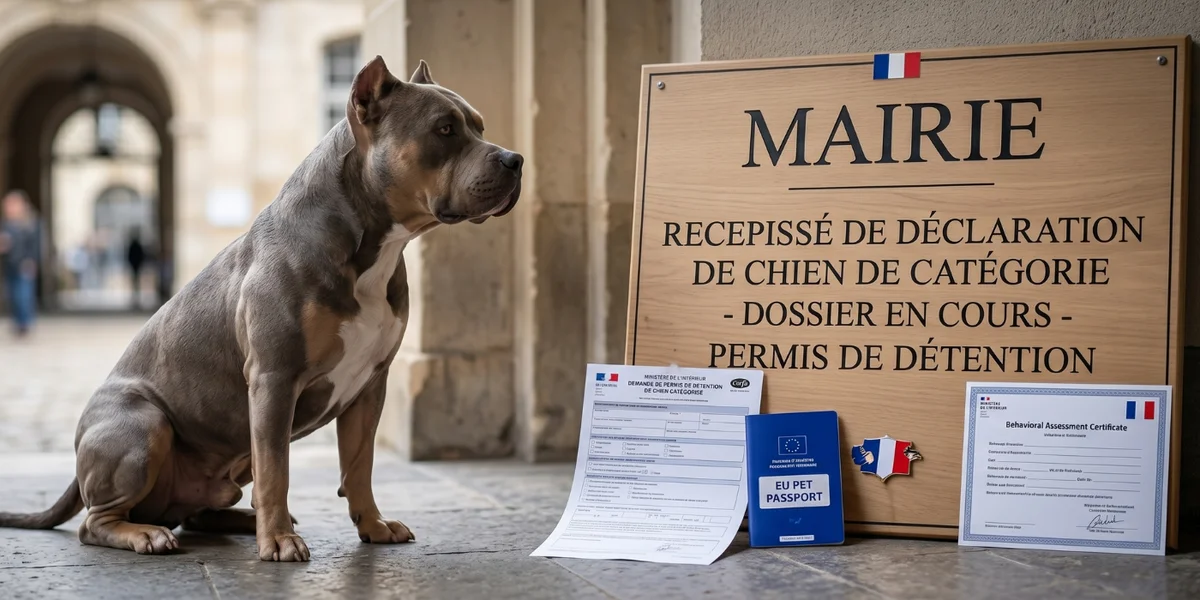
The owner must obtain a detention permit issued by the local town hall, subject to a behavioral assessment of the dog and completion of an owner aptitude course. Failing to meet these requirements can result in a fine and up to three months in prison.
Category 2 obligations are less restrictive but still firmly enforced: muzzle and lead in public spaces, a declaration to the town hall, valid civil liability insurance, and up-to-date rabies vaccination. If the dog falls into neither category, no specific legal requirements apply.
That said, registering with a recognized breed club remains strongly advisable: it simplifies identification, builds a credible traceability record, and provides a solid argument in the event of any inspection by authorities.
The European Landscape: Country by Country
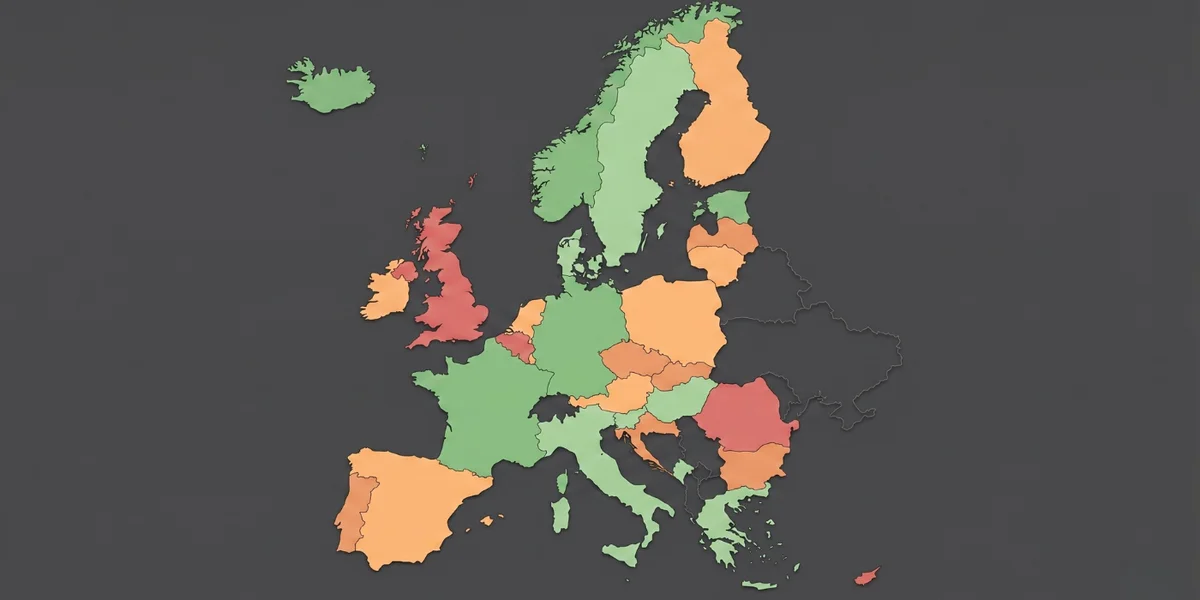
The American Bully's legal status across Europe is anything but consistent. Each country follows its own rules, and the gap between neighboring nations can be striking. Here is a clear breakdown, country by country.
• Countries With a Full or Partial Ban
Several European countries have enacted laws directly targeting molosser-type dogs or breeds assimilated to fighting types. Denmark has banned a long list of breeds since 1991, including Pit Bull types that share clear morphological similarities with certain American Bullies.
Norway applies similar logic through a national list of prohibited breeds. Ireland enforces strict rules: muzzle and short lead in public for Pit Bull-type dogs. The American Bully is rarely named explicitly in these texts, but its physical appearance is often enough to trigger classification under these legal frameworks.
In 2025, France is actively considering adding the American Bully to its list of regulated dogs, following several high-profile incidents and a formal Senate question published in February 2025. The French government is being directly challenged to revise existing legislation. The debate is open, and political pressure has intensified since the UK ban in 2024.
Serious owners and breeders have every reason to get ahead of any tightening rules by securing their dog's traceability and documentation right now.
• Countries With No Specific Restrictions
Not every European country has chosen to legislate by breed. The Netherlands stands out as a strong example: they repealed their dangerous dog breed law in 2009, replacing it with an individual behavior-based approach. Each dog assessed by a qualified behaviorist receives a legal status based on its actual behavior, not its appearance.
Many in the canine world consider this far fairer and more effective than morphology-based classification and several European governments are now watching this model closely.
Portugal and parts of Italy also lack national legislation specifically targeting the American Bully. That does not mean total freedom, however: local and regional rules can vary, and a powerfully built dog will always attract attention from authorities.
Traveling or relocating to these countries with an American Bully is feasible, but solid documentation remains strongly advisable: microchip, up-to-date health records, and ideally a club certificate or recognized pedigree to back up the dog's identity.
• Key Cases: UK, Germany, Belgium, and Spain
The United Kingdom has set the most documented precedent in Europe. Since February 1, 2024, owning an American Bully XL without a Certificate of Exemption is a criminal offense across England, Wales, Scotland, and Northern Ireland. Owners who kept their dog legally must ensure it is neutered, microchipped, insured, and muzzled in public.
All new purchases, sales, and rehoming are banned outright. The UK became the first European country to specifically name the Bully XL in legislation a move that several other governments are now studying carefully.
In Germany, regulation falls under individual federal states rather than a single national law. Most Länder impose strict controls on Pit Bull-type dogs, and the American Bully is frequently swept in through morphological assimilation. In Belgium, Brussels and Wallonia both restrict Pit Bull-type dogs under regional rules, with variations depending on the area.
In both countries, an American Bully without solid documentation faces a real classification risk. A breed diagnosis, microchip, and registration with a recognized European club are the strongest protections available to owners.
Spain operates a national list of potentially dangerous dogs (PPP), governed by royal decree. The American Staffordshire Terrier appears on that list, which puts American Bullies at risk of morphological assimilation by local authorities. Owners of PPP dogs must hold a specific permit, carry civil liability insurance, and muzzle their dog in public spaces.
The American Bully is not explicitly listed, but its physical similarity to regulated breeds creates the same grey area found in France and Belgium, an area where documentation and club membership make all the difference.
Traveling in Europe With an American Bully
Traveling across Europe with an American Bully requires serious preparation. Rules vary significantly from one country to the next, and the consequences of missing paperwork can be severe. Here is what every owner needs to know before setting off.
• Required Documents and the EU Pet Passport
For any trip within the European Union, your dog must carry an EU Pet Passport issued by a licensed veterinarian. This document is valid for life, provided that the health records remain current. It must include the dog's microchip number, a valid rabies vaccination record, and the owner's contact details.
The microchip must be implanted before the rabies vaccination for it to be legally recognized at any European border crossing. Without a compliant chip on record, no passport can be issued and no travel is possible.
The rabies vaccine must take effect at least 21 days before the first border crossing and requires an annual booster to remain valid. From April 22, 2026, the EU is tightening internal border controls: every crossing now triggers a systematic check of identification and vaccination records.
One missing or expired document is enough to stop the trip entirely. For specific destinations such as Finland, Ireland, Malta, or Norway, an antiparasitic treatment against Echinococcus is also required, administered between 24 and 120 hours before arrival and logged in the passport by the vet.
• What to Check Before Crossing Any European Border
Always research the legislation of your destination country before you travel. Germany allows tourists with restricted breeds for stays of up to four weeks, but requires a pedigree, an up-to-date EU passport, and a behavior test certificate.
Spain imposes additional requirements for dogs on its PPP list, including civil liability insurance of at least 120,000 euros and a clean criminal record for the owner. Each country applies its own morphological criteria to identify high-risk breeds, which means an American Bully can be assessed very differently depending on which border you cross.
For American Bully owners, two additional documents can make a real difference: a breed diagnosis issued by a qualified vet, and a membership certificate from a recognized club such as FBKC. These do not replace the EU passport, but they provide a solid argument when authorities question the dog's breed on the spot.
Always check the rules directly with the embassy of your destination country before departure — breed-related legislation evolves fast and can vary not just between countries, but between regions within the same country.
• Penalties and Risks for Non-Compliant Owners
The consequences of incomplete paperwork at the border go far beyond a minor delay. A missing document can result in outright refusal of entry, immediate seizure of the dog, or a mandatory quarantine entirely at the owner's expense.
In countries with active breed restrictions, an American Bully without adequate documentation may be subject to an on-the-spot morphological assessment by authorities. If the dog is deemed to match a banned breed type, authorities hold full legal power to detain it and in the most serious cases, to order euthanasia on the spot.
In the UK, owning a Bully XL without a valid Certificate of Exemption is a criminal offense carrying an unlimited fine. In Germany, staying longer than four weeks with a restricted dog and no required paperwork can lead directly to seizure of the animal.
Prevention is the only real protection: an up-to-date passport, a favorable breed diagnosis, a pedigree or club certificate, civil liability insurance, and a careful check of local rules before every single trip. A solid file eliminates most at-risk situations and keeps every journey stress-free.

What's Next: The Future of American Bully Legislation
The legislative future of the American Bully in France and across Europe is being decided right now. Parliamentary debates are picking up pace, the canine community is mobilizing, and the direction of change is starting to take shape.
• Ongoing Debates Around Breed Classification Reform
In France, the parliamentary debate around the American Bully has gained significant momentum in recent years. As early as 2022, formal questions were raised in both the National Assembly and the Senate calling for the breed to be explicitly listed under Category 1 or 2.
In February 2025, a new Senate question pressed the government directly on the need to update existing legislation. The Ministry of Agriculture's response, published in June 2025, confirmed that a formal review is underway to strengthen prevention around this breed's behavior. A clear signal for owners and serious breeders alike.
This debate extends well beyond French borders. Across Europe, the UK's 2024 ban on the Bully XL triggered a ripple effect on legislative discussions in several neighboring countries. In Ireland, Belgium, and parts of Germany, voices are growing louder in favor of tighter controls on the breed.
Political pressure is being matched by a genuine public demand for clarity — particularly from responsible owners who want a more readable legal framework that protects their dog from arbitrary classification based on appearance alone.
• The Role of Breeders and Associations in Official Recognition
Faced with a persistent legal grey area, serious breeders and recognized clubs like FBKC are stepping up to play a key role. By rigorously documenting bloodlines, upholding strict breed standards, and raising awareness among public authorities about existing abuses, they are building the foundation for a reliable and honest traceability system across Europe.
Official recognition by the FCI or national authorities would pull the American Bully out of this grey zone and place it within a controlled breeding framework — one that benefits both animal welfare and public safety.
Many canine professionals make a straightforward case: registering the American Bully in a studbook recognized and serious would be far more effective than an outright ban. A documented, traceable dog bred by a responsible professional from birth offers far stronger guarantees than a dog from an uncontrolled backyard breeding operation.
Official recognition protects the breed just as much as it holds owners accountable. That is exactly the work that clubs like FBKC are actively carrying to French and European institutions.
• Could Europe Move Toward a Unified Breed Regulation?
Every EU member state currently applies its own rules on regulated dog breeds. This fragmentation creates major inconsistencies: a dog that is perfectly legal in France can be seized the moment it crosses into Belgium or Germany. The European Union has not yet established a harmonized framework on this issue.
Some MEPs and cynological associations are pushing for a common directive, one that would replace the current patchwork of national laws with a European standard built on objective behavioral criteria rather than morphology alone.
The Dutch model which abolished breed-specific legislation in 2009 in favor of individual behavioral assessment is widely cited as a reference point in this European debate. Experts and veterinarians across the continent broadly agree that a dog's danger depends above all on its upbringing and environment, not just its build.
If European harmonization were ever to happen, it would represent a major step forward for every American Bully owner and for the canine community across Europe as a whole.
Video
Frequently asked questions
The American Bully is not banned in France. No law names the breed explicitly. It can, however, be classified under Category 1 or 2 based on physical appearance, following a vet breed diagnosis. In 2025, the French government is actively reviewing its legislation.
Not automatically. An American Bully can fall under Category 1 if it looks morphologically similar to an American Staffordshire Terrier without LOF registration.
A breed diagnosis carried out by a qualified vet is the only official way to determine its legal status.
An up-to-date EU Pet Passport, a registered microchip, and a valid rabies vaccination at least 21 days before travel.
For countries like Ireland, Malta, or Finland, an antiparasitic Echinococcus treatment is also required between 24 and 120 hours before arrival.
The XL Bully has been banned in the UK since February 1, 2024. In other European countries, the breed is not explicitly outlawed but may face restrictions based on morphological criteria.
Rules vary significantly from one country to the next, with no EU-wide standard in place.
Get a breed diagnosis from a qualified vet at 12 months or older. Choose an American Bully with a build clearly distinct from the Staffordshire type.
Registering with a recognized club like FBKC strengthens traceability and supports your dog's legal standing.


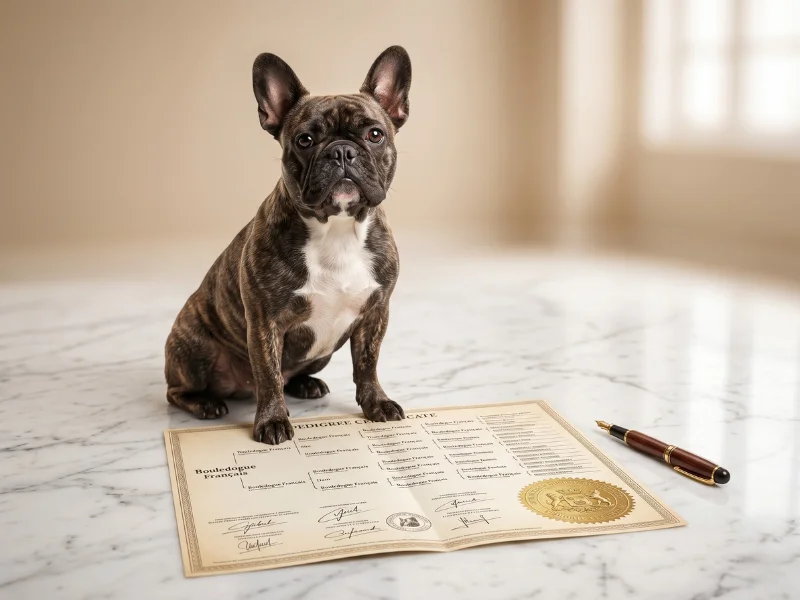

Breeds mentioned in this article