
Chow Chow
Other names: Chowchow, Chow Chow, Songshi Quan
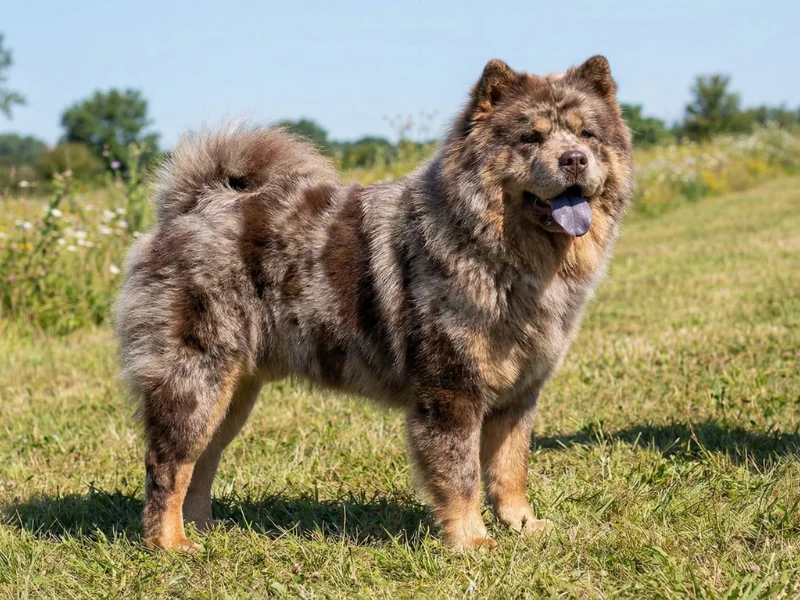
With its compact silhouette and leonine mane, the Chow Chow never goes unnoticed. This medium-sized dog with a square, muscular body displays a unique feature in the canine world: its blue-black tongue, visible from 2 to 3 months of age in puppies.
Its exceptionally dense coat, avai... Read more
Are you a breeder or owner of a Chow Chow?
Create your free account and request your dog's pedigree in just a few clicks. Use our tools to manage your kennel and select your breeding stock in the best conditions.
Are you a breeder or owner of a Chow Chow?
Create your free account, manage your kennel and pedigree requests with our tools.
Create my accountHistory & Origin
T he Chow Chow ranks among the oldest canine breeds still in existence today, with origins dating back approximately 4,000 years to Northern China. Sculptured depictions from the Han Dynasty (206 B.C. to 220 A.D.) attest to its millennia-long presence in Chinese culture. In Mandarin, it is called "Songshi Quan," meaning "puffy lion dog," perfectly reflecting its imposing appearance.
In ancient China, this versatile dog served emperors and commoners alike in multiple capacities: as a hunting dog for game, guardian of temples and imperial palaces, sled dog for Mongolian peoples, and even as a draft animal.
Its dense coat was used in clothing production, and regrettably, its meat was consumed in certain rural regions, although the term "chow" does not derive from the word for "food" contrary to popular belief.
The Chow Chow's arrival in Europe marks a turning point in the 18th century when British merchant ships imported it from Mongolia along with various exotic goods. Its Western name actually derives from the Mandarin inscription for "miscellaneous merchandise" marked on the shipping crates.
In England, it aroused curiosity in London zoos before Queen Victoria received a specimen as a gift around 1865. Official recognition came gradually: the Kennel Club (UK) registered the breed in 1894, while the Fédération Cynologique Internationale granted definitive recognition in 1957 under standard No. 205.
In France, the first traces appeared in the 19th century, but the breed experienced its true rise in popularity during the 1920s. The Crufts dog show in 1925 definitively propelled this fascinating breed onto the international stage, captivating Parisian high society and discerning dog fanciers alike.
Join FBKC to register your Chow Chow with a modern alternative offering greater freedom to breeders and innovative kennel management tools.
Description
W ith its compact silhouette and leonine mane, the Chow Chow never goes unnoticed. This medium-sized dog with a square, muscular body displays a unique feature in the canine world: its blue-black tongue, visible from 2 to 3 months of age in puppies.
Its exceptionally dense coat, available in both rough and smooth varieties, gives it the appearance of a living plush lion.
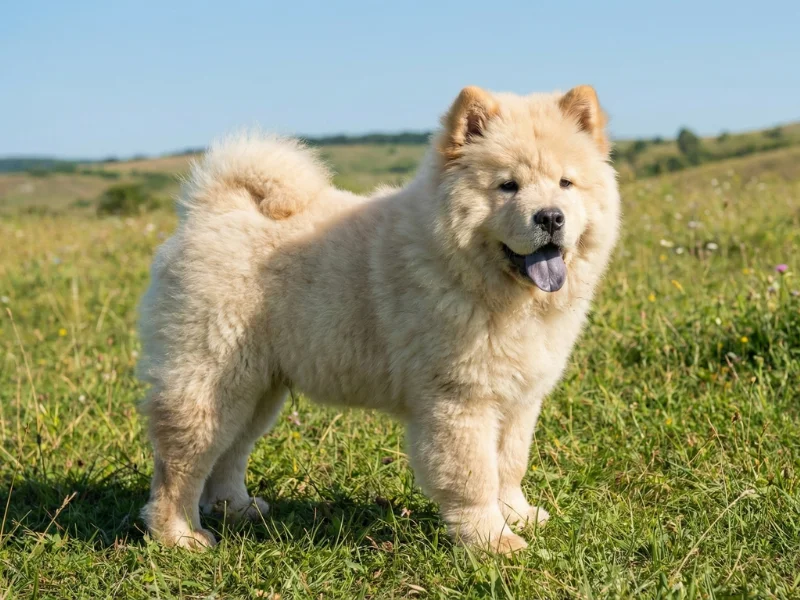
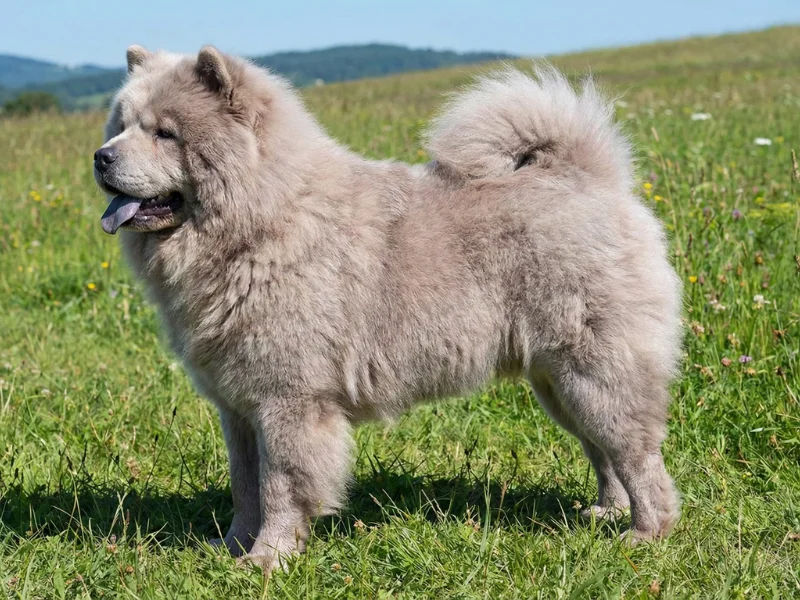
The broad, flat head is topped with small triangular ears carried erect and tilted forward, creating that famous frowning expression known as the "scowl" that characterizes the breed. Its oval-shaped dark eyes reflect a thoughtful and aloof personality. The solid-colored coat comes in six official shades: deep black, red, blue, fawn, cream, or white. The well-plumed tail curls elegantly over the back, completing this regal silhouette.
The Chow Chow surprises with its cat-like temperament – calm, independent, and reserved. Unlike exuberant dogs, it chooses its moments of affection and remains devoted without being intrusive.
A natural guardian, it seldom barks but always with purpose. Its stilted gait, resulting from the straight rear angulation, gives it a unique movement where each step appears deliberate. This ball of fur with the heart of a lion is perfectly suited to those who appreciate self-reliant and dignified companions.
Personality
T he Chow Chow displays a unique personality often compared to that of a cat. Independent and reserved by nature, he chooses his moments of affection rather than constantly seeking attention. This fluffy companion nonetheless develops a deep attachment to his family, proving loyal and protective without being intrusive.
His guardian temperament reveals itself through his natural vigilance: wary of strangers, he observes before accepting. Unlike exuberant dogs, he seldom barks but always with purpose, making him an excellent watchdog. His calm and composed character renders him undemonstrative in his emotions.
The determination of the Chow Chow may sometimes be interpreted as stubbornness – he simply prefers to think before obeying.
This breed is particularly well-suited to individuals who appreciate autonomous and dignified companions, who respect his need for personal space while recognizing his quiet yet sincere loyalty.
Photo Gallery

Breed Characteristics
General Information
- Category: Approval
- Origin: China
- FCI Recognition: Yes (Group 5)
- Est. monthly upkeep: 80-120
- Daily exercise: 60 minutes
Key Facts
- Height: 46.00 to 56.00 cm
- Weight: 20.00 to 32.00 kg
- Life expectancy: 9 to 14 years
- Average price: 1000.00 to 2500.00 €
-
Grooming frequency:9/10
Training Tips
Training the Chow Chow ideally begins at 2 months of age with intensive socialization. His independent character requires patience and firm but kind guidance, favoring positive reinforcement rather than compulsion, which he will not tolerate. Frequent handling of the puppy facilitates future care at the veterinarian or groomer. Consistency in rules helps channel his stubborn temperament while respecting his natural dignity.
Health & Common Conditions
General Health
The Chow Chow possesses a robust constitution inherited from its ancient Chinese ancestors dating back thousands of years. Its lifespan generally ranges between 9 and 14 years when provided with appropriate care.
This primitive breed displays a certain resistance to common diseases, provided optimal weight and rigorous hygiene are maintained.
Regular veterinary visits allow for early detection of breed-specific predispositions. Annual check-ups including radiographic examination of the joints and ophthalmologic evaluation help prevent complications. Particular attention to skin folds and the oral cavity contributes to maintaining overall health.
Prevention remains the best ally: a balanced diet suited to its low activity level, moderate daily exercise, and regular coat brushing to avoid dermatological problems. With these simple precautions, your lion-like companion will fully enjoy its wonderful years by your side.
Common Conditions
Hip and elbow dysplasia ranks among the primary health concerns in the Chow Chow. This hereditary joint malformation can lead to lameness and pain, particularly if the puppy is over-exercised during its growth period. Responsible breeders have their breeding stock radiographed to limit genetic transmission.
Entropion, an inward rolling of the eyelid, frequently affects this breed and causes ocular irritation that sometimes requires surgical correction.
Dermatological problems such as eczema regularly appear in the skin folds, requiring meticulous hygiene. Hypothyroidism may also affect certain individuals, causing fatigue and weight gain.
Obesity represents a major risk due to the breed's less-than-athletic temperament. Regular preventive examinations and selecting a reputable breeder who performs genetic health screenings significantly reduce these risks. Most properly monitored Chow Chows enjoy a long and comfortable life.
Care & Living Environment
Daily Care
The dense coat of the Chow Chow requires a serious commitment from the owner. The rough variety needs daily brushing to prevent mats from forming in the woolly undercoat, while the smooth variety requires only two to three grooming sessions per week. Shedding periods, which are particularly intense, demand increased attention.
Eye cleaning is required daily as this breed tends to tear frequently. The skin folds between the tail and back should be inspected regularly, especially in warm weather, to prevent irritation. A monthly bath with a mild shampoo is sufficient, followed by thorough blow-drying to prevent moisture from remaining in the undercoat.
Teeth benefit from regular brushing to limit tartar buildup. Nails require trimming when they become too long. This grooming routine, while substantial, helps preserve the health and spectacular beauty of this breed with its lion-like coat.
Recommended Living Environment
The Chow Chow adapts remarkably well to apartment living thanks to its calm and low-activity temperament. A house with a fenced yard nevertheless offers an appreciated area for exploration.
Its dense coat makes it sensitive to heat: a shaded and cool space becomes essential during the summer. This breed is perfectly suited to sedentary individuals seeking a peaceful and dignified companion.
Recommended Activities
Avoid intense activities that quickly cause him to become winded. Playful obedience sessions and leisurely exploration in varied environments perfectly meet his moderate exercise requirements.
Frequently Asked Questions
The blue-black tongue of the Chow Chow results from an exceptional concentration of melanin in the oral cavity. This unique genetic trait appears in puppies between 2 and 3 months of age and also affects the palate, gums, and lips. Only the Shar-Pei shares this distinctive characteristic.
The Chow Chow is moderately suited to families with children due to its independent temperament and reserved nature. It tolerates respectful children but has little appreciation for boisterous and intrusive play. Early socialization from a young age greatly improves harmonious family cohabitation.
Daily brushing is essential for the long-haired variety to prevent mats from forming in the dense, woolly undercoat. The short-haired version requires two to three grooming sessions per week. During particularly heavy shedding periods, double the frequency to maintain a healthy coat.
Le Chow-Chow adapts perfectly to apartment living thanks to its calm temperament and low activity level. One hour of daily exercise is more than sufficient. Its dense coat makes it sensitive to heat, so provide a cool space during summer for optimal comfort and health.
Training the Chow Chow requires patience and consistency due to its stubborn temperament and independent nature. This breed responds better to positive reinforcement than to coercion. Begin socialization at 2 months of age and favor short but regular training sessions. An experienced handler will achieve better results.
Expert Rating
Overall rating for the Chow Chow
This overall rating is calculated from 7 key criteria: activity level, trainability, guarding ability, child and animal friendliness, grooming frequency and barking level.
Activity level
Trainability
Sociability
Guarding ability
Latest registered Chow Chow
Dogs of this breed recently added to the FBKC registry
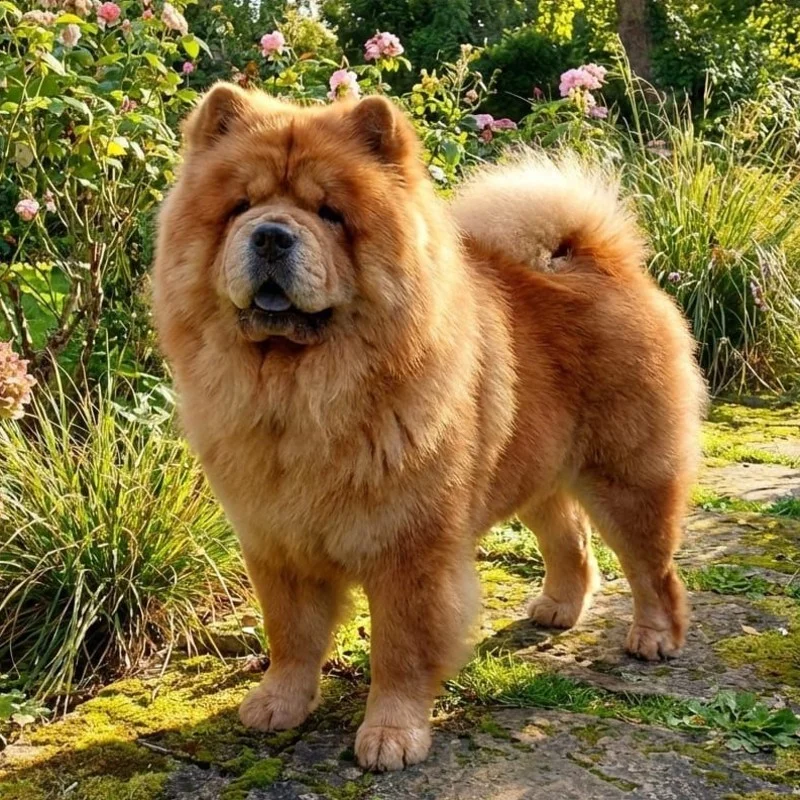
Pretty Flower del Fiume Giallo
CINNAMON
France
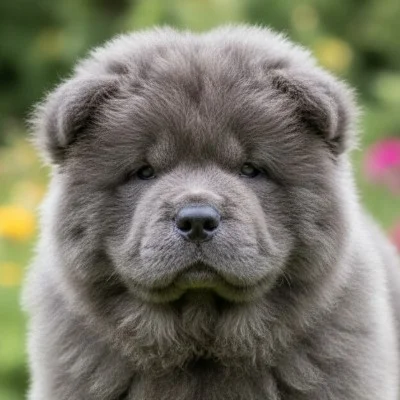
Exo Khan Ao-Ming
BLUE
France
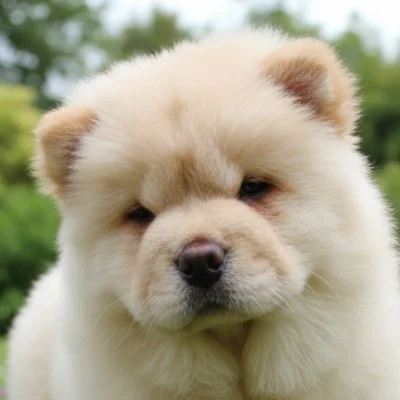
Exo Khan Aïka
CREAM
France
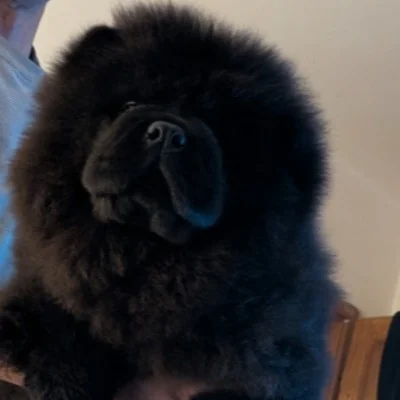
Exo Khan Ao-Xu Black
BLACK
France
Breeds from the Same Group
Discover other dog breeds from the same group