
Newfoundland
Other names: Newfoundland, Newfie, Newf, Chien de Terre-Neuve
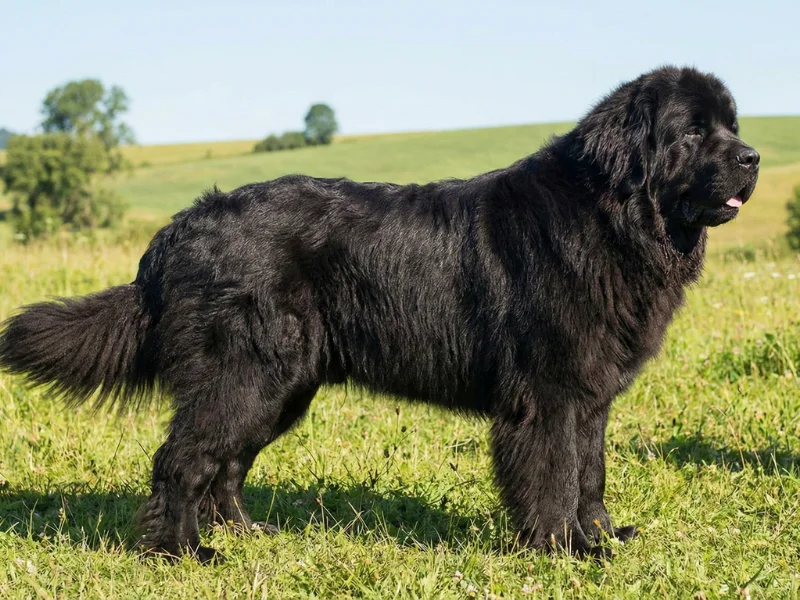
Imposing as a bear and gentle as a lamb, the Newfoundland embodies the perfect balance between natural power and infinite tenderness. This Canadian giant with its dense, water-resistant coat displays a massive yet harmonious silhouette, supported by a robust bone structure without excessive heaviness.
... Read moreAre you a breeder or owner of a Newfoundland?
Create your free account and request your dog's pedigree in just a few clicks. Use our tools to manage your kennel and select your breeding stock in the best conditions.
Are you a breeder or owner of a Newfoundland?
Create your free account, manage your kennel and pedigree requests with our tools.
Create my accountHistory & Origin
T he history of the Newfoundland begins nearly a millennium ago on the island of the same name, off the Atlantic coast of Canada.
Its ancestors trace back to the Viking bear dogs introduced during Scandinavian expeditions around the year 1000, which crossbred with the native dogs already inhabiting the island. These early robust dogs thus laid the foundation for a breed shaped by the harsh Nordic climate.
The arrival of European fishermen in the 16th century, particularly English and French cod fishermen accompanied by their own working dogs, enriched the breed's genetic heritage.
By the early 17th century, the behavioral and physical characteristics of the Newfoundland became progressively established.
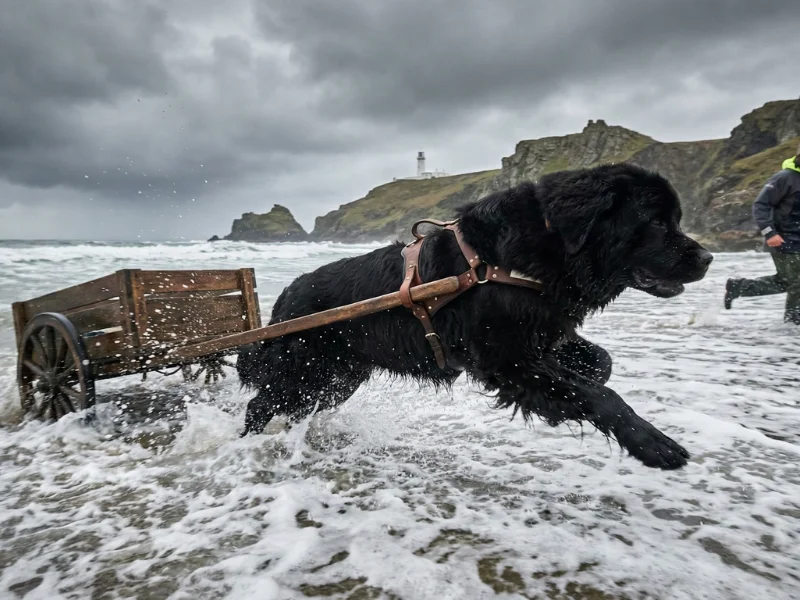
These versatile dogs quickly became indispensable to fishermen: they hauled in heavy fishing nets, retrieved objects that fell overboard, and rescued sailors from drowning thanks to their exceptional aquatic abilities.
On land, their impressive strength made them invaluable for pulling logs and heavy loads.
The late 19th century marked the beginning of official recognition. A first standard was established in 1923 in Canada, the breed's country of origin. On August 4, 1954, the FCI officially recognized the Newfoundland, registering it under number 50 in Group 2, Section 2.2 (Molossoid breeds, Mountain type).
The current standard, dating from 1996, remains under Canadian responsibility. Today, the Newfoundland perpetuates its legend as the "St. Bernard of the seas" throughout the world, valued both as a devoted family companion and as an accomplished water rescue dog.
We offer the opportunity to register your Newfoundlands with our club: a modern alternative to traditional clubs, with greater freedoms and innovative breeding management tools for responsible breeders.
Description
I mposing as a bear and gentle as a lamb, the Newfoundland embodies the perfect balance between natural power and infinite tenderness. This Canadian giant with its dense, water-resistant coat displays a massive yet harmonious silhouette, supported by a robust bone structure without excessive heaviness.
Its proportions are impressive: males stand approximately 71 cm at the withers weighing 60 to 70 kg, while females measure 66 cm at 50 to 60 kg.
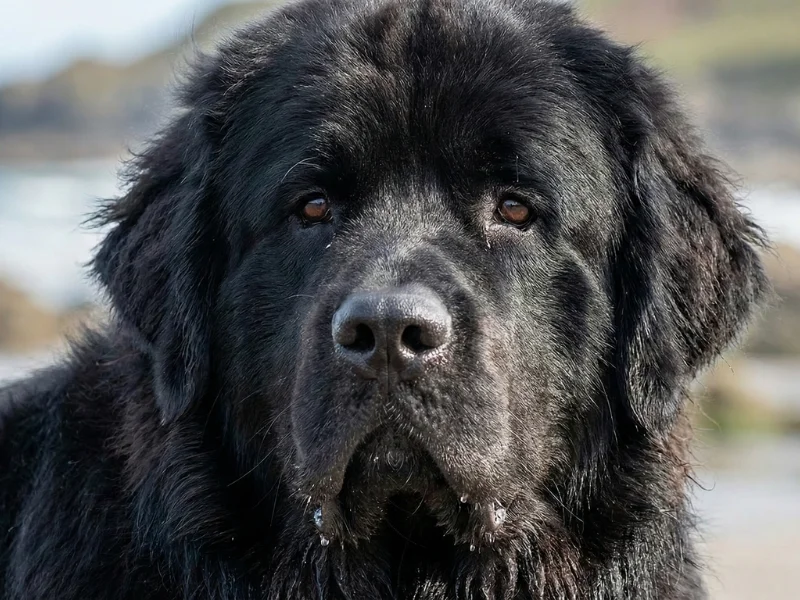
Its massive head features a short, square muzzle, small dark brown eyes sparkling with intelligence, and medium-sized triangular ears that fall elegantly along the skull.
Its coat is its true hallmark: a double coat of medium to long length, straight and lustrous, with an exceptionally dense undercoat that provides remarkable resistance to water and cold.
Recognized colors include solid black (the most common), bronze brown ranging from chocolate to chestnut, and black and white.
A fascinating detail: its webbed feet provide exceptional aquatic abilities, making it an outstanding swimmer whose swimming style resembles the human breaststroke more than the traditional "doggy paddle."
Beneath this calm giant's appearance lies a remarkably gentle temperament.
Calm and composed, it exudes a soothing serenity while remaining vigilant and protective toward its family. This giant teddy bear combines Herculean strength with legendary patience, particularly with children, for whom it becomes a devoted guardian and tireless playmate.
Personality
T he Newfoundland possesses an exceptional temperament that melts hearts. Gentle, calm and patient, this good-natured giant displays a natural kindness toward everyone, both humans and animals.
His never aggressive character makes him an ideal family companion, particularly with children, for whom he becomes a watchful protector and tireless playmate.
Intelligent and devoted, he constantly seeks to make himself useful and to please his family. His deep attachment makes him intolerant of prolonged solitude.Despite his impressive strength, he is surprisingly calm indoors, willingly sleeping for long hours.
Not much of a barker, he only vocalizes when there is good reason. His legendary courage and rescue instinct may prompt him to spontaneously jump into the water to "save" a swimmer he perceives to be in danger.
Photo Gallery


Breed Characteristics
General Information
- Category: Work
- Origin: Canada
- FCI Recognition: Yes (Group 2)
- Est. monthly upkeep: 120-160
- Daily exercise: 60 minutes
Key Facts
- Height: 66.00 to 76.00 cm
- Weight: 50.00 to 70.00 kg
- Life expectancy: 8 to 12 years
- Average price: 1000.00 to 1500.00 €
-
Grooming frequency:8/10
Training Tips
Training begins as soon as the puppy arrives home at 2-3 months of age, by establishing consistent rules that the entire family follows. This giant in the making learns easily thanks to his natural desire to please, but his slow maturation (up to 3 years) requires patience and consistency. Positive reinforcement methods based on rewards yield excellent results. Early and varied socialization builds a well-balanced temperament. Be careful not to reverse permissions granted to the puppy: allowed on the couch at 22 pounds, he will expect the same privilege at 155 pounds.
Health & Common Conditions
General Health
The Newfoundland enjoys a robust constitution, although its giant size implies certain areas of vigilance.
Its most delicate period occurs during rapid growth, when careful monitoring is necessary to preserve its joints. Life expectancy ranges between 8 and 12 years, typical for giant breeds.
Its double waterproof coat protects it admirably from the cold and humidity, making it a dog perfectly suited to northern climates.
Conversely, he tolerates heat very poorly and requires precautions during hot days: access to shade, plenty of fresh water, and limited physical activity. Regular veterinary check-ups, including weight and joint monitoring, help optimize his longevity and overall well-being.
Common Conditions
Like most giant breeds, the Newfoundland has a predisposition to hip and elbow dysplasia, hereditary joint malformations causing pain and early-onset arthritis. Responsible breeders systematically test their breeding stock to limit this genetic transmission.
Cystinuria, a hereditary disease leading to the formation of urinary stones, is among the breed-specific concerns to monitor.Congenital heart conditions (stenosis, portosystemic shunt) may also affect certain individuals. The puppy's rapid growth requires a balanced diet, neither too rich nor too fatty, to prevent skeletal disorders.
Fortunately, early health screenings and appropriate lifestyle management allow these predispositions to be effectively managed, providing this gentle giant with a fulfilling life.
Care & Living Environment
Daily Care
The Newfoundland's dense coat requires twice-weekly brushing to remove dead hair and prevent mat formation. During spring and fall shedding seasons, daily brushing becomes necessary as hair loss intensifies significantly.
Care of the pendant ears deserves regular attention to prevent infections, particularly after swimming. The eyes should be inspected frequently. Nails require monthly trimming if they do not wear down naturally. Weekly tooth brushing prevents tartar buildup.
Special consideration: this heavy drooler requires keeping a towel handy to regularly wipe the mouth, especially after drinking. The naturally water-resistant coat only requires occasional bathing to preserve its protective oils.
Recommended Living Environment
La swimming ranks first among the favorite activities of this exceptional swimmer, satisfying both his need for exercise and his aquatic instinct. Water rescue represents his historical calling.
Long leisurely walks, moderate hiking, and draft work (carting, sledding) fulfill his need to be useful.
Obedience, tracking, and puzzle games pleasantly engage his intelligence. Avoid intensive exercise and jumping during his lengthy growth period to protect his fragile joints.
Recommended Activities
Leisurely long walks, moderate hiking, and draft work (carting, sledding) fulfill his need to be useful.
Obedience, tracking, and puzzle games provide pleasant mental stimulation. Avoid strenuous exercise and jumping during his extended growth period to protect his developing joints.
Frequently Asked Questions
The price of a Newfoundland puppy ranges between 1000 and 1500 euros from a reputable breeder. This fee covers health testing of the parents, vaccinations, and early socialization of the puppy. Champion bloodlines command higher prices. Plan for a monthly budget of 100 to 150 euros.
The Newfoundland excels as a companion for children thanks to its legendary patience and natural gentleness. It is protective without ever being aggressive, tolerating their play with remarkable forbearance. Its surprising sensitivity allows it to perceive the emotions of little ones. However, caution should be exercised regarding its imposing size, which may inadvertently knock over toddlers.
The male Newfoundland stands between 71 and 76 cm at the withers with a weight of 60 to 70 kg, while the female reaches 66 to 71 cm and weighs 50 to 60 kg. This giant breed requires ample space and monitored growth until 3 years of age, when it reaches full maturity. Its rapid development demands appropriate nutrition to protect its joints.
The Newfoundland possesses natural webbed feet and a water-resistant coat that make him an exceptional swimmer. Historically bred for water rescue, his aquatic instinct remains deeply ingrained. His unique swimming style resembles the human breaststroke rather than the traditional dog paddle. Regular access to a body of water fulfills his natural need and protects his joints.
The life expectancy of the Newfoundland ranges between 8 and 12 years, typical for giant breeds. This longevity can be optimized through proper nutrition, moderate exercise, and regular veterinary care. Monitoring weight and joint health plays a determining role. Preventive screenings help detect hereditary predispositions such as dysplasia at an early stage.
Expert Rating
Overall rating for the Newfoundland
This overall rating is calculated from 7 key criteria: activity level, trainability, guarding ability, child and animal friendliness, grooming frequency and barking level.
Activity level
Trainability
Sociability
Guarding ability
Latest registered Newfoundland
Dogs of this breed recently added to the FBKC registry

Vaillant du Royaume d Escape
BLANC ET NOIR
France
Vador du Royaume d Escape
NOIR
France
Viking du Royaume d Escape
BLANC ET NOIR
France
Vita du Royaume d Escape
NOIR
France
Breeds from the Same Group
Discover other dog breeds from the same group