
Pug
Other names: Pug, Mops, Chinese Pug, Dutch Pug, Lo-Sze, Paï
Imagine a small mastiff concentrated into a pocket-sized format, and you have the Pug! This companion dog originating from China displays a square and compact silhouette that leaves no one indifferent. Its muscular body, surprisingly heavy for its size (6 to 8 kg), reveals all the substance of this ancient ... Read more
Are you a breeder or owner of a Pug?
Create your free account and request your dog's pedigree in just a few clicks. Use our tools to manage your kennel and select your breeding stock in the best conditions.
Are you a breeder or owner of a Pug?
Create your free account, manage your kennel and pedigree requests with our tools.
Create my accountHistory & Origin
T he history of the Pug dates back more than 2000 years, to the imperial courts of ancient China. Known as "Lo-Sze" or "Pai," this small dog was the exclusive privilege of emperors and Chinese aristocracy, who meticulously selected it for its flattened muzzle and short legs.
Some believe it to be a descendant of the shorthaired Pekingese, while others suggest a kinship with Asian mastiffs.
In the 16th century, trade routes between China and Europe changed the destiny of the breed. Dutch and Portuguese merchants brought back these prized companions, who quickly won over the royal courts of Europe.
The Netherlands embraced the Pug with great enthusiasm, the House of Orange-Nassau even made it their canine emblem.
The year 1688 marked a turning point: William III of Orange became King of England and brought his Pugs across the Channel. The British nobility became so enamored with this newcomer that they set aside the King Charles Spaniel.
Marie Antoinette, Josephine de Beauharnais, Queen Victoria... all succumbed to the charm of this small mastiff-type dog. Its French name is believed to derive from the Italian actor Carlo Antonio Bertinazzi, famous for his black Harlequin mask.
The first official standard was established in 1883 in England, followed by recognition from the Fédération Cynologique Internationale in 1966. At that time, the Pug was more streamlined and had a less flattened muzzle than today. The first black specimens did not appear until the late 19th century, expanding the color palette.
After a period of obscurity in favor of other breeds, the Duke and Duchess of Windsor restored its noble status in the 1960s, ensuring its current worldwide popularity.
Join our club to register your Pug! Enjoy a modern alternative with greater freedom for breeders and powerful management tools.
Description
I magine a small mastiff concentrated into a pocket-sized format, and you have the Pug! This companion dog originating from China displays a square and compact silhouette that leaves no one indifferent. Its muscular body, surprisingly heavy for its size (6 to 8 kg), reveals all the substance of this ancient breed.
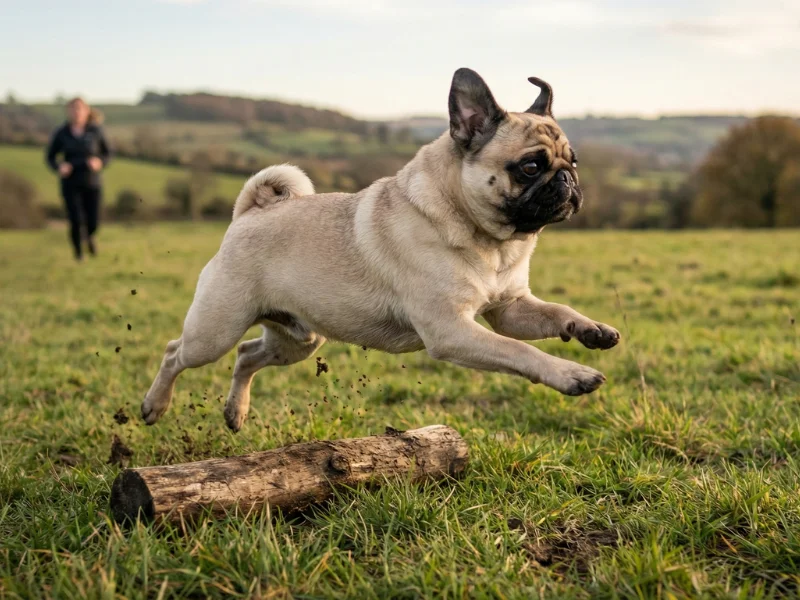
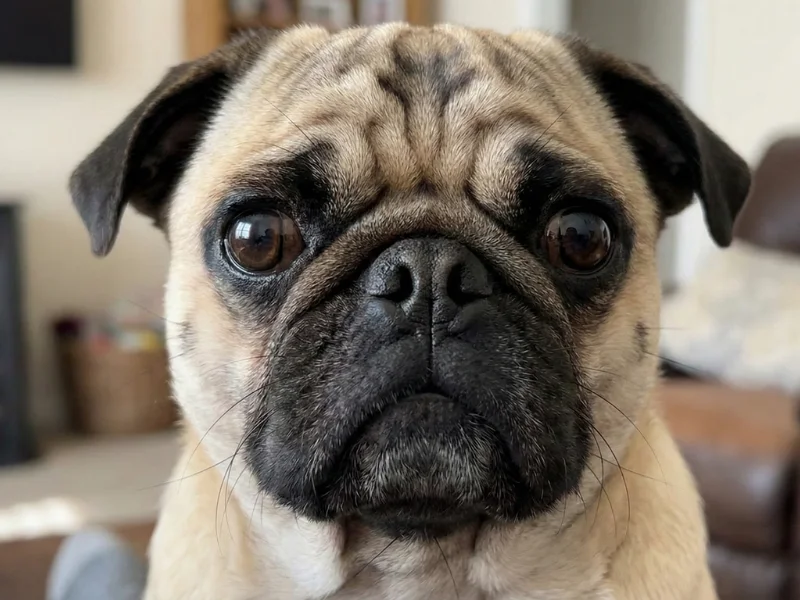
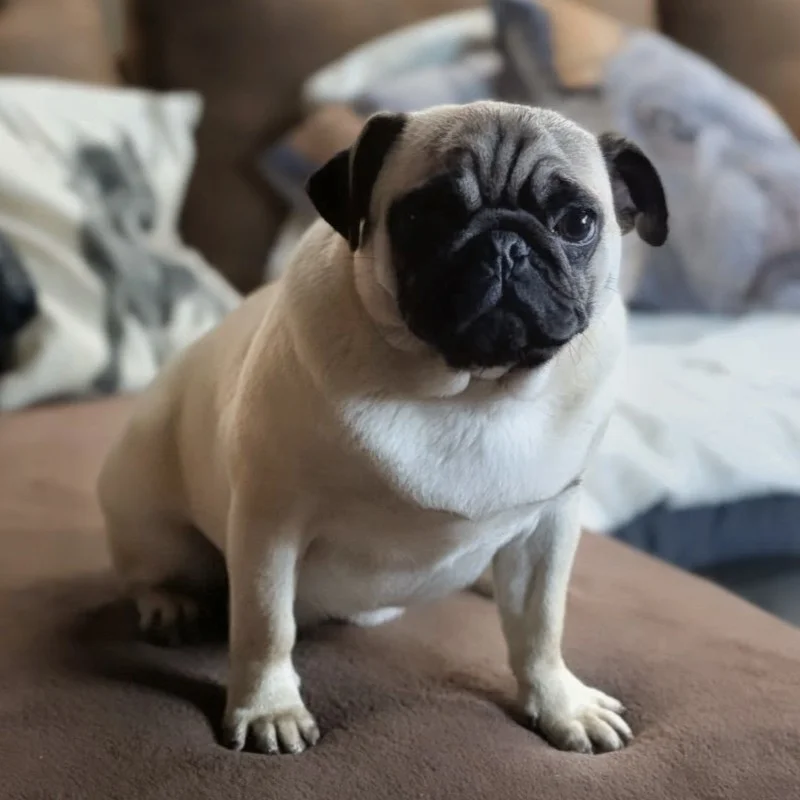
Its round head with expressive wrinkles constitutes its visual signature. The short, flat muzzle, framed by a characteristic black mask, gives this little companion an expression that is both endearing and full of character.
Its large, prominent eyes, bright and dark, reflect infinite gentleness, they seem to scrutinize their master's soul with a striking intensity.
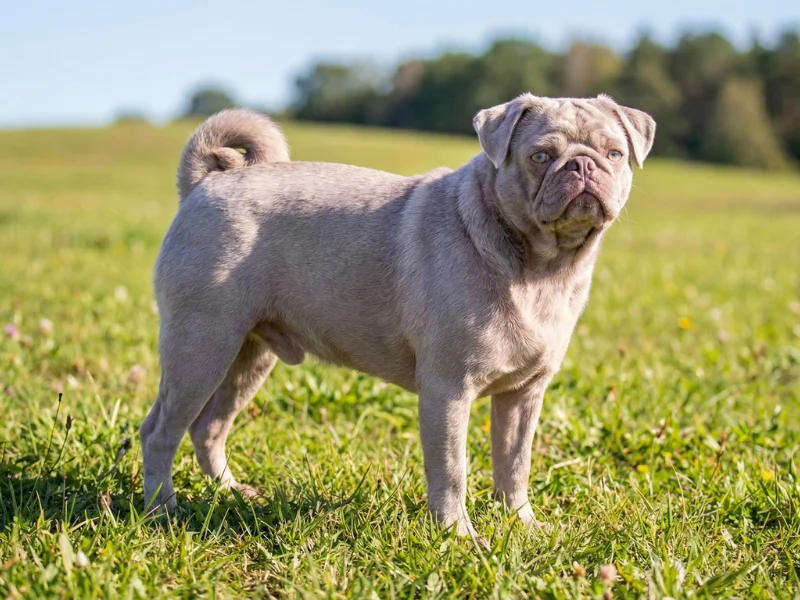
The Pug's short, silky coat comes in several elegant colors: fawn, warm apricot, deep black, or luminous silver.
Each color highlights the clear contrasts between the coat, the black trace, and the famous mask. Its corkscrew tail, ideally double-curled over the hip, completes this unique silhouette.
In terms of temperament, this small mastiff cultivates a remarkable balance between liveliness and calm. Cheerful without being hyperactive, affectionate without being intrusive, it adapts perfectly to apartment living.
Its slight roll of the hindquarters when moving adds an extra touch of charm to this bundle of happiness that truly embodies its motto: "Multum in parvo" – a lot of dog in a small package.
Personality
T he Pug overflows with joie de vivre and affection for his family. This four-legged little clown loves being the center of attention, following his owner like a faithful shadow throughout the house.
His balanced temperament combines liveliness and calm, knowing when to be playful during active moments and then peaceful for long naps on the couch.
His natural sociability works wonderfully with children, whom he treats with patience and gentleness. Intelligent but sometimes stubborn, this little mastiff-type dog has his own personality; he thinks before obeying, which requires consistency in training.
His remarkable sensitivity allows him to perceive the emotions of those close to him, offering comfort and companionship during difficult times. He tolerates prolonged solitude poorly and distinctly prefers human companionship above all else.
Photo Gallery

Breed Characteristics
General Information
- Category: Approval
- Origin: China
- FCI Recognition: Yes (Group 9)
- Est. monthly upkeep: 40-60
- Daily exercise: 30 minutes
Key Facts
- Height: 25.00 to 33.00 cm
- Weight: 6.00 to 8.00 kg
- Life expectancy: 12 to 15 years
- Average price: 1000.00 to 2500.00 €
-
Grooming frequency:4/10
Training Tips
Training the Pug ideally begins at 8 weeks of age. This clever little dog responds particularly well to positive reinforcement, especially with treats! His tendency toward determination requires consistency and patience. Short, playful training sessions maintain his attention. Early socialization with other dogs and various situations develops a well-balanced and confident adult.
Health & Common Conditions
General Health
The Pug enjoys an overall robust constitution and can live between 12 and 15 years in good health. Its greedy nature, however, requires weight monitoring, as excess weight easily threatens this little gourmet.
Its moderate energy level adapts well to short but regular daily exercise.
Owners must pay particular attention to weather conditions: this dog is especially sensitive to heat and extreme temperatures. Regular veterinary visits help monitor its vulnerable areas and anticipate potential issues.
A quality diet, suited to small breeds and properly portioned, greatly contributes to maintaining its vitality. With appropriate preventive care and rigorous hygiene, the Pug remains a sturdy everyday companion.
Common Conditions
Brachycephalic syndrome represents the primary health concern in the Pug, causing respiratory difficulties related to its flattened muzzle.
This condition manifests through snoring, noisy breathing, and intolerance to strenuous exercise. Surgical intervention may sometimes prove necessary in severe cases.
Its prominent eyes predispose the breed to ocular conditions: corneal ulcers, dry eye, and chronic tearing require careful monitoring. Skin infections within the facial folds also affect certain individuals.
Hip dysplasia and joint problems may occur, particularly in cases of excess weight.
Females frequently experience difficult whelping requiring cesarean section. Early screening and regular health checks fortunately allow for effective management of these conditions.
Care & Living Environment
Daily Care
Grooming the Pug remains relatively simple despite its regular shedding. A weekly brushing with a soft brush is sufficient to maintain its short, shiny coat, increasing frequency during shedding season. Baths remain occasional, only when necessary.
Daily cleaning of the facial wrinkles deserves particular attention: use a damp cloth to remove moisture and debris, then dry thoroughly to prevent bacterial infections. Its eyes require regular wiping with saline solution to remove tear secretions.
Nail trimming should be done monthly if they do not wear down naturally. Teeth brushing several times a week prevents tartar buildup and gum disease. The drop ears require weekly inspection to detect any redness or unusual odor.
Recommended Living Environment
The Pug thrives perfectly in an urban apartment thanks to its compact size and calm temperament. A house with a yard also suits this breed, but human companionship takes priority over available space.
Its sensitivity to temperatures requires an air-conditioned interior in summer and heated quarters in winter. The breed adapts to all lifestyles provided it remains close to its family.
Recommended Activities
Absolutely avoid intense physical activities in hot weather. Canine socialization classes gently strengthen his social skills.
Frequently Asked Questions
Absolutely! The Pug proves to be an ideal companion for families. His gentle and patient temperament works wonderfully with children, whom he tolerates remarkably well. This small mastiff-type dog loves participating in family life and following his owners from room to room throughout the house. His compact size makes him easy to handle, even for the youngest family members. Sociable and affectionate, he forms deep bonds with all members of the household. His moderate energy level suits both active families and those with a quieter lifestyle perfectly.
The monthly budget for a Pug ranges between 40 and 60 euros. This amount covers quality nutrition suited to small breeds, representing the primary expense. Premium kibble helps maintain ideal weight and digestive health. Add hygiene products to clean facial wrinkles, eyes, and ears. Preventive veterinary visits, dewormers, and parasite control complete this budget. Also plan for a fund for unexpected care related to the brachycephalic conformation.
No, the Pug does not tolerate prolonged solitude well. This companion dog develops a very strong attachment to its family and clearly prefers human presence. Left alone for too long, it may display anxiety through barking or undesirable behaviors. Ideally, the Pug should not be left alone for more than 4 to 5 hours at a time. If your schedule requires it, accustom your dog gradually from a young age. Interactive toys and a secure environment help ease these periods of temporary solitude.
The Pug's snoring originates from its brachycephalic morphology, characterized by a short, flattened muzzle. This anatomical feature narrows the upper airways, creating air turbulence during respiration. The phenomenon intensifies during sleep when the tissues relax. These snoring sounds are an integral part of the breed and do not systematically constitute a health concern. However, excessively loud or labored breathing warrants veterinary consultation. Maintaining an optimal weight reduces the intensity of these nocturnal respiratory manifestations.
Explain why this breed is called the Pug: The name "Pug" in France ("Carlin") finds its origin in 18th-century Italian theater. It is believed to derive from the actor Carlo Antonio Bertinazzi, famous for his portrayal of the Harlequin character at the Comédie-Italienne in Paris. This actor wore a distinctive black mask that bore a striking resemblance to that of the little Chinese dog. This remarkable similarity between the dog's dark facial mask and that of the actor is thought to have inspired the name in France. In other countries, the breed carries different names: Pug in English-speaking countries and Mops in Germany, curiously meaning "grumpy."
Expert Rating
Overall rating for the Pug
This overall rating is calculated from 7 key criteria: activity level, trainability, guarding ability, child and animal friendliness, grooming frequency and barking level.
Activity level
Trainability
Sociability
Guarding ability
Latest registered Pug
Dogs of this breed recently added to the FBKC registry

Vador Des Mille et un Pug
SABLE
France
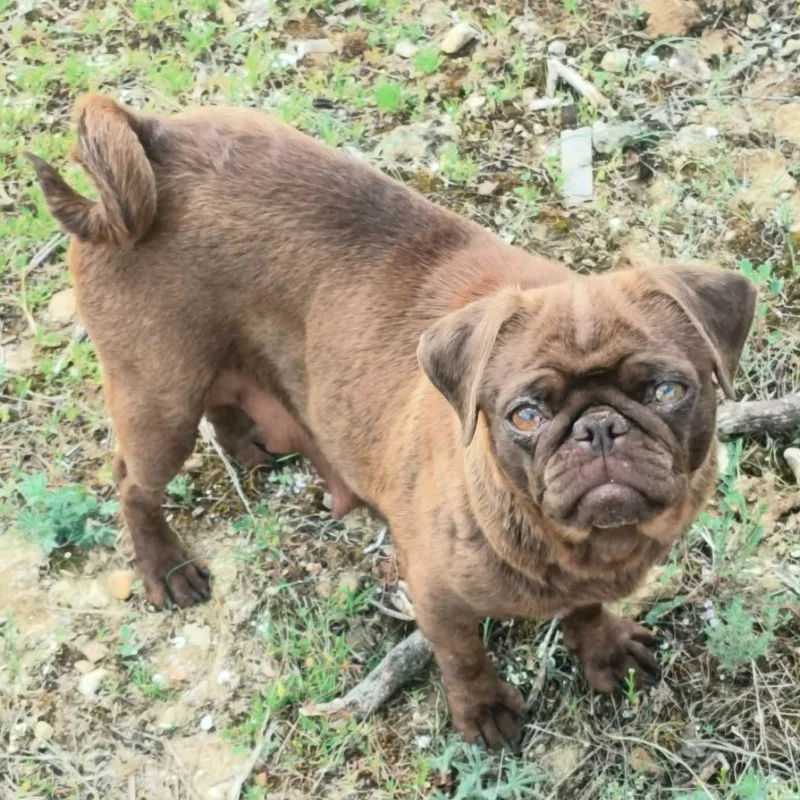
Velours des Mille et un Pug
CHOCOLATE
France
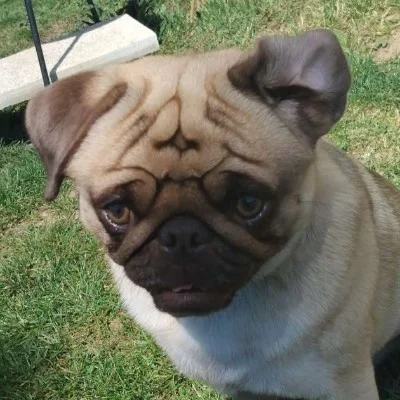
Stytch Des Mille et un Pug
CHOCO FAWN
France
Adèle du Domaine d'Iris
SABLE
France
Breeds from the Same Group
Discover other dog breeds from the same group