

Dachshund
Other names: Dachshund, Dackel, Chien saucisse, Saucisson à pattes, Teckel à poil ras, Teckel à poil dur, Teckel à poil long, Teckel nain, Kaninchenteckel, Teckel standard
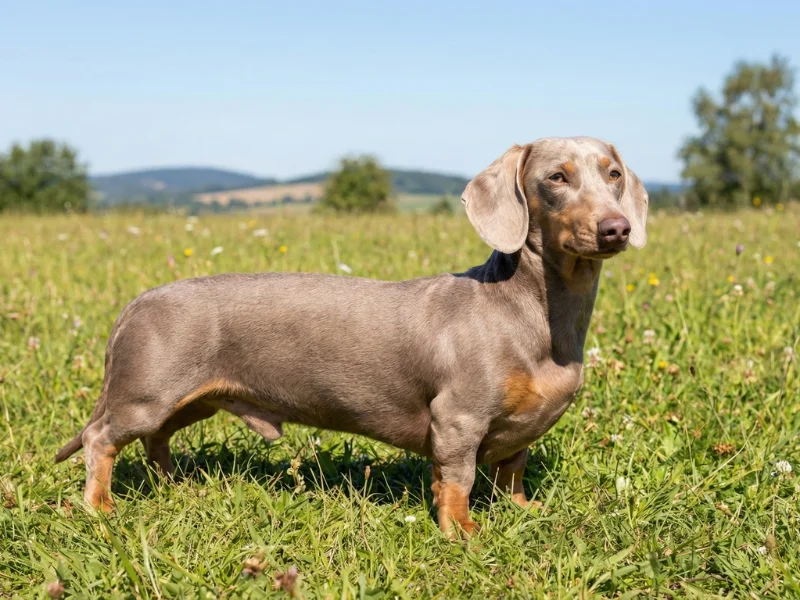
The Dachshund is impossible to confuse with any other breed, as its silhouette remains unique in the canine world. This sausage dog, as it is affectionately nicknamed, displays a remarkably elongated body set on short but sturdy legs that give it an irresistible waddling gait.
Despite its atypical p... Read more
Are you a breeder or owner of a Dachshund?
Create your free account and request your dog's pedigree in just a few clicks. Use our tools to manage your kennel and select your breeding stock in the best conditions.
Are you a breeder or owner of a Dachshund?
Create your free account, manage your kennel and pedigree requests with our tools.
Create my accountHistory & Origin
T he Dachshund traces its roots to medieval Germany, where the first evidence of low-set dogs appears as early as the Middle Ages. Its German name Dachshund literally means "badger dog," reflecting its original function as an underground hunter specialized in flushing out this formidable mustelid.
From brackes and bassets, German breeders meticulously developed a dog capable of navigating narrow burrows to flush out badgers, foxes, and rabbits.
Its elongated body and short yet muscular legs are functional adaptations perfectly optimized for this perilous underground hunting.
The first specimens resembling modern Dachshunds emerged in the 17th century, the result of crosses between Pinschers and small local hunting dogs.
The diversification of the breed accelerated in the 19th century with the appearance of three coat varieties. The smooth-coated variety represents the original version.
The Longhaired Dachshund originated in the 16th century from crosses with spaniels, adding gentleness to temperament and elegance to coat.
The Wirehaired Dachshund, created to enhance weather resistance, incorporated terrier blood, thus preserving the qualities of a fearless hunter.
The first breed standard was established in 1879, followed by the founding of the Deutscher Teckel Club in 1888, the oldest breed club in the world. The miniature varieties, Miniature Dachshund and Kaninchenteckel (Rabbit Dachshund), appeared later to hunt small game in even narrower burrows.
The FCI officially recognized the breed in January 1955, granting it the unique honor of constituting Group 4 by itself, underscoring its originality and cynological importance. Today, the Dachshund has evolved into a cherished companion dog while retaining its remarkable hunting abilities.
Our FBKC club offers Dachshund breeders a modern alternative with greater flexibility. Register your Dachshunds online in all their varieties and obtain four-generation pedigrees through our efficient breeding management tools to select your breeding stock.
Description
T he Dachshund is impossible to confuse with any other breed, as its silhouette remains unique in the canine world. This sausage dog, as it is affectionately nicknamed, displays a remarkably elongated body set on short but sturdy legs that give it an irresistible waddling gait.
Despite its atypical proportions, this German basset conveys an impression of compact strength and well-developed musculature.
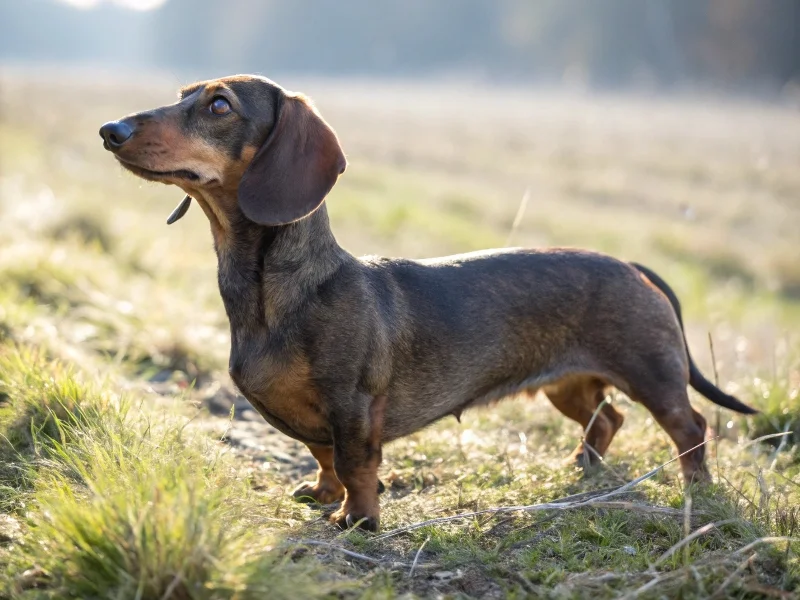
Its elongated head with a slightly domed skull extends into a fine muzzle and powerful jaws inherited from its past as a badger hunter. The medium-sized eyes, ranging from dark to hazel depending on the coat color, shine with a lively and intelligent expression.
The ears, set high, long and rounded at their tips, hang gracefully along the cheeks. The tail harmoniously continues the line of the back, carried as an extension or slightly curved.
The Dachshund comes in nine varieties combining three sizes and three coat types. The smooth-haired variety presents a short, sleek, and glossy coat. The wire-haired Dachshund sports a harsh coat with a characteristic beard and bushy eyebrows.
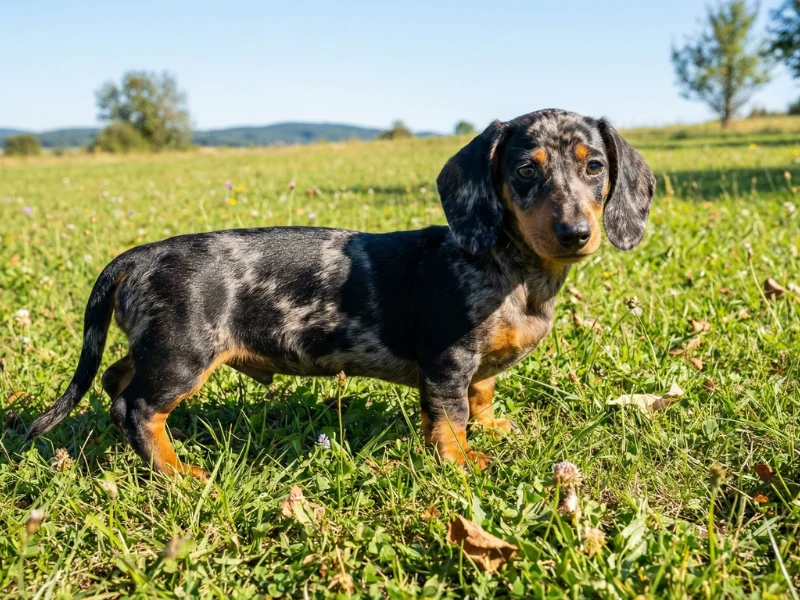
As for the long-haired Dachshund, it reveals a silky and wavy coat, particularly abundant under the body and on the ears. The coats offer a varied palette: solid colors from red to fawn, two-colored black and tan or chocolate and tan, and more rarely dapple.
Behind this singular appearance lies a fiery temperament. Intelligent, courageous, and determined to the point of stubbornness, the Dachshund more than compensates for its small size with an assertive personality.
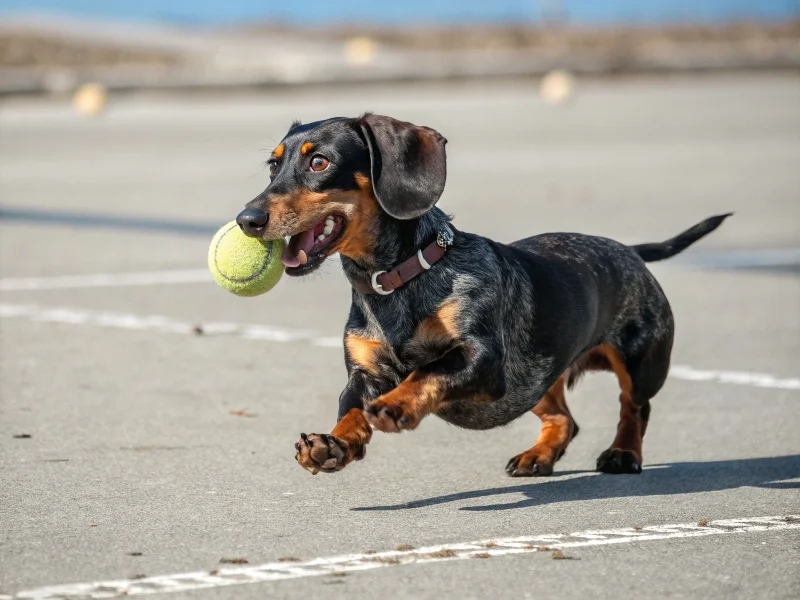
Playful and devoted to its family, this natural-born hunter retains a keen instinct for digging that drives it to explore its surroundings with insatiable curiosity.
Personality
T he Dachshund overflows with a bold personality that contrasts with its small size. Intelligent and lively, this born hunter retains a denning instinct that manifests as a tendency to dig and explore its surroundings.
Its independent and sometimes stubborn character requires patience and consistency in training.
Deeply devoted to its family, it displays a touching loyalty toward its master while maintaining a certain reserve with strangers. Playful and mischievous, it enjoys moments of companionship and cuddles.
Its courageous nature, a legacy of its badger-hunting past, can make it somewhat dominant with other dogs. Each variety presents subtle differences: the Smooth coat tends to be possessive, the Wirehaired remains the most intrepid, while the Longhaired displays a gentler and more affectionate temperament.
Photo Gallery


Breed Characteristics
General Information
- Category: Work
- Origin: Germany
- FCI Recognition: Yes (Group 4)
- Est. monthly upkeep: 50-70
- Daily exercise: 90 minutes
Key Facts
- Height: 20.00 to 27.00 cm
- Weight: 3.00 to 12.00 kg
- Life expectancy: 12 to 14 years
- Average price: 1200.00 to 3500.00 €
-
Grooming frequency:4/10
Training Tips
Begin training at 8 weeks of age, favoring positive methods based on rewards and play. This breed's stubborn nature requires patience, consistency, and kind firmness. Early socialization with people and animals helps temper an occasionally possessive temperament. Use the breed's intelligence and love of play to facilitate learning the essential basic commands.
Health & Common Conditions
General Health
The Dachshund enjoys a robust constitution that grants it an impressive lifespan of 12 to 14 years. Its natural hardiness and boundless energy reflect a generally sound genetic heritage.
This spirited little dog recovers quickly after exercise and tolerates moderate climate variations well.
Its unique conformation nonetheless constitutes its Achilles' heel: the elongated back requires particular vigilance throughout its life. Avoiding jumps from heights, limiting repeated stair climbing, and maintaining optimal weight help preserve its spinal column.
Regular veterinary visits, a balanced diet suited to its specific build, and moderate but consistent daily exercise ensure a long and fulfilling life for this spirited companion.
Common Conditions
The Dachshund has a major predisposition to intervertebral disc disease due to its elongated conformation. This condition manifests through back pain, reluctance to move, or in severe cases, hindquarter paralysis.
Rest, anti-inflammatory medications, or sometimes surgery constitute the therapeutic options. Prevention involves weight management and avoiding jumping.
Some individuals develop idiopathic epilepsy identifiable by seizures. Ocular problems such as hereditary cataracts or progressive retinal atrophy may occur. Cushing's disease sometimes affects older individuals.
Fortunately, early screening and attentive veterinary monitoring allow for effective management of these conditions and ensure optimal quality of life.
Care & Living Environment
Daily Care
Grooming requirements vary considerably depending on the coat variety. The Smooth Dachshund simply requires weekly brushing with a soft brush to remove dead hair and maintain natural shine.
The Longhaired Dachshund needs brushing two to three times per week to prevent matting, with particular attention to the feathering and tail.
The Wirehaired Dachshund requires seasonal hand-stripping twice a year to maintain the characteristic harsh texture. Baths should remain occasional, spaced no more than two to three months apart to preserve the natural protective oils.
Nails require monthly trimming, and teeth should be brushed twice weekly. The pendant ears merit weekly inspection and cleaning to prevent infections. Shedding remains moderate throughout the year.
Recommended Living Environment
The Dachshund adapts perfectly to apartment living provided he receives sufficient daily exercise. A house with a fenced yard suits him ideally, though be mindful of his propensity for digging.
Avoid homes with numerous stairs that place excessive strain on his fragile spine. He tolerates extreme temperatures poorly and prefers a temperate indoor environment.
Recommended Activities
Avoid jumping, agility, and activities that stress the back. Supervised swimming offers excellent exercise without joint impact. Controlled digging sessions channel his natural burrowing instinct.
Frequently Asked Questions
The price of a Dachshund varies between 1,200 and 3,500 euros depending on the coat variety, size, and lineage. Wirehaired Dachshunds from hunting lines are at the lower end of the range, while puppies with rarer colors or miniature size sometimes reach several thousand euros. This price generally includes initial vaccinations, microchip identification, and official pedigree papers. The monthly budget ranges from 40 to 80 euros to cover size-appropriate nutrition, preventive veterinary care, and coat maintenance.
The Dachshund can become a good companion for children provided there is early socialization and mutual respect. Patience levels vary among individuals, and the breed's assertive character requires that children learn to handle them gently. This breed does not tolerate rough play or repeated teasing. Their small size makes them vulnerable to clumsy handling by toddlers. Appropriate supervision remains recommended, particularly to protect their fragile backs from improper carrying.
The Dachshund adapts perfectly to apartment living thanks to its compact size and great adaptability. Its daily exercise needs of one hour can be met through enriching urban walks and indoor play sessions. Its moderate to high barking level may, however, pose problems with noise-sensitive neighbors. The ideal living situation remains a home without numerous stairs to protect its fragile spine from repeated strain.
The Dachshund's unique morphology, with its elongated body and short legs, places significant strain on its spine. The intervertebral discs experience increased pressure that can lead to herniated discs or intervertebral disc disease, particularly between 4 and 7 years of age. Jumping from heights, repeated stair climbing, and excess weight aggravate these risks. Maintaining optimal weight, using ramps, and limiting high-impact activities effectively protect the back throughout the dog's life.
There are nine officially FCI-recognized Dachshund varieties, combining three sizes and three coat types. The sizes include Standard, Miniature, and Kaninchen (Rabbit). The coat types are Smooth, Wirehaired, and Longhaired. Each variety displays subtle temperament differences: the Smooth tends to be possessive, the Wirehaired remains the most fearless for hunting, while the Longhaired exhibits a gentler, more affectionate temperament, making it ideal as a family companion dog. Our club officially recognizes all color variations, including Merle and its dilute varieties.
Expert Rating
Overall rating for the Dachshund
This overall rating is calculated from 7 key criteria: activity level, trainability, guarding ability, child and animal friendliness, grooming frequency and barking level.
A 10-point bonus is added as this breed is among the most popular!
Activity level
Trainability
Sociability
Guarding ability
Latest registered Dachshund
Dogs of this breed recently added to the FBKC registry
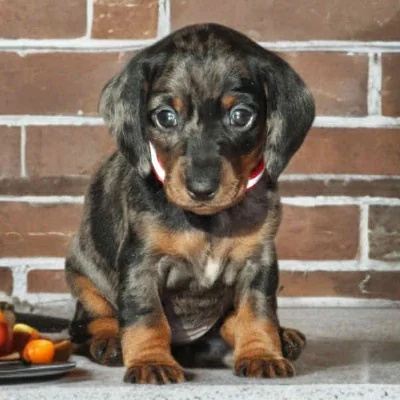
Altess By SCBC
BLACK TAN ARLEQUIN
France
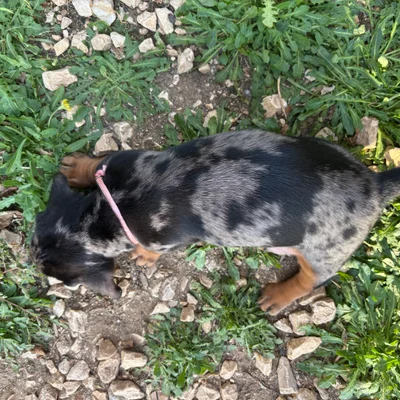
Aïka Aria-Bella Du clos d’Artémys
BLACK TAN ARLEQUIN
France

Blues Cadillac Love
BLACK ARLEQUIN
France
Blues Cadillac Flynn
ISABELLA MERLE TAN
France