
Thème d'affichage
Langue / Language
 Passer en Français
Join the FBKC
Create your free account and access all our services: pedigree requests, ratings, health tracking and more!
100% free & secure
A question about our services? Contact us directly!
Write on WhatsApp
Passer en Français
Create your free account and access all our services: pedigree requests, ratings, health tracking and more!
100% free & secure
Elbow dysplasia is a common condition that primarily affects medium to large dog breeds. It manifests as lameness in one or both forelimbs and can significantly affect the quality of life of affected dogs.
Dysplasia encompasses several distinct abnormalities: ununited anconeal process, fragmented medial coronoid process, osteochondrosis of the humeral trochlea and joint incongruence.
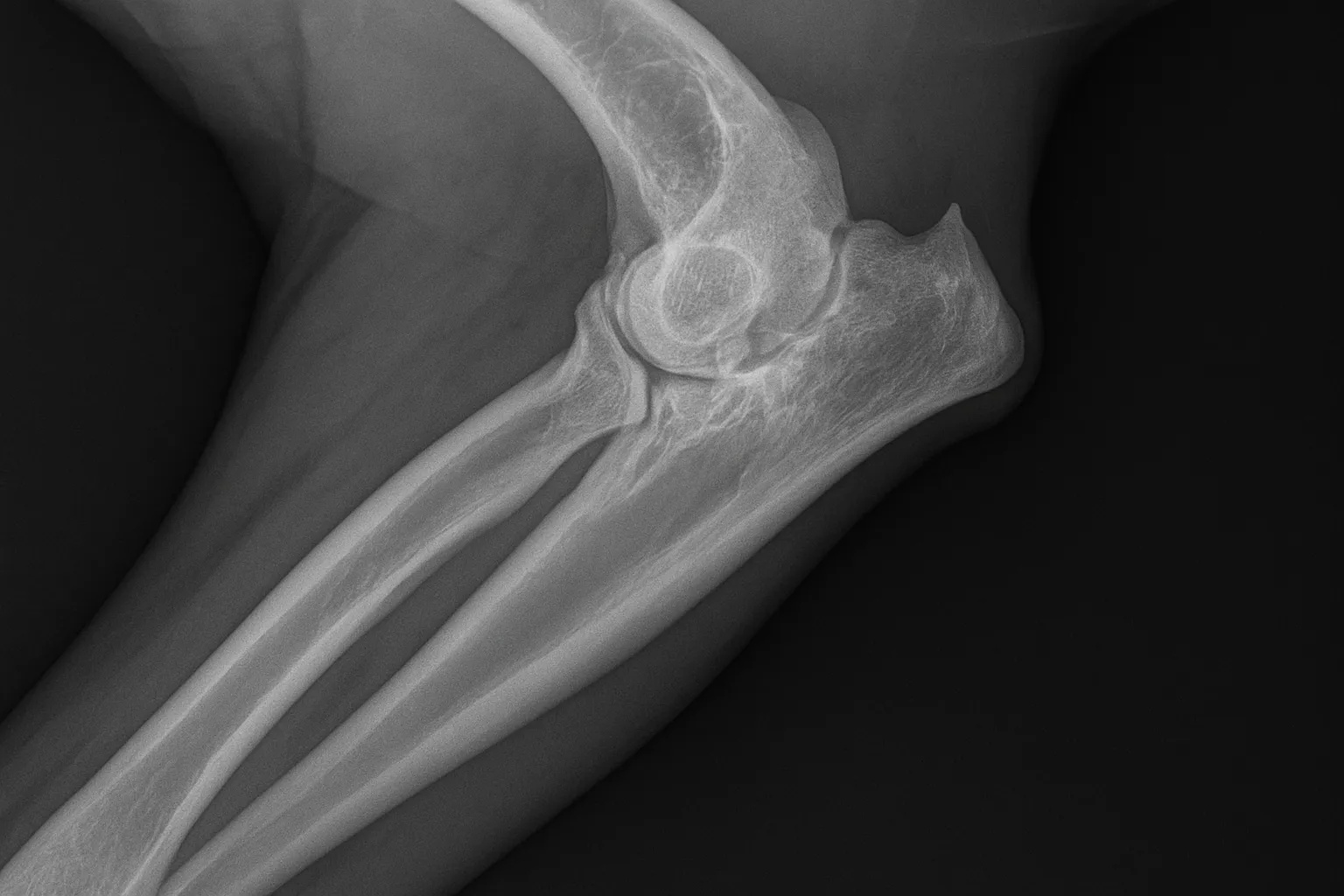
Lateral radiograph of an elbow affected by dysplasia
The causes of elbow dysplasia are primarily genetic. Certain bloodlines show a higher predisposition. However, environmental factors also contribute to the development of this condition, including:
These causes can lead to osteochondral lesions or a disparity between the growth of the radius and ulna — two bones that must normally be of compatible lengths for harmonious development of the elbow joint.
The symptoms of elbow dysplasia vary, but the most common are:
The severity of symptoms can vary: some dogs are mildly affected, while others show severe lameness and significant daily discomfort.
Elbow dysplasia is diagnosed by radiography, often performed in cases of lameness or in dogs intended for breeding. A preliminary radiograph can be taken from as early as 4.5 months if dysplasia is suspected.
It is recommended to assess the incidence of dysplasia within bloodlines. Breeding dogs should be selected to avoid passing on this condition. Genetics plays an essential role, but a balanced diet and an appropriate environment are equally important for preventing dysplasia.
Surgical treatment can be performed from a young age to limit the development of arthritis. This procedure aims to correct bone malformations to restore better joint function.
Medical treatment is used to relieve arthritis and associated pain. It includes:
This condition is caused by insufficient ulna growth, which prevents normal fusion of the anconeal process with the olecranon. It leads to instability and the development of arthritis.
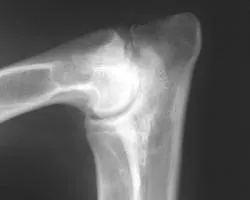
Elbow showing an ununited anconeal process
Resulting from excessive ulna growth, this condition places pressure on the coronoid process, which may fragment, causing pain and arthritis.
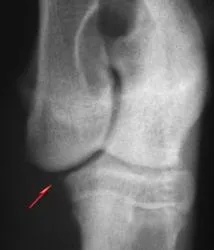
Elbow showing fragmentation of the medial coronoid process
This type of dysplasia is caused by a disturbance in cartilage development, leading to the detachment of cartilaginous fragments and affecting joint movement.
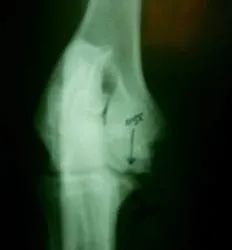
Elbow showing osteochondrosis of the humeral trochlea
Joint incongruence is a poor fit between the joint surfaces, which can cause pain and arthritis. It may be caused by a difference in length between the radius and ulna.
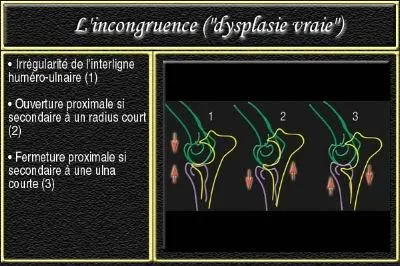
The three types of joint incongruence
Elbow dysplasia is a serious condition that requires particular attention. By selecting healthy breeding dogs and providing an appropriate environment, breeders and owners can help reduce the incidence of this disease and improve the quality of life of affected dogs.
If dysplasia is suspected, it is advisable to consult a vet and consider radiographic examinations for an accurate diagnosis.
Elbow dysplasia is a complex orthopaedic condition that primarily affects medium and large breed dogs. This developmental condition can affect one or both forelimbs, significantly impacting the animal's quality of life.
Genetic predisposition plays a major role in the development of dysplasia, particularly in large breeds. Some breeds are especially affected:
Elbow dysplasia is a complex condition that requires a comprehensive approach, from prevention through to treatment. Early detection and appropriate management can optimise the quality of life of affected dogs. Do not hesitate to consult your vet at the first sign of concern — early diagnosis can make a significant difference to the progression of the disease.