
English Bulldog
Other names: Bulldog, English Bulldog, Bulldog anglais
With its stocky silhouette and expressive gaze, the English Bulldog never goes unnoticed. This compact molossoid breed, standing between 31 and 40 cm at the withers and weighing 22 to 25 kg, embodies quiet strength in a surprisingly endearing package.
Its massive, muscular physique is supported by sh... Read more
Are you a breeder or owner of a English Bulldog?
Create your free account and request your dog's pedigree in just a few clicks. Use our tools to manage your kennel and select your breeding stock in the best conditions.
Are you a breeder or owner of a English Bulldog?
Create your free account, manage your kennel and pedigree requests with our tools.
Create my accountHistory & Origin
T he history of the English Bulldog traces its roots to medieval England in the 13th century, although its origins likely date back even further. During this period, its ancestors were selected for their ferocity and tenacity, destined for the cruel sport of bull-baiting – organized fights between dogs and bulls.
These mastiff-type dogs needed to be compact, powerful, equipped with a formidable jaw, and possessed of unfailing courage.
The year 1835 marked a decisive turning point: the ban on animal fighting in the United Kingdom nearly led to the breed's disappearance. Fortunately, dedicated enthusiasts like Bill George rallied to save it.
A first club dedicated to the Bulldog was established, followed in 1864 by the creation of the first breed standard. This began a remarkable transformation: through rigorous selection, breeders gradually eliminated aggression to develop companion dog qualities.
From 1875 onward, breeding programs intensified and the Bulldog became a British national symbol, embodying determination and resilience.
The Kennel Club officially recognized the breed as early as 1873, making it one of the first registered breeds. Unfortunately, extreme selection over time led to concerning health issues: oversized heads, respiratory difficulties, and cesarean section rates exceeding 80%.
In response to these problems, the British Kennel Club imposed a new standard prioritizing health and animal welfare in 2009.
Since October 2010, the Fédération Cynologique Internationale (FCI) has maintained this modernized standard, placing the Bulldog in Group 2 for mastiff-type breeds.
We offer you the opportunity to register your English Bulldog with our club, a modern alternative providing greater freedom for breeders and efficient management tools. All coat colors are accepted
Description
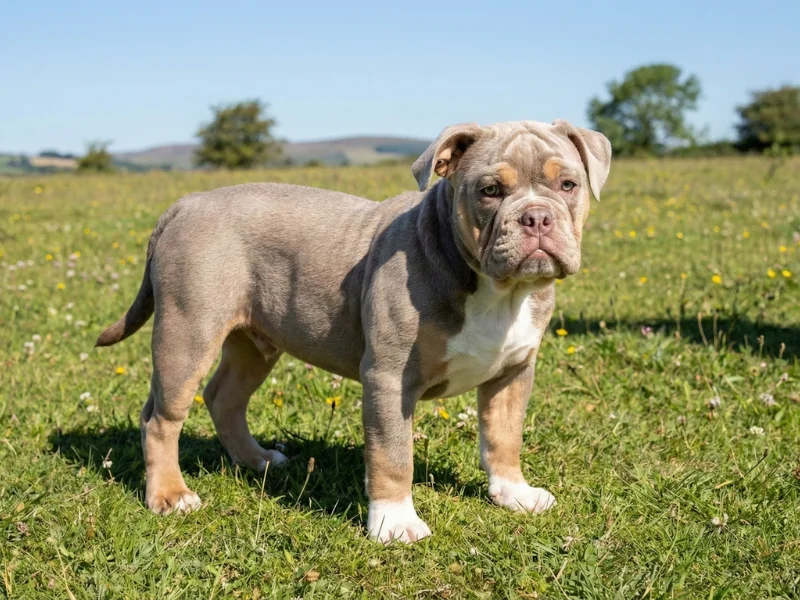
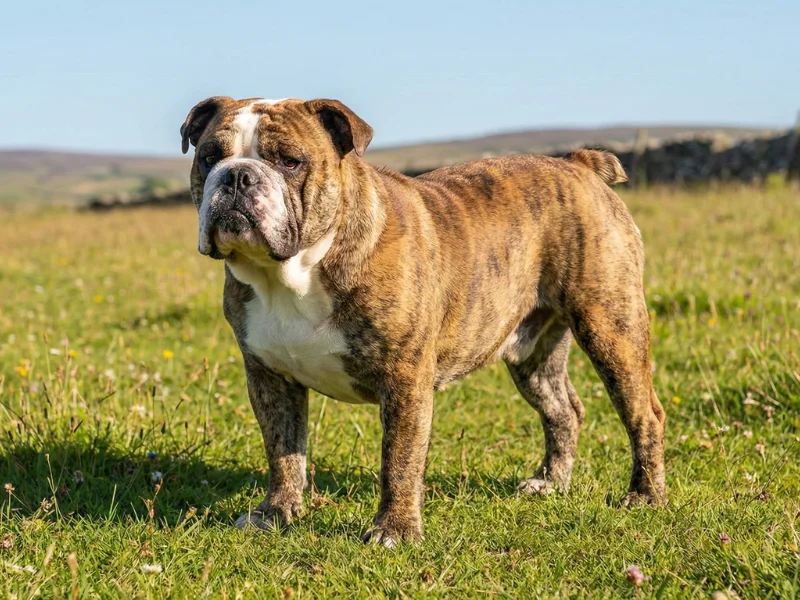
W ith its stocky silhouette and expressive gaze, the English Bulldog never goes unnoticed. This compact molossoid breed, standing between 31 and 40 cm at the withers and weighing 22 to 25 kg, embodies quiet strength in a surprisingly endearing package.
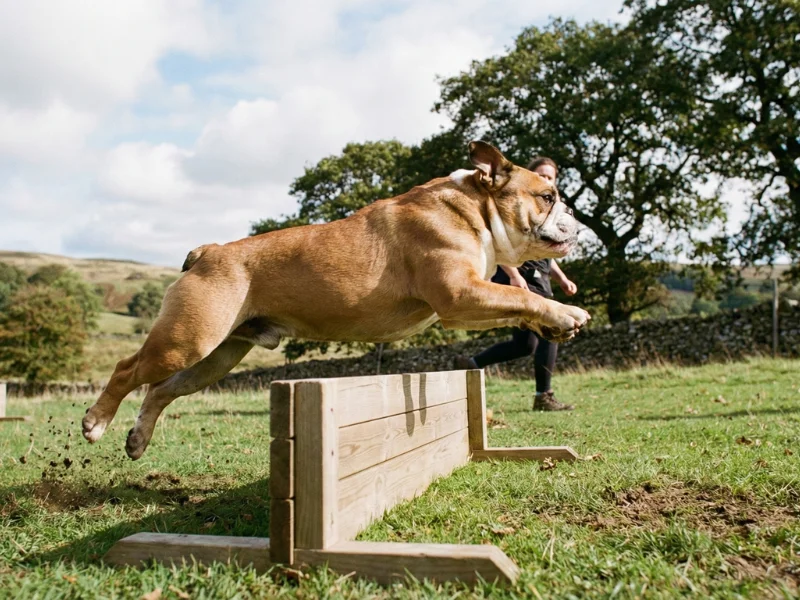
Its massive, muscular physique is supported by short but sturdy legs, capable of quick movements despite appearances.
The imposing, square head is its visual hallmark: broad, covered with expressive wrinkles, it features a short, turned-up muzzle that gives this breed its famous scowling expression.
The round, very dark, wide-set eyes, however, convey an unexpected gentleness. Its small rose-shaped ears, set high on the skull, harmoniously complete this unique portrait.
The short, sleek coat comes in several colors: fawn, red, white, brindle, or pied, often enhanced by a black mask. Its naturally short tail, sometimes corkscrew-shaped, never extends above the topline. The broad, deep chest speaks to the breed's historic power.
Behind this tough exterior lies a remarkably gentle temperament. Affectionate to the point of devotion, this apartment-friendly molossoid constantly seeks closeness with its family.
Its natural calm and legendary patience with children make it a well-balanced companion, as loyal as it is protective. Stubborn yet tender, this breed prefers to think before acting – a characteristic that adds to its unmistakable British charm.
Personality
T he English Bulldog is a bundle of gentleness and affection, despite his sullen appearance that might suggest otherwise.
This loyal companion develops a deep attachment to his family, often following his favorite human from room to room. His legendary patience with children is remarkable, tolerating their play with exceptional grace.
Behind his British stoicism lies a sensitive nature that keenly perceives his owners' emotions. Protective without aggression, he remains wary of strangers while staying sociable.
His stubborn streak reflects more of a tendency to think before acting than true obstinacy. This mastiff-type breed despises solitude and may develop anxiety if left alone for extended periods.
His calm nature and moderate exercise requirements make him the perfect indoor companion for families or seniors.
Photo Gallery



Breed Characteristics
General Information
- Category: Approval
- Origin: United Kingdom
- FCI Recognition: Yes (Group 2)
- Est. monthly upkeep: 80-120
- Daily exercise: 30 minutes
Key Facts
- Height: 31.00 to 40.00 cm
- Weight: 22.00 to 25.00 kg
- Life expectancy: 8 to 10 years
- Average price: 1500.00 to 2500.00 €
-
Grooming frequency:5/10
Training Tips
Training begins as soon as the puppy arrives home, around 8 weeks of age. A firm yet gentle approach works better than harshness given this breed's sensitive temperament. Early socialization is essential. Teaching "no" and housetraining are the initial priorities. Short, engaging sessions maintain motivation despite the breed's occasional stubborn streak.
Health & Common Conditions
General Health
The English Bulldog possesses a robust constitution but requires particular vigilance due to its brachycephalic morphology. This anatomical characteristic makes it sensitive to high temperatures and necessitates increased monitoring during summer months. Walks should be adjusted to prevent overheating.
With a life expectancy of 8 to 10 years, this companion enjoys good longevity when provided with a balanced diet and regular veterinary care.
Its tendency toward weight gain requires strict portion control and moderate but regular physical activity. Biannual preventive examinations allow for early detection of potential health issues.
Maintaining an ideal weight throughout its life contributes significantly to preserving its mobility and joint comfort.
Common Conditions
The English Bulldog may present certain genetic predispositions that require monitoring. Brachycephalic syndrome manifests through breathing difficulties, snoring, and intolerance to strenuous exercise – regular veterinary examinations help assess severity and adapt lifestyle accordingly.
Hip and elbow dysplasia affects this breed, causing pain and reduced mobility. Early radiographic screening helps anticipate the need for dietary supplements or treatments.
Patellar luxation is identified by occasional lameness. Cardiac conditions such as pulmonic stenosis require cardiological monitoring.
Skin infections within the facial folds remain common but are easily preventable with rigorous daily cleaning. Responsible breeding selection and genetic testing contribute to reducing these risks.
Care & Living Environment
Daily Care
Grooming the English Bulldog remains relatively undemanding despite a few specific care requirements. A weekly brushing with a soft brush or rubber grooming mitt is sufficient to remove dead hair and maintain the shine of the short coat. During shedding periods, this frequency may be doubled.
The daily cleaning of facial wrinkles is the most important task: use a soft wipe or damp cloth, then dry thoroughly to prevent infections and unpleasant odors. The ears and eyes also require regular attention using saline solution.
A bath every 2 to 3 months with a pH-neutral shampoo protects the sensitive skin. Nails should be trimmed approximately every 2 months if natural wear is insufficient. Dental brushing two to three times per week prevents the oral health issues common in this breed.
Recommended Living Environment
The English Bulldog thrives perfectly in an apartment thanks to his natural calmness and low space requirements.
An air-conditioned environment during the summer suits him ideally. Access to an outdoor space remains a plus without being indispensable.
He adapts equally well to urban or rural life, as long as he stays close to his family.
The English Bulldog thrives perfectly in an apartment setting thanks to its naturally calm disposition and minimal space requirements. An air-conditioned environment during summer months is ideal for this breed.
Access to an outdoor area is a bonus but not essential. It adapts equally well to urban and rural living, provided it remains close to its family.
Recommended Activities
Avoid swimming as his conformation makes him a poor swimmer. Gentle social interactions remain his favorite activities.
Frequently Asked Questions
The English Bulldog excels as a family dog thanks to its affectionate and calm temperament. Its legendary patience with children and protective nature make it an ideal companion for households with young ones. It develops deep bonds with its owners and does not tolerate solitude well. This gentle mastiff-type breed prefers the company of its family to lengthy athletic outings and adapts perfectly to family life.
The English Bulldog has a brachycephalic morphology that causes respiratory difficulties and sensitivity to high temperatures. He is also predisposed to hip dysplasia, cardiac problems, and skin infections within the folds. Regular veterinary monitoring and daily hygiene of the facial folds help prevent many issues. His life expectancy ranges between 8 and 10 years.
Grooming the English Bulldog remains simple with weekly brushing to remove dead hair. The major point of attention concerns daily cleaning of the facial folds with a soft wipe followed by thorough drying. The ears, eyes, and teeth also require regular care. A bath every 2 to 3 months with a mild shampoo and nail trimming every two weeks complete the grooming routine for this mastiff-type breed.
The English Bulldog thrives perfectly in an apartment thanks to his calm temperament and low space requirements. His short legs and moderate activity level make him an ideal urban dog who is content with daily walks of 30 to 45 minutes. His quiet nature delights neighbors. He appreciates an air-conditioned environment during summer due to his sensitivity to high temperatures and natural breathing difficulties.
The price of a registered English Bulldog puppy ranges from 1,500 to 2,500 euros depending on lineage, sex, and the breeder's reputation. This cost reflects the high breeding expenses, particularly the frequent cesarean sections required in this breed. In addition to the purchase price, expect monthly expenses of 80 to 120 euros covering quality nutrition, preventive veterinary care, and breed-specific maintenance. Pet health insurance is highly recommended for this breed.
Expert Rating
Overall rating for the English Bulldog
This overall rating is calculated from 7 key criteria: activity level, trainability, guarding ability, child and animal friendliness, grooming frequency and barking level.
Activity level
Trainability
Sociability
Guarding ability
Latest registered English Bulldog
Dogs of this breed recently added to the FBKC registry

Barth De La Butte de Goliath
FAWN AND WHITE
France

Barney De La Butte de Goliath
FAWN MERLE
France

Bertha De La Butte de Goliath
WHITE AND MERLE
France

Brooklyn De La Butte de Goliath
FAWN MERLE
France
Breeds from the Same Group
Discover other dog breeds from the same group