
Chihuahua
Other names: Chihuahueño, Chi, Chichi
The world's smallest dog fits in the palm of a hand, yet what a personality! The Chihuahua proudly displays its miniature frame of 15 to 25 cm at the withers with a featherweight of 1 to 3 kg, with some individuals weighing even less than one kilogram. Its compact and well-proportioned body conveys an impre... Read more
Are you a breeder or owner of a Chihuahua?
Create your free account and request your dog's pedigree in just a few clicks. Use our tools to manage your kennel and select your breeding stock in the best conditions.
Are you a breeder or owner of a Chihuahua?
Create your free account, manage your kennel and pedigree requests with our tools.
Create my accountHistory & Origin
T he history of the Chihuahua traces its roots back to the pre-Columbian civilizations of Mexico, over 1,000 years ago. Its ancestor, the Techichi, lived alongside the Toltecs who domesticated it and made it a revered spiritual companion. These small dogs, then larger and heavier than today, were considered guides of souls to the afterlife.
In the 12th century, when the Aztecs succeeded the Toltecs, they continued this reverence while refining the breed to make it smaller and lighter. The Techichis accompanied their masters in death, sacrificed during funeral ceremonies to guide the deceased into the underworld.
Archaeological excavations have revealed pottery, sculptures, and figurines dating from the Mayan era depicting dogs similar to today's Chihuahua.
A mystery remains, however: a painting by Sandro Botticelli created in 1482, ten years before Christopher Columbus arrived in America, depicts a dog strikingly resembling the Chihuahua. Some experts suggest a possible older Chinese origin, with these small dogs having crossed the Bering Strait with nomadic tribes.
In the mid-19th century, American tourists discovered numerous specimens in the Mexican state of Chihuahua, from which the breed takes its name.
Border merchants sold these small dogs, which quickly won over the United States and then Europe by the late 19th century. The American Kennel Club recognized the breed in 1904, followed by the Fédération Cynologique Internationale in 1959.
The Club du Chihuahua, du Coton de Tuléar et des Exotiques was established in France in 1953. Today, the Chihuahua ranks among the most popular breeds in the world, a celebrity favorite and the quintessential urban companion dog.
Register your Chihuahua with or without pedigree with our club! A modern alternative offering breeders more freedom and innovative kennel management features.
Description
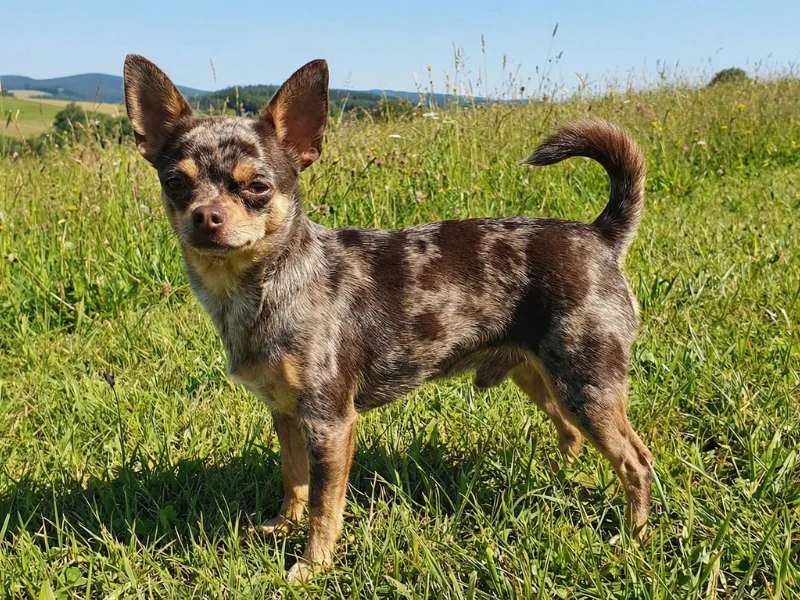
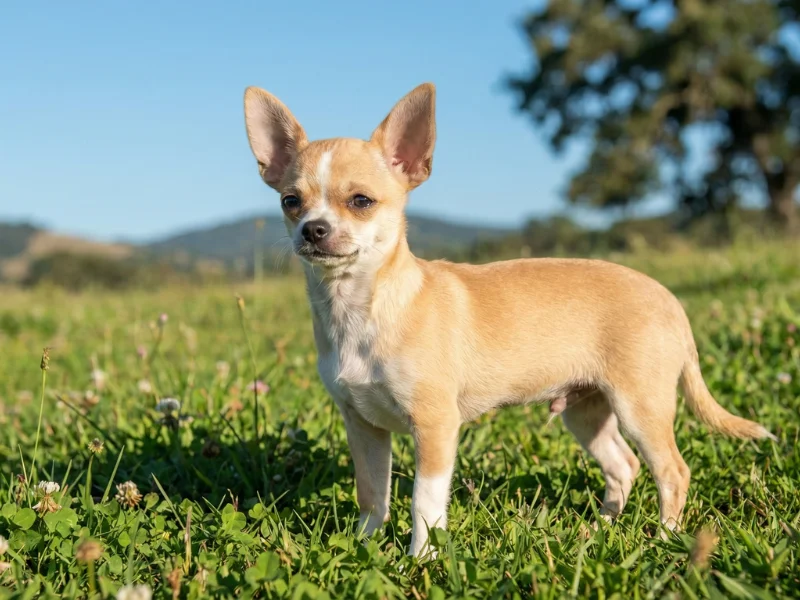
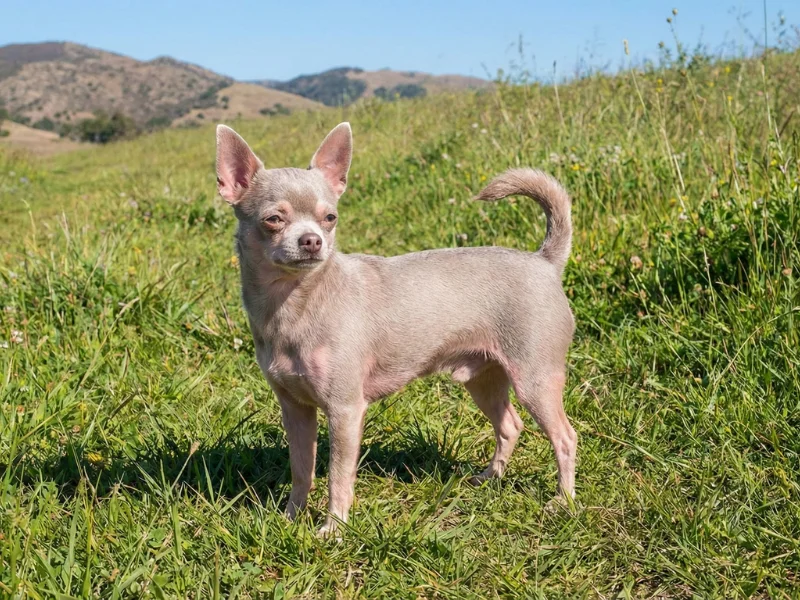
T he world's smallest dog fits in the palm of a hand, yet what a personality! The Chihuahua proudly displays its miniature frame of 15 to 25 cm at the withers with a featherweight of 1 to 3 kg, with some individuals weighing even less than one kilogram. Its compact and well-proportioned body conveys an impression of sturdiness despite its delicate appearance.
Its round, apple-shaped head constitutes its most recognizable visual signature. The domed skull surmounts a short muzzle and round, large, expressive eyes, generally dark in color, that shine with intelligence.
Two large erect ears, set wide apart, point upward above the skull, tapering toward the tips. Its broad, well-let-down chest contrasts with its compact body. The moderately long tail, set high, is thicker at the base and tapers toward the tip.
The Chihuahua's coat comes in two distinct varieties: smooth coat, which is short, glossy, and soft to the touch, or long coat, which is fine, silky, either flat or slightly wavy.
All colors and shades imaginable adorn this breed, from deep black to chocolate, cream, white, and fawn, with bicolor or tricolor combinations. Only the merle color remains excluded from the official standard.
Regarding temperament, this small bundle of energy possesses a bold character that defies its size. Alert, courageous, and brimming with vitality, it displays a deep and often exclusive attachment to its owner.
Affectionate and cuddly with its family, it proves wary and even aggressive toward strangers. Its outsized ego drives it to challenge dogs much larger than itself, never allowing itself to be intimidated. Remarkable intelligence and natural vigilance make it an excellent watchdog.
Personality
T he Chihuahua overflows with affection and loyalty toward its owner, often developing an exclusive and deeply bonded attachment to a single family member.
This small companion possesses an outsized ego that defies its miniature size. Brave to the point of fearlessness, it does not hesitate to challenge much larger dogs with deterrent barking.
Lively, dynamic, and full of energy, it loves moments of tenderness in the arms of its favorite human. Its natural suspicion toward strangers makes it an excellent alarm dog that signals the slightest suspicious approach. Intelligent but sometimes stubborn, it can prove difficult to train if clear boundaries are not set from the moment it arrives.
Its assertive temperament requires consistency and benevolent firmness. Contrary to popular belief, this little active daredevil overflows with vitality and does not spend its days sleeping. The Chihuahua overflows with affection and loyalty toward its owner, often developing an exclusive and deeply bonded attachment to a single family member.
This small companion possesses an outsized ego that defies its miniature stature. Bold to the point of fearlessness, it does not hesitate to challenge much larger dogs with deterrent barking.
Alert, spirited, and full of energy, it loves moments of tenderness in the arms of its favorite human. Its natural wariness of strangers makes it an excellent watchdog that alerts to any suspicious approach.
Intelligent yet sometimes stubborn, it can prove challenging to train if clear boundaries are not established from the start.
Its assertive temperament requires consistency and gentle firmness. Contrary to popular belief, this little active daredevil brims with vitality and does not spend its days sleeping.
Photo Gallery


Breed Characteristics
General Information
- Category: Approval
- Origin: Mexico
- FCI Recognition: Yes (Group 9)
- Est. monthly upkeep: 30-50
- Daily exercise: 30 minutes
Key Facts
- Height: 15.00 to 25.00 cm
- Weight: 1.00 to 3.00 kg
- Life expectancy: 14 to 20 years
- Average price: 800.00 to 2500.00 €
-
Grooming frequency:4/10
Training Tips
Training begins as soon as the puppy arrives at around 8 weeks of age. This little stubborn character responds well to positive reinforcement with treats and praise. His intelligence facilitates learning, but his determination requires firm yet gentle handling and consistency. Early socialization with various people, children, and animals tempers his natural wariness and reduces excessive barking. Absolutely avoid overprotection, which reinforces his bossy and possessive tendencies.
Health & Common Conditions
General Health
Despite his fragile appearance, the Chihuahua possesses a surprisingly robust constitution and enjoys exceptional longevity that can reach 20 years, with an average of 14 to 18 years. This remarkable life expectancy reflects his natural vitality. Naturally clean and odorless, he requires minimal daily grooming care.
His small size, however, makes him sensitive to cold and extreme temperatures, requiring protective clothing in winter. Young puppies may experience hypoglycemia during times of stress or prolonged fasting, requiring regular feeding during their first months.
Regular veterinary visits allow for early detection of potential health conditions. Selecting a responsible breeder who tests breeding stock for hereditary diseases significantly minimizes future health risks.
Common Conditions
Patellar luxation is among the common orthopedic conditions, causing lameness and a skipping gait. Dental problems particularly affect this breed due to the small jaw, requiring regular brushing to prevent early tooth loss and malocclusion. Mitral valve disease may develop with age.
Hydrocephalus, an accumulation of fluid in the brain, affects some individuals. Portosystemic liver shunt occasionally occurs in the breed. Whelping often proves difficult for females due to their small size, frequently requiring cesarean section.
The prominent eyes require monitoring for injuries. Fortunately, attentive veterinary care and selecting responsible breeders significantly reduce the incidence of these conditions.
Care & Living Environment
Daily Care
Grooming for the Chihuahua varies according to the coat variety. The smooth coat variety requires only a simple weekly brushing with a soft brush or rubber grooming mitt, taking just a few minutes. The long coat variety requires brushing two to three times per week to prevent mats and tangles in the silky coat.
Seasonal shedding in spring and fall slightly increases hair loss. Baths should remain occasional using a mild, pH-neutral shampoo, as this breed is naturally clean. Regular dental care is of particular importance to prevent tartar buildup and dental problems.
The erect ears require weekly inspection. The eyes benefit from gentle cleaning with saline solution. Nail trimming should be performed monthly if natural wear is insufficient. In cold weather, a small sweater or coat protects this cold-sensitive breed during winter outings.
Recommended Living Environment
The Chihuahua thrives perfectly in an urban apartment thanks to its miniature size. It distinctly prefers indoor living with heating and cannot live outdoors where it tolerates neither cold nor extreme temperatures.
Despite its small size, it requires daily outings to expend its boundless energy. It enjoys green spaces for relaxation and play sessions.
Recommended Activities
Canine brain games maintain his mental sharpness. Avoid jogging and pulling sports that are unsuitable for his delicate build. Favor gentle activities that respect his small stature.
Frequently Asked Questions
The Chihuahua frequently trembles due to its small size and fast metabolism. Its tiny body loses heat rapidly, particularly when temperatures drop. This shivering constitutes a natural response to generate body heat and maintain stable temperature. Other factors trigger these tremors: intense excitement, stress, fear, or simply seeking attention from its owner. A properly fitted sweater in winter effectively addresses this thermoregulation issue.
The Chihuahua can live with children provided they are calm and respectful. His small size and delicate bone structure make him vulnerable to rough handling and overly physical play. Young children may inadvertently injure him when carrying or playing with him. Teach children to interact gently at ground level rather than picking him up. This small dog with an assertive temperament can become possessive and jealous without appropriate early socialization with the entire family.
The Chihuahua possesses an exceptional longevity among canine breeds, living an average of 14 to 18 years. Some particularly robust specimens even reach 20 years with appropriate care and high-quality nutrition. This remarkable life expectancy significantly exceeds that of large-sized dogs. Several factors contribute to this longevity: regular veterinary follow-ups, a balanced diet, adapted daily exercise, and the prevention of dental issues. A healthy lifestyle maximizes the chances of enjoying this small companion for many years.
Yes, the Chihuahua has a strong tendency to bark for various reasons: territorial vigilance, wariness of strangers, excitement, or simply to seek attention. Its high-pitched barking often compensates for its small size when facing situations it perceives as threatening, even with much larger dogs. This characteristic makes it an excellent alert dog that signals any unusual approach. Early and consistent training combined with proper socialization significantly reduces nuisance barking and channels this natural behavior appropriately.
The adult Chihuahua officially weighs between 1 and 3 kg according to the FCI standard, making it the smallest dog breed in the world. Some exceptionally small individuals weigh even less than one kilogram, although these extreme sizes present greater fragility and health risks. The ideal weight varies according to individual conformation, genetics, and the sex of the dog. Males tend to be slightly heavier than females. Maintain a stable and healthy weight to preserve joint and cardiac health throughout its long lifespan.
Expert Rating
Overall rating for the Chihuahua
This overall rating is calculated from 7 key criteria: activity level, trainability, guarding ability, child and animal friendliness, grooming frequency and barking level.
A 10-point bonus is added as this breed is among the most popular!
Activity level
Trainability
Sociability
Guarding ability
Latest registered Chihuahua
Dogs of this breed recently added to the FBKC registry
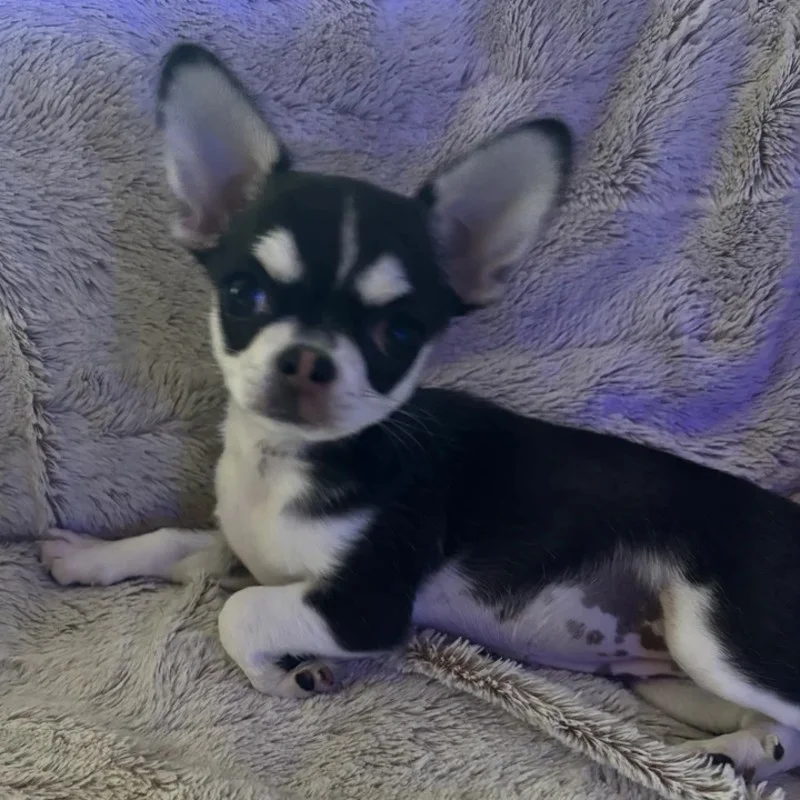
Dollhouse Alaska
BLACK AND WHITE
France
Ebony Taromi World
GRIS ET BLANC
France

Vogue des Pattounes Douces
CHOCOLATE AND WHITE
France
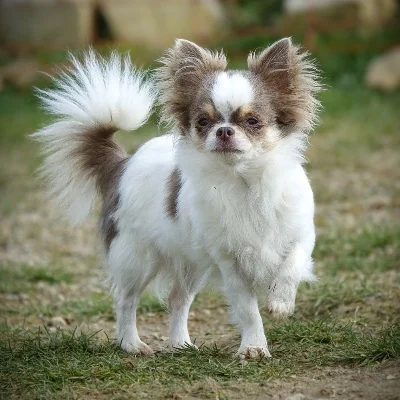
Fleur des Petits Loustics
WHITE AND LILAC TAN
France
Breeds from the Same Group
Discover other dog breeds from the same group