
Australian Shepherd
Other names: Aussie, Australian Shepherd, Berger Australien d'Amérique
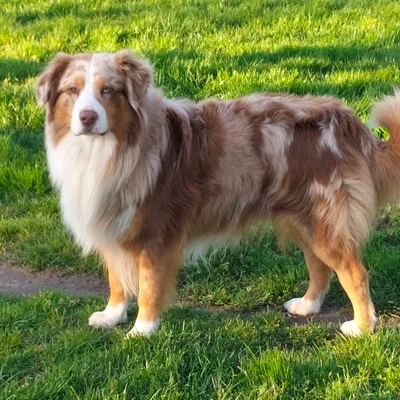
A versatile athlete with a captivating gaze, the Australian Shepherd charms with its harmonious silhouette and dynamic movement. A medium-sized dog, males stand between 51 and 58 centimeters at the withers while females measure 46 to 53 centimeters, with weight ranging from 16 to 32 kilograms. Its body, sli... Read more
Are you a breeder or owner of a Australian Shepherd?
Create your free account and request your dog's pedigree in just a few clicks. Use our tools to manage your kennel and select your breeding stock in the best conditions.
Are you a breeder or owner of a Australian Shepherd?
Create your free account, manage your kennel and pedigree requests with our tools.
Create my accountHistory & Origin
C ontrary to what its name suggests, the Australian Shepherd's true roots lie not on the Australian continent, but in the Basque mountains and the vast American expanses. Its history begins with Basque shepherds who, for centuries, owned herding dogs bearing a striking resemblance to today's Aussies.
In the mid-19th century, during the gold rush and pastoral expansion, these Basque shepherds emigrated to Australia, a major producer of wool and sheep. Their faithful companions were crossed there with local dogs such as Kelpies and Cattle Dogs, thus enriching the genetic heritage. Some historians also mention contributions from German and Swiss herding dogs established in Australia.
Around the 1900s, descendants of these Basque shepherds settled in Australia decided to try their luck in North America, bringing with them their sheep and their prized working dogs.
Farmers and ranchers in the American West, impressed by the exceptional abilities of these dogs arriving with the Australian flocks, began calling them Australian Shepherd Dogs. The name stuck, and the breed developed primarily in the United States.
In 1957, the Australian Shepherd Club of America (ASCA) was founded to promote and preserve the breed. The official standard was drafted in 1975. The breed gained popularity after World War II, gradually transitioning from working dog status to that of a versatile family companion.
The Fédération Cynologique Internationale granted provisional recognition to the breed in 1996, followed by full recognition on June 28, 2007, placing it in Group 1 of Sheepdogs and Cattledogs. In France, the breed has experienced tremendous success since the 2000s, becoming the country's most popular dog for several consecutive years.
Register your Australian Shepherd with our club and benefit from a modern alternative offering breeders greater flexibility, along with innovative breeding management tools.
Description
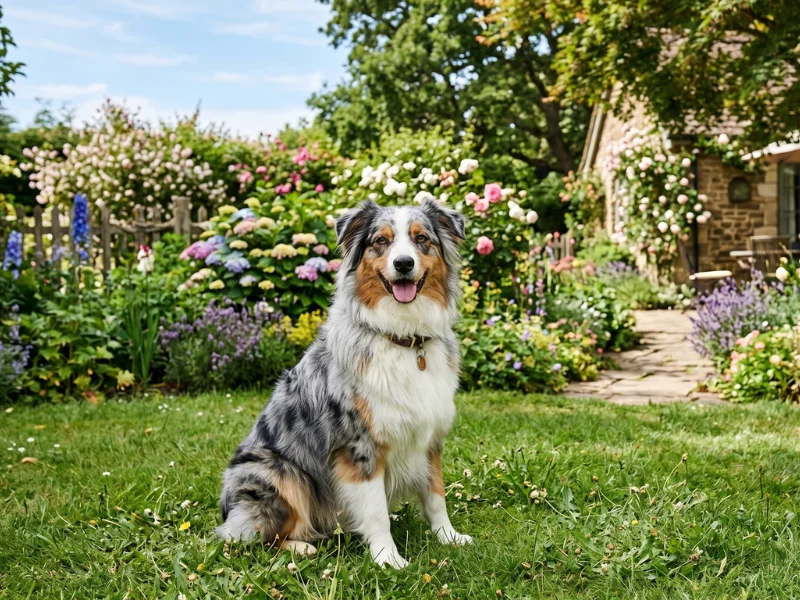
A versatile athlete with a captivating gaze, the Australian Shepherd charms with its harmonious silhouette and dynamic movement. A medium-sized dog, males stand between 51 and 58 centimeters at the withers while females measure 46 to 53 centimeters, with weight ranging from 16 to 32 kilograms. Its body, slightly longer than tall, conveys an impression of athletic soundness without heaviness, built for endurance and agility.
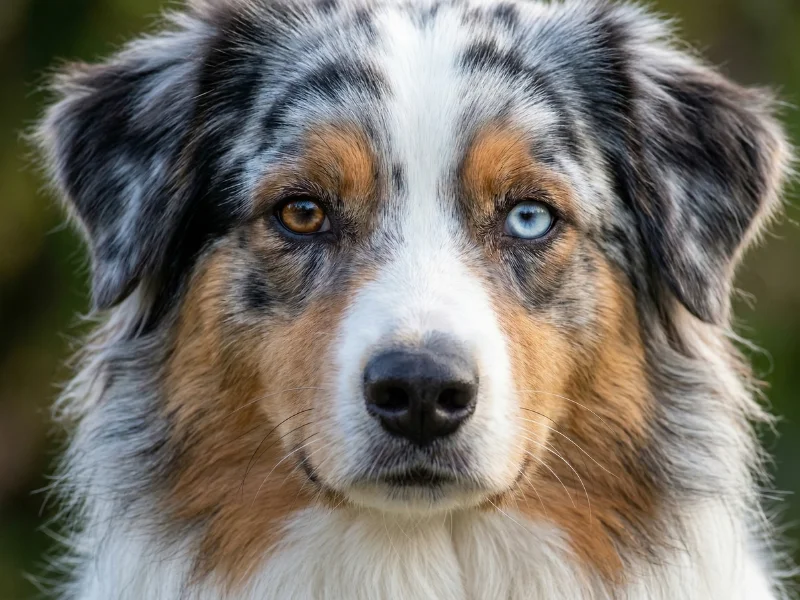
Its coat is one of its most spectacular features: a medium-length coat, straight or slightly wavy, offering a fascinating color palette. Black tricolor, red tricolor, blue merle, and red merle are adorned with white and tan markings that make each individual unique.
Its almond-shaped eyes can display all shades from brown to blue, and may even exhibit striking heterochromia with marbled or odd-colored irises.
Its triangular head with a defined stop carries high-set drop ears that rise slightly when alert. Some specimens are born naturally with a short tail, a characteristic known as natural bobtail. The dense double coat provides remarkable protection from the elements, a legacy from its hardworking ancestors.
Its temperament reveals an exceptional dog: intelligent, energetic, and devoted, displaying unwavering loyalty to its family. Alert and curious, it retains a pronounced herding instinct that shows in its constant desire to gather and organize its surroundings. Its protective nature is expressed with restraint, appearing reserved yet never aggressive toward strangers.
Personality
T he Australian Shepherd possesses remarkable intelligence that ranks it among the most keen-minded breeds. A tireless worker, it displays a constant desire to please its owners and perform meaningful tasks. Its boundless energy is complemented by a well-balanced temperament and unwavering loyalty to its family.
Naturally protective, it is reserved yet never aggressive toward strangers, preferring to observe before extending its trust. Its herding instinct is evident in daily life: it enjoys gathering, organizing, and watching over its surroundings, sometimes gently circling family members.
Affectionate and playful, it forms deep bonds with children, becoming their ideal playmate. Its sensitivity enables it to perceive the emotions of those close to it, adapting its behavior with a touching natural empathy.
Photo Gallery


Breed Characteristics
General Information
- Category: Work
- Origin: USA
- FCI Recognition: Yes (Group 1)
- Est. monthly upkeep: 50-80
- Daily exercise: 120 minutes
Key Facts
- Height: 46.00 to 58.00 cm
- Weight: 16.00 to 32.00 kg
- Life expectancy: 12 to 15 years
- Average price: 800.00 to 1800.00 €
-
Grooming frequency:7/10
Training Tips
Training begins at two months of age using methods based on positive reinforcement and rewards. This intelligent breed learns quickly but picks up bad habits just as fast, requiring consistency and coherence. Early socialization with various people, animals, and environments develops a balanced temperament. Physically and mentally stimulating activities channel its boundless energy and prevent destructive boredom.
Health & Common Conditions
General Health
The Australian Shepherd benefits from a robust constitution and an impressive lifespan that can reach 12 to 15 years when properly cared for. Its double coat provides excellent protection against harsh weather conditions, while its athletic nature gives it remarkable endurance for sustained physical activity.
However, the breed's growing popularity has unfortunately led to certain breeding practices that have increased the risk of genetic predispositions. Rigorous selection of breeding stock and appropriate health testing significantly minimize these risks. Maintaining optimal weight and regular physical activity help preserve the breed's vitality.
Annual veterinary examinations allow for early detection of potential health conditions and ensure this active companion enjoys a long and fulfilling life. A quality diet suited to the dog's activity level also supports overall health.
The Australian Shepherd benefits from a robust constitution and an impressive lifespan that can reach 12 to 15 years when properly cared for. Its double coat provides excellent protection against harsh weather conditions, while its athletic nature gives it remarkable endurance for sustained physical activity.
However, the breed's growing popularity has unfortunately led to certain breeding practices that have increased the risk of genetic predispositions. Rigorous selection of breeding stock and appropriate health testing significantly minimize these risks. Maintaining optimal weight and regular physical activity help preserve the breed's vitality.
Annual veterinary examinations allow for early detection of potential health conditions and ensure this active companion enjoys a long and fulfilling life. A quality diet suited to the dog's activity level also supports overall health.
Common Conditions
The breed has a predisposition to hereditary eye diseases, grouped under the term MOHC. Progressive retinal atrophy, Collie eye anomaly, and juvenile cataracts require annual screenings by a veterinary ophthalmologist. Genetic testing can identify carriers before breeding.
Hip and elbow dysplasia, although less common than in large breeds, warrants screening radiographs. The MDR1 gene mutation, of particular concern, causes certain individuals to be hypersensitive to several common medications. A simple genetic test identifies carrier dogs.
The breeding of two merle dogs, now prohibited since 2018, produced puppies at high risk for deafness, blindness, and excessive white markings. A responsible breeder systematically performs all recommended tests and provides health certificates, thus ensuring the best chances of good health.
Care & Living Environment
Daily Care
The Australian Shepherd requires regular brushing two to three times per week to maintain a healthy coat and prevent mat formation. This frequency increases to daily during the two annual shedding seasons in spring and fall, periods during which hair loss becomes quite substantial.
Bathing should remain occasional, approximately every two months, to preserve the coat's natural protective oils. A firm bristle brush effectively removes dead hair from the dense undercoat. The drop ears require weekly inspection and gentle cleaning to prevent infections.
Nail trimming should be performed as soon as they click on the floor, generally monthly. Dental brushing two to three times per week prevents tartar buildup and periodontal disease.
Contrary to popular belief, clipping the coat is not recommended as it disrupts the natural temperature regulation.
Recommended Living Environment
The Australian Shepherd thrives ideally in a house with a fenced yard offering regular access to the outdoors. Apartment living remains feasible for individuals with a suitable temperament, provided they receive substantial daily outings and their owner is genuinely available. His double coat protects him well from cold but makes him less tolerant of high summer heat.
Recommended Activities
Frequently Asked Questions
The Australian Shepherd can adapt to apartment living provided its daily exercise requirements are met. This breed requires a minimum of two hours of activity per day combining walks, play, and mental stimulation. Without an available and active owner, it may develop destructive behaviors due to boredom. A house with a yard remains ideal for its overall well-being.
The price of an Australian Shepherd puppy ranges from 800 to 1500 euros depending on the lineage, pedigree, and reputation of the breeder. This range reflects the quality of genetic selection and the health testing performed on the parents.
A reputable breeder provides certificates, ensures early socialization, and remains available to support you throughout. The monthly maintenance cost then ranges from 50 to 80 euros.
The Australian Shepherd possesses a double coat that sheds twice a year in spring and autumn. During these periods, hair loss becomes significant and requires daily brushing to keep the home clean and prevent matting. The rest of the year, two to three brushings per week are more than sufficient. Its coat is easy to maintain without requiring regular professional grooming.
The Australian Shepherd requires a minimum of two hours of daily exercise combining physical activities and mental stimulation. Dog sports such as agility, canicross, or disc dog are perfectly suited to its natural abilities. Tracking games, scent work exercises, and long hikes also fulfill its needs. A simple fenced yard is not sufficient without regular interactions and mental challenges.
The Australian Shepherd possesses a remarkable intelligence that facilitates learning when training begins at two months of age. He learns very quickly with positive reinforcement, but will just as readily pick up bad habits without consistency. His sensitivity requires gentleness and patience, with no place for harsh treatment. Early socialization and stimulating activities channel his energy and develop a well-balanced, obedient companion.
Expert Rating
Overall rating for the Australian Shepherd
This overall rating is calculated from 7 key criteria: activity level, trainability, guarding ability, child and animal friendliness, grooming frequency and barking level.
A 10-point bonus is added as this breed is among the most popular!
Activity level
Trainability
Sociability
Guarding ability
Latest registered Australian Shepherd
Dogs of this breed recently added to the FBKC registry
Symba de la Cité des Animaux
ROUGE MERLE
France

Raven
ROUGE MERLE ET BLANC
France
T'Fiasko
BLEU MERLE TRICOLORE ET BLANC
France
Breeds from the Same Group
Discover other dog breeds from the same group