
Yorkshire Terrier
Other names: Yorkie, York, Yorkshire
Beneath its silky little prince appearance lies a true dog of character, lively and determined: the Yorkshire Terrier is undoubtedly one of the most endearing breeds in the canine world. Compact and elegant, this small-sized dog does not exceed 3.2 kg with a height at the withers between 15... Read more
Are you a breeder or owner of a Yorkshire Terrier?
Create your free account and request your dog's pedigree in just a few clicks. Use our tools to manage your kennel and select your breeding stock in the best conditions.
Are you a breeder or owner of a Yorkshire Terrier?
Create your free account, manage your kennel and pedigree requests with our tools.
Create my accountHistory & Origin
T he history of the Yorkshire Terrier begins during the tumultuous Industrial Revolution of the 19th century, in the heart of the mining and textile regions of northern England.
In the mid-1800s, thousands of Scottish workers migrated to Yorkshire County and the Manchester area, bringing with them their small working terriers.
These dogs, crossed with local breeds such as the Paisley Terrier, Skye Terrier, Dandie Dinmont, and Waterside Terrier, gave rise to a new type: a small, agile dog capable of slipping into rabbit warrens, hunting rats in mines and textile mills, and even hiding in poachers' pockets.
Three foundation dogs, a male named Old Crab and two females including Kitty, are recognized as the ancestors of the breed.
In 1860, at a show in Birmingham, these small dogs competed for the first time under the designation "miniature terriers." It was in 1870 that a journalist from The Field magazine, Angus Sutherland, proposed the name "Yorkshire Terrier," which was officially adopted in 1873 and recognized by The Kennel Club (UK) in 1886.
The official breed standard was subsequently established in 1898, defining weight limits among other characteristics. The Yorkshire Terrier arrived in North America in 1872, and the first specimen was registered with the American Kennel Club in 1878.
The breed quickly gained favor with the aristocracy and upper classes, trading the mines for gilded parlors.
Today recognized by the FCI in Group 3 (Terriers, Section 4), the Yorkshire Terrier is one of the most popular companion dogs in the world, without ever having lost its spirit of a little warrior.
The FBKC recognizes the Yorkshire Terrier: register your dogs online, obtain a four-generation pedigree, and manage your breeding program with our modern tools. A serious alternative, offering breeders greater freedom.
Description
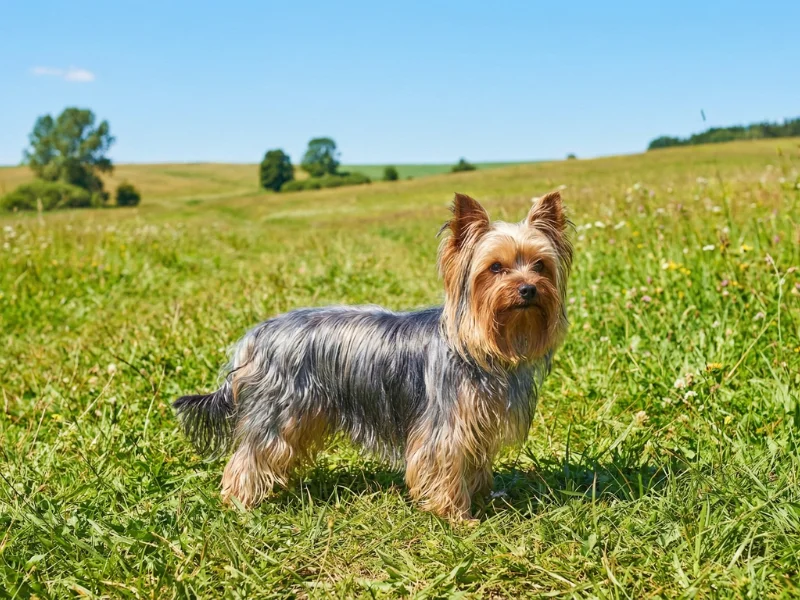
B eneath its silky little prince appearance lies a true dog of character, lively and determined: the Yorkshire Terrier is undoubtedly one of the most endearing breeds in the canine world. Compact and elegant, this small-sized dog does not exceed 3.2 kg with a height at the withers between 15 and 25 cm, yet it projects a presence that would put many larger breeds to shame.
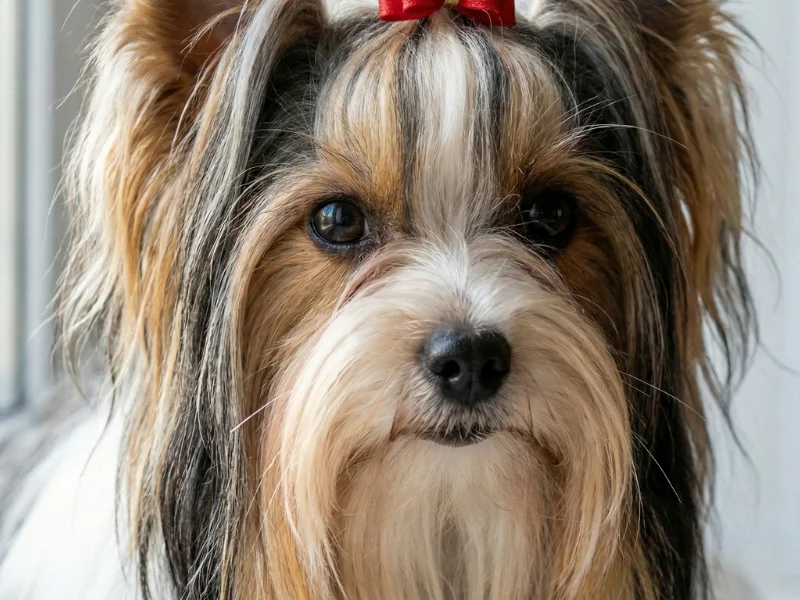
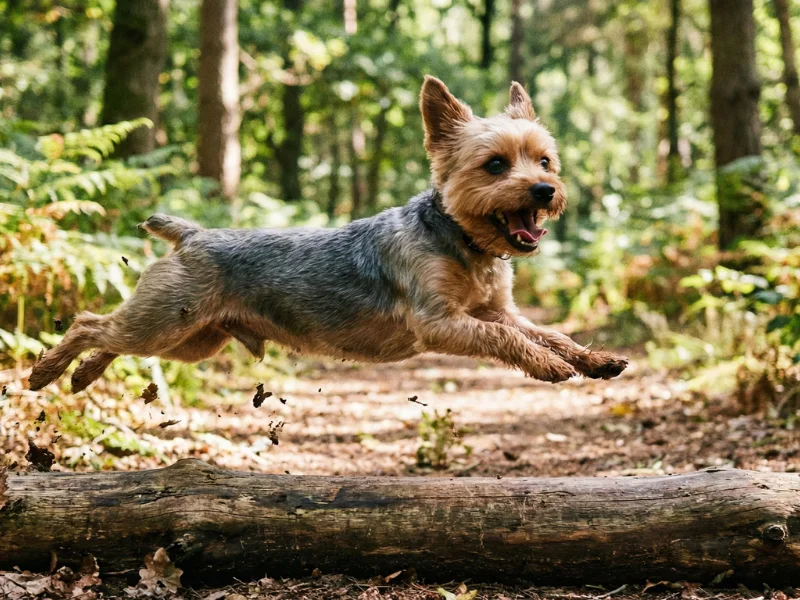
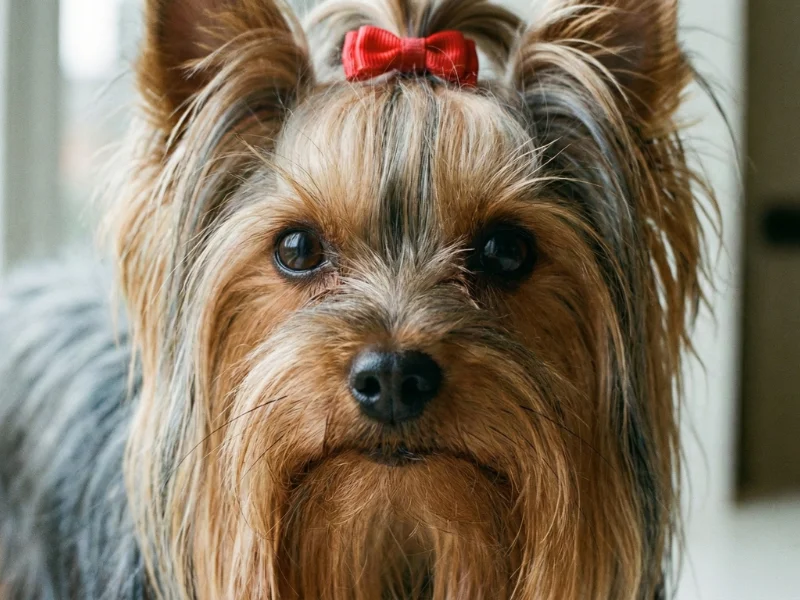
Its most remarkable asset remains its long, straight, and silky coat, parted by a line extending from the muzzle to the tip of the tail. The coat displays a dark steel blue on the body and a rich, bright tan on the head and lower legs.
Puppies are born black, and their colors gradually emerge over the weeks, like a painting coming to life.
Its small head is flat and well-proportioned, with small V-shaped ears carried erect, and dark eyes with bright highlights that reveal a keen intelligence. Its eyelids, slightly rimmed in black, give it an expressive and penetrating gaze, almost theatrical.
In terms of temperament, the Yorkie bridges two worlds: that of the affectionate lap dog who loves to settle on its owner's lap, and that of the courageous terrier, always ready to take on a challenge far greater than itself.
Curious, playful, and deeply loyal, it adapts to apartment living as well as to the outdoors, and wins over every heart in the household with remarkable ease.
Personality
T he Yorkshire Terrier is a small dog with a bold and assertive temperament that captivates everyone who meets him.
Alert, inquisitive, and brimming with energy, he bonds deeply with his family and will happily follow his favorite person from room to room like an affectionate little shadow.
Beneath his lapdog appearance lies a true terrier spirit: courageous, determined, and occasionally a bit stubborn.
He enjoys children, gets along well with other animals when properly socialized, and will not hesitate to sound the alarm at any suspicious presence. A loyal and spirited companion, ideal for attentive families.
Photo Gallery


Breed Characteristics
General Information
- Category: Approval
- Origin: United Kingdom
- FCI Recognition: Yes (Group 3)
- Est. monthly upkeep: 70-100
- Daily exercise: 45 minutes
Key Facts
- Height: 15.00 to 25.00 cm
- Weight: 1.50 to 3.20 kg
- Life expectancy: 12 to 15 years
- Average price: 1000.00 to 2000.00 €
-
Grooming frequency:9/10
Training Tips
Training should begin from the earliest weeks, with short, positive, and consistent sessions. The Yorkie responds well to rewards and encouragement. Early socialization with children, animals, and varied environments is essential to channel his assertive temperament and limit excessive barking.
Health & Common Conditions
General Health
Its small jaws require frequent dental brushing from an early age, as dental problems represent one of its primary vulnerabilities.
Regular veterinary visits, nutrition formulated for small breeds, and joint monitoring help maintain this small companion in excellent condition throughout its lifetime.
Common Conditions
The Yorkshire Terrier has several health predispositions that warrant monitoring. Patellar luxation is common in toy breeds, manifesting as intermittent lameness or a skipping gait.
Tracheal collapse may cause chronic coughing, particularly during exertion. Dental issues (tartar buildup, gingivitis) often develop by four years of age.
Legg-Calvé-Perthes disease, which affects the hip joint, and progressive retinal atrophy round out these health considerations.
Early screening and annual veterinary examinations enable prompt detection of these conditions and effective intervention.
Care & Living Environment
Daily Care
The Yorkshire's silky coat requires daily brushing to prevent tangles and preserve its natural shine. A gentle shampoo every week or two completes the routine. At the groomer, a regular cut every 6 to 8 weeks is recommended depending on the desired length.
Nails should be trimmed every two to three weeks. Tooth brushing should be performed several times a week using a dog-appropriate toothpaste.
Ears warrant weekly inspection to prevent wax buildup or the onset of infection. A rigorous yet rewarding grooming routine that strengthens the bond with this delightful little companion.
Recommended Living Environment
The Yorkshire Terrier adapts perfectly to apartment living, provided he receives daily outings.
He appreciates warm interiors and secure spaces. His small size makes him compatible with all lifestyles, urban as well as rural, as long as time spent alone is limited.
Recommended Activities
Tracking games, hidden object searches, and interactive toys fulfill his need for mental stimulation. Agility adapted for small breeds also provides an excellent activity to channel his energy.
Frequently Asked Questions
The Yorkshire Terrier adapts perfectly to apartment living. Its small size and easily channeled energy make it a discreet and pleasant companion. A few daily outings are sufficient to keep it content. Above all, it appreciates the warmth of home and the closeness of its humans.
The Yorkshire Terrier is a particularly long-lived dog for its category. Its life expectancy ranges between 12 and 15 years. Regular veterinary care, a diet suited to small breeds, and careful dental maintenance contribute greatly to providing a long and fulfilling life.
The Yorkshire Terrier is intelligent and a quick learner, but his terrier temperament sometimes makes him determined to have his own way. Early training based on positive reinforcement and consistency yields excellent results. Short, regular sessions are highly successful in channeling his assertive character.
The silky coat of the Yorkshire Terrier requires daily brushing to remain shiny and tangle-free. A bath every two weeks and a visit to the groomer every six to eight weeks complete the routine. This regular maintenance quickly becomes a bonding moment enjoyed by the dog.
The Yorkshire Terrier may be prone to patellar luxation, tracheal collapse, and dental problems as early as 4 years of age. Progressive retinal atrophy and Legg-Calvé-Perthes disease are also monitored in the breed. An annual veterinary examination helps detect these conditions early and address them effectively.
Expert Rating
Overall rating for the Yorkshire Terrier
This overall rating is calculated from 7 key criteria: activity level, trainability, guarding ability, child and animal friendliness, grooming frequency and barking level.
Activity level
Trainability
Sociability
Guarding ability
Breeds from the Same Group
Discover other dog breeds from the same group