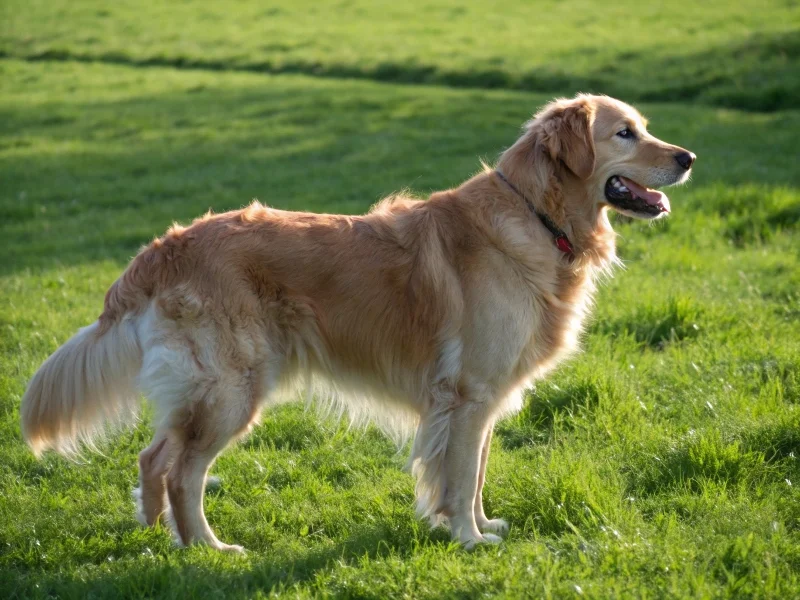


English Cocker Spaniel
Other names: English Cocker Spaniel, Cocker Spaniel Anglais, Cocker
With its long, silky ears nearly brushing the ground and its endearing expression, the English Cocker Spaniel embodies pure charm. This medium-sized dog with a compact, well-proportioned body displays a harmonious silhouette where the length equals the height at the withers.
Its medium-long to long ... Read more
Are you a breeder or owner of a English Cocker Spaniel?
Create your free account and request your dog's pedigree in just a few clicks. Use our tools to manage your kennel and select your breeding stock in the best conditions.
Are you a breeder or owner of a English Cocker Spaniel?
Create your free account, manage your kennel and pedigree requests with our tools.
Create my accountHistory & Origin
T he history of the English Cocker Spaniel has its roots in medieval England, where the first Spanish spaniels were imported over 2,000 years ago, perhaps even by the Roman soldiers of Julius Caesar according to some legends.
As early as the 14th century, writer Geoffrey Chaucer mentioned these "Spanish dogs" in his works, while William Shakespeare described them two centuries later, attesting to their ancestral popularity among British nobility.
In the 18th century, scientist John Caius developed a classification distinguishing Land Spaniels from Water Spaniels. The Cocker then specialized in woodcock hunting, which earned it its name derived from "woodcock," the English term for this bird.
Around 1850, the designation "Cocker Spaniel" became widely used to identify these medium-sized dogs particularly gifted at flushing and retrieving small feathered game. The breed gained consistency through selective breeding that refined its physical and behavioral characteristics.
Official recognition came in 1873 with the establishment of the British Kennel Club, then in 1892 when the English Kennel Club definitively standardized the breed.
Paul Gaillard, a French hunting enthusiast, introduced the English Cocker Spaniel to France at the end of the 19th century, where it met with immediate success.
The French Spaniel Club, founded in 1898 and now the oldest breed club in France, established the official standard in 1901. The Cocker experienced soaring popularity in the 1970s, immortalized by the character Lady in the Disney animated film "Lady and the Tramp."
Unfortunately, this enthusiasm attracted unscrupulous breeders who practiced inbreeding and separated puppies from their mothers too early, creating lines with behavioral problems.
Since then, the market has been cleaned up and the English Cocker Spaniel has regained its original qualities, remaining today one of the most beloved breeds both as a family companion and as a high-performing hunting dog.
Register your English Cocker Spaniels with FBKC to benefit from a modern alternative offering breeders more freedom and innovative kennel management features.
Description
W ith its long, silky ears nearly brushing the ground and its endearing expression, the English Cocker Spaniel embodies pure charm. This medium-sized dog with a compact, well-proportioned body displays a harmonious silhouette where the length equals the height at the withers.
Its medium-long to long coat, with an incomparably silky texture, features elegant feathering on the legs and hindquarters, giving this agile hunter an aristocratic appearance.
The English Cocker Spaniel's coat offers a remarkable palette of colors: solids such as deep black, vibrant red, golden buff, or rich chocolate, as well as bicolors and tricolors combining white with black, orange, liver, or lemon.
Roan coats, with their characteristic ticking, add a distinctive touch to certain individuals. Its slightly domed skull, square muzzle of moderate length, and dark brown almond-shaped eyes give it that gentle, intelligent expression that melts hearts.
The English Cocker Spaniel's temperament joyfully combines the spirit of a hunter with the gentleness of a family companion. Merry without being hyperactive, affectionate without being demanding, it displays remarkable vitality for its size.
Its flushing instinct remains well intact, resulting in an irrepressible need to investigate and explore during outings. Intelligent yet possessing a determined character, this charming rascal requires gentle but firm training from an early age to channel its boundless energy and occasional stubbornness.
Personality
T he English Cocker Spaniel radiates a contagious zest for life that brightens every moment spent in his company. Playful and mischievous, this charming rascal loves joining in games with children, tolerating their antics with remarkable patience.
His boundless affection for his family is expressed through enthusiastic displays of tenderness, making him a companion as devoted as he is endearing.
Behind this apparent gentleness lies a spirited temperament inherited from his hunting ancestors. Intelligent and determined, he can sometimes display stubbornness when an enticing scent engages his flushing instinct.
His legendary love of food makes him particularly responsive to treat rewards during training, but also requires constant vigilance to prevent excess weight.
His outgoing temperament leads him to greet visitors and strangers with enthusiasm, drastically limiting his abilities as a watchdog. His barking generally remains moderate, simply announcing arrivals without excess.
This bundle of energy distinctly prefers company to solitude and does not tolerate prolonged absences well without gradual conditioning. His need to sniff and explore becomes evident during daily outings where every scent warrants thorough investigation.
Photo Gallery




Breed Characteristics
General Information
- Category: Hunting
- Origin: United Kingdom
- FCI Recognition: Yes (Group 8)
- Est. monthly upkeep: 80-100
- Daily exercise: 90 minutes
Key Facts
- Height: 38.00 to 41.00 cm
- Weight: 12.00 to 14.00 kg
- Life expectancy: 12 to 15 years
- Average price: 800.00 to 1500.00 €
-
Grooming frequency:9/10
Training Tips
Training the English Cocker Spaniel begins at 2 months of age with a gentle yet firm approach to channel his assertive temperament and occasional stubbornness. Positive reinforcement based on food rewards, taking advantage of his natural food motivation, yields excellent results. Early socialization with people, children, and other dogs prevents future timidity. Pay particular attention to recall training, as his hunting instinct may cause him to ignore commands when an interesting scent captures his attention.
Health & Common Conditions
General Health
The English Cocker Spaniel benefits from a robust constitution that allows him to fully enjoy his 12 to 15 years of life when provided with appropriate care.
This working breed retains remarkable vitality and considerable endurance, a legacy of generations of tireless hunters traversing the British underbrush.
Obesity prevention remains an absolute priority as this inveterate food lover displays an unfortunate tendency toward excess weight if he lacks daily exercise.
His long, pendulous ears promote the accumulation of moisture and debris, creating conditions conducive to recurrent ear infections. Weekly cleaning with an appropriate ear solution effectively prevents these issues.
Regular veterinary checkups allow for early detection of breed predispositions such as dysplasia or eye problems. Weight monitoring, combined with a balanced diet and two hours of active outings daily, keeps this athlete in
Common Conditions
Hip and elbow dysplasia is among the hereditary conditions affecting certain English Cocker Spaniel lines. This joint malformation causes stiffness, lameness, and abnormal gait in young dogs, potentially progressing to early-onset arthritis.
Responsible breeders perform screening radiographs on their breeding stock to limit genetic transmission.
Progressive retinal atrophy represents a serious concern leading to progressive blindness typically detected in adult dogs. Familial nephropathy, a breed-specific hereditary kidney degeneration, requires mandatory genetic testing of breeding parents.
Recurrent ear infections, a direct consequence of the long, pendulous ears, can be prevented through rigorous weekly maintenance.
Skin problems and food allergies occasionally affect certain individuals, manifesting as itching and redness. Entropion, an inward rolling of the eyelid, sometimes occurs in this breed with its expressive eyes.
Reviewing the parents' health clearances when acquiring a puppy and maintaining preventive veterinary care considerably reduce these risks, allowing the Cocker Spaniel to enjoy a long and happy life.
Care & Living Environment
Daily Care
The silky coat of the English Cocker Spaniel requires daily brushing, particularly after each walk where its elegant feathering inevitably collects leaves, mud, thorns, and twigs.
This routine prevents the formation of painful mats in the long-haired areas such as the legs, ears, and hindquarters. Using an appropriate brush and a metal comb facilitates thorough detangling.
Professional grooming is essential every two to three months, following one fundamental rule: never clip the coat, as this risks producing a curly texture upon regrowth. Only hand-stripping or scissoring preserves the characteristic silky texture.
The ears require weekly cleaning with a specialized solution, thinning of the hair at the leather attachment, and trimming of the inner ear to promote proper air circulation.
Tooth brushing two to three times per week limits tartar buildup, while nails require monthly trimming when they begin clicking on the floor.
The eyes, whose lids tend to droop slightly, benefit from regular gentle cleaning. This considerable grooming commitment, while time-consuming, proves essential for maintaining the health and elegance of this breed with its spectacular coat.
Recommended Living Environment
The English Cocker Spaniel distinctly prefers country living where it can satisfy its instinctive need to explore vast open spaces. Nevertheless, it adapts to urban apartment life provided it receives long daily walks totaling at least two hours.
A house with a fenced yard represents the ideal setting, offering a personal territory for exploration. This hardy dog tolerates inclement weather well thanks to its dense coat, particularly enjoying outings in wooded areas.
Recommended Activities
Retrieving games stimulate his natural talent as a retriever, while tracking exercises make excellent use of his exceptional scenting ability.
Agility and dummy work channel his boundless energy. Swimming sessions delight this water enthusiast, and scent work activities fully satisfy his need to quest.
Frequently Asked Questions
The English Cocker Spaniel differs from its American cousin by its larger size, measuring 38 to 41 cm compared to 36 to 39 cm. Its muzzle is longer and its head less rounded. The English Cocker Spaniel weighs 12 to 14 kg while the American reaches only 10 kg. Its more active temperament and hunting instinct remain well pronounced.
The English Cocker Spaniel sheds moderately throughout the year. Its silky coat requires daily brushing to prevent matting, particularly after walks where its feathering collects debris and plant matter. Professional grooming every two to three months maintains its well-groomed appearance.
The English Cocker Spaniel excels as a family companion thanks to its gentle and affectionate temperament. It loves sharing playtime with children and displays remarkable patience with their antics. Its cheerful nature and playful character make it an ideal partner for active families seeking a sociable and endearing dog.
The English Cocker Spaniel requires between 1.5 to 2 hours of daily exercise to satisfy its boundless energy and hunting instinct. Long walks in nature, ideally in woodland or near water, fulfill its need to explore and flush. Without sufficient activity, this natural athlete is prone to weight gain and behavioral issues stemming from boredom.
The English Cocker Spaniel can develop hip dysplasia, progressive retinal atrophy, or familial nephropathy. Recurrent ear infections are a common concern due to their long, pendulous ears. A responsible breeder performs genetic testing on breeding stock and provides health certificates ensuring sound puppies.
Expert Rating
Overall rating for the English Cocker Spaniel
This overall rating is calculated from 7 key criteria: activity level, trainability, guarding ability, child and animal friendliness, grooming frequency and barking level.
Activity level
Trainability
Sociability
Guarding ability
Latest registered English Cocker Spaniel
Dogs of this breed recently added to the FBKC registry

Pain d'Épices
FAUVE OR
France
Breeds from the Same Group
Discover other dog breeds from the same group