
Golden Retriever
Other names: Golden, Retriever Doré, Yellow Retriever, Golden Flatcoat
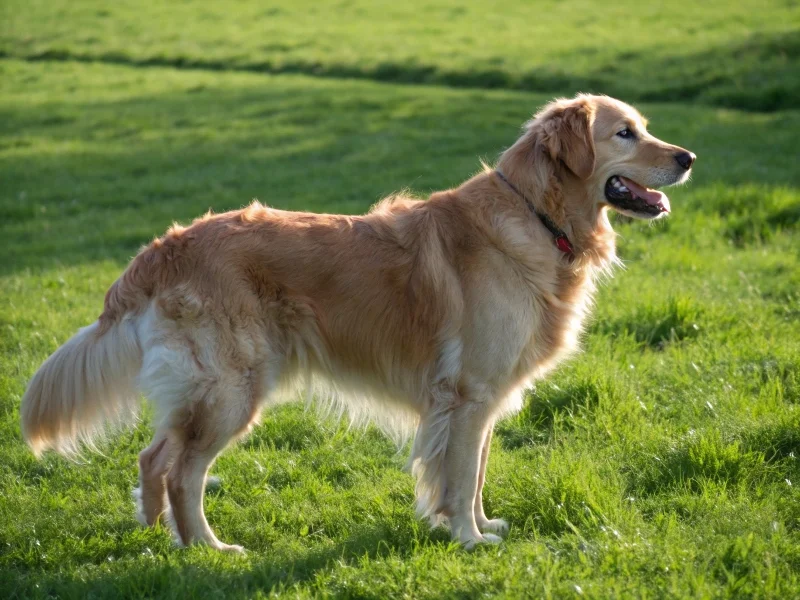
With its golden coat that catches the light like threads of gold in the sun, the Golden Retriever embodies natural elegance and kindness personified. This medium to large-sized dog, weighing between 25 and 34 kilograms, displays a harmonious and powerful silhouette that reveals its sturdiness without heaviness.
Its e... Read more
Are you a breeder or owner of a Golden Retriever?
Create your free account and request your dog's pedigree in just a few clicks. Use our tools to manage your kennel and select your breeding stock in the best conditions.
Are you a breeder or owner of a Golden Retriever?
Create your free account, manage your kennel and pedigree requests with our tools.
Create my accountHistory & Origin
T he history of the Golden Retriever begins in the Scottish Highlands during the 19th century, specifically at Guisachan, the estate of Lord Tweedmouth (Dudley Coutts Marjoribanks).
In 1868, this Scottish nobleman with a passion for dog breeding crossed a yellow Wavy Coated Retriever named "Nous" with Belle, a female Tweed Water Spaniel. This union produced the first Golden Retrievers in history, the result of meticulous selective breeding that would later incorporate Irish Setter and St. John's Dog bloodlines.
Lord Tweedmouth's objective was to create the perfect waterfowl retriever: intelligent, resilient, and capable of recovering game in the most challenging conditions.
For nearly twenty years, he kept meticulous breeding records, refining the breed according to his exacting standards. The first specimens, then called "Yellow Retrievers," appeared at a dog show in London in 1908.
Official recognition came in 1913 when the British Kennel Club granted them their own registry, separate from other Retrievers. The definitive name "Golden Retriever" was adopted in 1920.
In France, Count Jean de Bonvouloir introduced the breed in 1925, although breeding did not truly flourish until after World War II. Since the 1990s, the Golden Retriever has experienced soaring popularity, becoming the second most popular dog among the French with over 14,000 annual registrations, a testament to its undisputed international success.
Join the FBKC to register your Golden Retriever and benefit from a modern approach to the dog fancy. Our club recognizes this magnificent breed and offers breeders innovative breeding management tools, greater autonomy in selecting their breeding stock, and the opportunity to obtain four-generation pedigrees. Take advantage of a flexible alternative to traditional clubs.
Description
W ith its golden coat that catches the light like threads of gold in the sun, the Golden Retriever embodies natural elegance and kindness personified. This medium to large-sized dog, weighing between 25 and 34 kilograms, displays a harmonious and powerful silhouette that reveals its sturdiness without heaviness.
Its expression of gentleness, accentuated by dark, well-set-apart eyes and an endearing gaze, constitutes its visual signature. The broad, cleanly chiseled head features a well-defined stop, while the moderately sized ears, set high and slightly pendant, frame a face of natural beauty.
The body, solidly constructed with a deep chest and well-sprung ribs, reveals an anatomy designed for endurance.
The long coat, accompanied by a dense undercoat, offers a silky texture that ranges from pale cream to dark golden. The bushy tail, carried level as an extension of the back, serves as a rudder during swimming sessions where this dog reveals its full aquatic talent.
This perfect physical combination makes the Golden Retriever an accomplished athlete as well as a companion of irresistible charm.
Personality
T he Golden Retriever embodies gentleness and sociability in the canine world. Its balanced temperament and legendary patience make it an exceptional family companion, particularly valued by families with children. Intelligent and eager to please, this breed is distinguished by its remarkable learning ability and constant enthusiasm.
Its playful nature never truly fades, even in adulthood, creating a joyful atmosphere in daily life. It displays boundless affection toward everyone, strangers included, which limits its abilities as a guard dog. Its need for human companionship is pronounced, tolerating prolonged solitude poorly.
This confident nature and natural optimism brighten every day. Its gentle disposition does not preclude a certain energy that requires channeling through exercise and mental stimulation.
Photo Gallery



Breed Characteristics
General Information
- Category: Hunting
- Origin: United Kingdom
- FCI Recognition: Yes (Group 8)
- Est. monthly upkeep: 80-120
- Daily exercise: 60 minutes
Key Facts
- Height: 51.00 to 61.00 cm
- Weight: 25.00 to 34.00 kg
- Life expectancy: 12 to 14 years
- Average price: 1200.00 to 1800.00 €
-
Grooming frequency:7/10
Training Tips
Training begins at 8 weeks, emphasizing positive reinforcement, a method perfectly suited to this eager-to-please dog. His high intelligence facilitates rapid learning of basic commands. Early socialization with various situations, people, and animals develops a well-balanced adult. Short, engaging sessions maintain his attention and motivation. His sensitivity requires gentleness and patience, avoiding any harshness that would damage his natural trust.
Health & Common Conditions
General Health
The Golden Retriever typically displays a robust constitution, inherited from its history as a hardworking sporting dog.
Its natural vitality allows it to remain active well into its senior years when provided with proper care. Its adaptability to various climates is an asset, although it prefers moderate temperatures.
Annual veterinary examinations help monitor breed-specific health concerns. A balanced diet appropriate to its activity level prevents obesity, a common concern in this food-motivated breed.
Daily exercise maintains optimal physical condition while protecting its joints. Early screening for hip and elbow dysplasia and regular ophthalmologic examinations contribute to its longevity. With attentive care and preventive measures, this breed fully enjoys its 10 to 12 years by your side.
Common Conditions
The Golden Retriever exhibits a predisposition to hip and elbow dysplasia, degenerative joint conditions requiring radiographic screening prior to breeding. Ocular disorders include progressive retinal atrophy and hereditary cataracts, detectable through annual specialized examinations.
The breed also demonstrates increased susceptibility to certain cancers, notably hemangiosarcoma and lymphoma, warranting particular vigilance after 7 years of age.
Recurrent ear infections frequently affect this breed with pendant ears, requiring regular preventive cleaning.
Skin and food allergies may occur, presenting as itching and redness. Fortunately, rigorous veterinary monitoring and selection from health-tested lines considerably improve the overall health prognosis.
Care & Living Environment
Daily Care
The Golden Retriever's dense, water-repellent coat requires regular brushing, ideally three to four times per week, to prevent mat formation and remove dead hair. During seasonal shedding periods in spring and fall, daily brushing becomes necessary to manage the heavy undercoat loss.
The pendant ears require weekly cleaning with an appropriate solution to prevent infections. Brushing the teeth two to three times per week limits tartar buildup. Nails should be trimmed monthly if natural wear is insufficient.
Infrequent baths, every two to three months, preserve the natural protective oils of the skin. Regular inspection of the paw pads after walks protects against injuries and foreign objects.
Recommended Living Environment
A house with a securely fenced yard provides the ideal environment for this active dog, offering the space needed to exercise freely. Apartment living remains feasible for owners committed to providing extended daily outings of at least one hour.
His dense coat protects him from cold weather, but he thrives in moderate temperatures. Access to water for swimming satisfies his innate love of the water. His sociable nature makes him equally adaptable to both urban and rural settings.
Recommended Activities
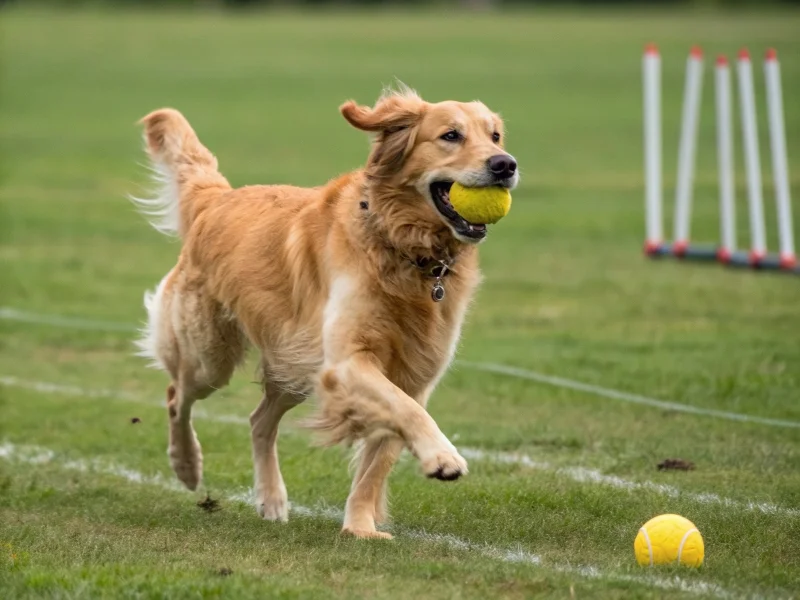
Long walks in nature satisfy his need for exploration. Dog agility positively channels his energy and intelligence. Tracking games stimulate his exceptional scenting ability. Advanced obedience work showcases his remarkable learning capabilities.
Frequently Asked Questions
The Golden Retriever represents a perfect choice for families with children. Its legendary patience and natural gentleness make it a remarkable companion for the youngest family members. It tolerates their sometimes boisterous play with impressive forbearance and displays a benevolent protectiveness. Its stable and predictable temperament reassures parents. Its medium size, however, requires supervision during interactions with toddlers to prevent accidental knockdowns. With early socialization, it develops deep and lasting bonds with every member of the family.
The Golden Retriever has an average life expectancy of 10 to 12 years, similar to other large breeds. This longevity largely depends on the quality of care provided, including proper nutrition and regular exercise. Dogs from lines tested for hereditary diseases generally exhibit better overall health. Maintaining an optimal weight and preventing obesity contribute significantly to extending their healthy years. Annual veterinary examinations allow for early detection of potential health concerns.
Yes, the Golden Retriever experiences moderate to heavy shedding throughout the year, with two particularly intense seasonal coat changes in spring and fall. During these periods, the dense undercoat is completely replaced, requiring daily brushing. The rest of the year, three to four brushings per week are sufficient to manage natural hair loss. This regular grooming routine significantly reduces loose hair in the home. Prospective owners should anticipate this aspect of maintenance before adoption and plan to have appropriate grooming equipment on hand.
A Golden Retriever puppy registered with a kennel club generally ranges between 1200 and 1800 euros depending on several determining factors. Prices vary according to the breeder's reputation, the parents' champion titles, health testing performed, and geographic region. Working or conformation lines also influence the price charged. This initial cost represents only a portion of the overall investment, as monthly maintenance reaches 80 to 120 euros including quality nutrition, preventive veterinary care, and regular activities. Some rescue organizations offer adult Golden Retrievers at lower cost.
The Golden Retriever can adapt to apartment living under certain strict conditions. Its medium size and moderate to high energy level require an owner committed to providing at least one hour of intense daily exercise with frequent outings. Without sufficient physical activity, the breed may develop boredom manifested through undesirable behaviors. Regular access to green spaces for running and playing becomes essential to its overall balance. Its calm demeanor indoors facilitates cohabitation in limited spaces. However, a spacious environment with a yard remains preferable for optimal and natural development.
Expert Rating
Overall rating for the Golden Retriever
This overall rating is calculated from 7 key criteria: activity level, trainability, guarding ability, child and animal friendliness, grooming frequency and barking level.
A 10-point bonus is added as this breed is among the most popular!
Activity level
Trainability
Sociability
Guarding ability
Breeds from the Same Group
Discover other dog breeds from the same group