

Maltese
Other names: Maltese, Malteser, Maltezer, Maltese Terrier
This small companion dog with its immaculate, silky coat immediately captivates the eye with its aristocratic bearing. Standing between 20 and 25 centimeters at the withers with a featherweight of 3 to 4 kilograms, it displays harmonious proportions despite its small size. Its relatively long, level body re... Read more
Are you a breeder or owner of a Maltese?
Create your free account and request your dog's pedigree in just a few clicks. Use our tools to manage your kennel and select your breeding stock in the best conditions.
Are you a breeder or owner of a Maltese?
Create your free account, manage your kennel and pedigree requests with our tools.
Create my accountHistory & Origin
T he history of the Maltese traces its roots back to ancient times, spanning more than two thousand years! This breed ranks among the oldest in the canine world, already mentioned in antiquity by the greatest thinkers.
The Greek philosopher Aristotle referred to the "canes melitenses" in his History of Animals in the 4th century BCE, while Roman mosaics and frescoes already depicted these elegant little white dogs.
Contrary to what its name suggests, the Maltese does not originate directly from the island of Malta. The term "Maltese" likely derives from the Phoenician word "màlat" meaning "refuge" or "harbor," in reference to several Mediterranean cities such as Melita in Sicily.
Its ancestors populated the ports and trading cities of the central Mediterranean basin, where their small size and agility proved invaluable for hunting rats and mice in harbor warehouses and the holds of merchant ships.
These efficient rodent hunters thus performed a valuable service for merchants and sailors of the era.
The breed's beauty and charming temperament quickly won the hearts of ladies of European nobility. During the Renaissance, the Maltese became a prized companion dog in royal courts, frequently appearing in works by masters such as Rubens and Goya.
In the 18th century, the breed was modified through crosses with Poodles and Toy Spaniels to reduce its size. Official recognition came in 1888 by the American Kennel Club, followed in 1955 by the FCI, which classified the breed in Group 9 as a Companion Dog.
Today, this little aristocrat continues to charm families worldwide.
We offer the opportunity to register your Maltese with FBKC, a modern alternative providing greater flexibility for breeders. Obtain a four-generation pedigree using our online tools.
Description
T his small companion dog with its immaculate, silky coat immediately captivates the eye with its aristocratic bearing. Standing between 20 and 25 centimeters at the withers with a featherweight of 3 to 4 kilograms, it displays harmonious proportions despite its small size. Its relatively long, level body rests on sturdy bone structure that contrasts pleasantly with its delicate appearance.
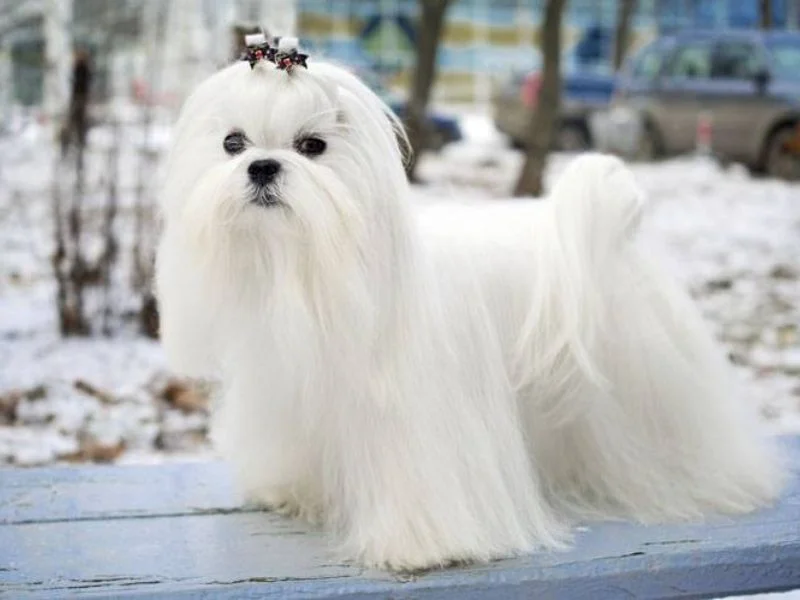
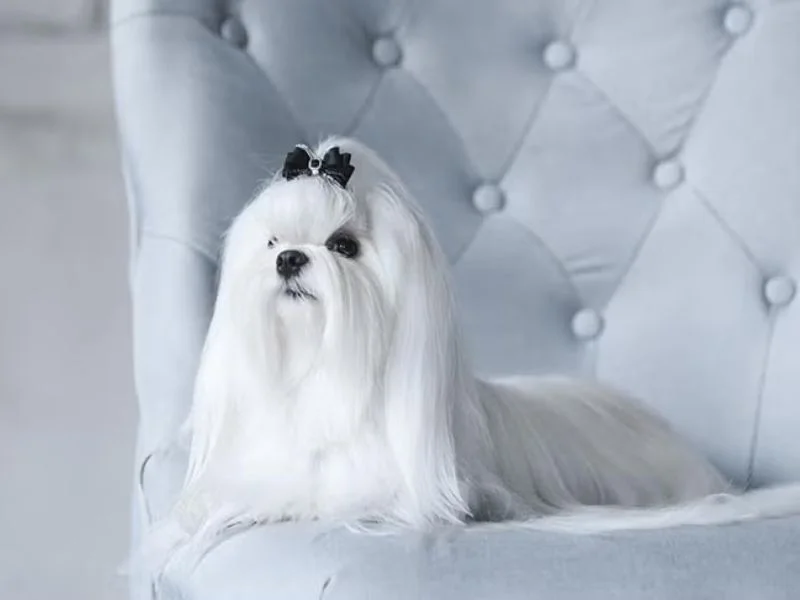
Its long coat, which can reach 20 centimeters in length, falls gracefully to the ground without forming curls or waves. Pure white, sometimes slightly ivory, this luxurious coat gives the Bichon the appearance of a little canine prince.
Its square head with flat skull features large, round, dark eyes sparkling with intelligence and mischief. The striking contrast between its black nose, the pigmented eye rims, and the immaculate whiteness of its coat accentuates its lively and endearing expression.
Its small, triangular drop ears frame its expressive face harmoniously.
The proud head carriage, slightly tilted back, gives it a unique gait reminiscent of a jaunty, rolling trot. Its tail, carried high, curves elegantly over the back, completing this distinguished silhouette.
Beneath this lapdog appearance beats the heart of an affectionate and lively companion: playful, intelligent, and overflowing with tenderness, the Maltese constantly seeks the company of its family.
Its gentle and cheerful temperament, combined with its irrepressible need for cuddles, makes it the quintessential companion dog.
Personality
T he Maltese embodies the very definition of a devoted companion dog. Its affection for its family borders on absolute adoration, constantly seeking the presence of its favorite humans like a tender and endearing shadow.
This little velcro dog loves to cuddle, never hesitating to climb onto laps at the slightest sign of invitation, or even without being asked! Its deep attachment makes solitude particularly difficult, potentially leading to separation anxiety if not accustomed to it from a young age.
Blessed with a keen and curious intelligence, it participates enthusiastically in all family activities. Its playful and cheerful temperament works wonderfully with older children, although supervision remains necessary with toddlers whose sudden movements could frighten it.
Its gentle and jovial nature does not prevent it from displaying a certain character: sometimes sensitive, it will not hesitate to express its displeasure if neglected for too long.
Despite its miniature size, this little courageous watchdog readily sounds the alarm when faced with suspicious noises or unfamiliar visitors. Its alert bark demonstrates its intact protective instinct.
Sociable with other dogs and animals, it particularly enjoys companionship and proves welcoming once proper introductions are made. Its natural liveliness is harmoniously balanced with moments of calm composure indoors.
Photo Gallery


Breed Characteristics
General Information
- Category: Approval
- Origin: Italy
- FCI Recognition: Yes (Group 9)
- Est. monthly upkeep: 60-100
- Daily exercise: 30 minutes
Key Facts
- Height: 20.00 to 25.00 cm
- Weight: 3.00 to 4.00 kg
- Life expectancy: 12 to 15 years
- Average price: 1000.00 to 2000.00 €
-
Grooming frequency:9/10
Training Tips
Begin training as soon as the puppy arrives, around 8 weeks of age, to establish good foundations immediately. This little intelligent prodigy learns quickly thanks to his natural quick-wittedness. Positive training methods based on rewards, encouragement, and play work wonderfully. Treats and affection transform each session into a special moment he eagerly anticipates. Establish clear rules from the start to prevent bad habits: no climbing on furniture without permission, managing barking, and accepting gradual alone time. His sensitivity requires gentleness and constant patience; avoid any harshness. Socialize him early with people, other dogs, and various environments. Gradually accustom him to being alone to prevent separation anxiety. This little showman loves learning fun tricks that stimulate his intelligence!
Health & Common Conditions
General Health
The Maltese displays a robust constitution that allows it to fully enjoy a remarkable longevity, commonly reaching 12 to 15 years. This natural resilience reflects the soundness of this ancient breed, developed over centuries.
Its small size contributes to its longevity, a valued characteristic of toy breeds. Its natural vitality allows it to remain active and playful throughout its life.
Its luxurious coat certainly requires dedicated maintenance, but provides valuable protection against moderate climate variations. However, caution is advised: this indoor dog is particularly sensitive to cold and prolonged humidity.
Its tear ducts may show increased sensitivity, particularly during the teething period, requiring daily eye cleaning to prevent unsightly tear stains.
Regular veterinary visits, ideally annual, help monitor overall condition and detect potential concerns early.
A high-quality balanced diet suited to its small size, rigorous dental hygiene, and weight management effectively prevent many health issues. Vaccination and parasite prevention remain essential for this indoor companion who nonetheless enjoys its daily outings.
Common Conditions
Dental problems rank among the top health concerns in this small dog. The narrowness of its jaw promotes rapid tartar accumulation and tooth crowding, which can lead to gum infections and premature tooth loss.
Regular dental brushing, ideally daily, combined with frequent veterinary checkups significantly reduces these risks. Eye conditions also affect this breed: corneal ulcers, cataracts, infections, and Collie eye anomaly require careful monitoring.
Patellar luxation, common in toy breeds, causes lameness and pain when the kneecap slips out of its normal position. Hip dysplasia, although less common in dogs of this size, can occur and lead to early-onset arthritis.
Epilepsy occasionally affects certain individuals, manifesting as seizures of varying intensity that require appropriate treatment. Weight gain is a concern for this food-motivated breed that particularly enjoys treats.
Fortunately, responsible breeder selection, early health screening, and appropriate preventive care significantly minimize the impact of these conditions. The generous life expectancy of this ancient breed speaks to its overall good health when provided with proper care.
Care & Living Environment
Daily Care
Daily brushing represents the cornerstone of Maltese grooming. Its long, silky coat, a veritable mantle of white silk, tangles quickly without regular care.
Dedicate 10 to 15 minutes each day to gently detangle the coat using an appropriate brush and a wide-toothed metal comb. This routine prevents the formation of unsightly and uncomfortable mats while preserving the brilliant whiteness of the coat.
Monthly baths with a mild shampoo specially formulated for white coats maintain the immaculate luster of the coat. Visits to a professional groomer every two to three months help maintain a hygienic trim, particularly around the eyes, feet, and sanitary areas.
Daily eye cleaning is essential to remove tear secretions and prevent brownish staining beneath the eyes. Use a specific cleansing solution or warm water with a sterile pad.
Dental hygiene requires particular attention: brushing several times weekly, or even daily, with canine toothpaste to combat the tendency toward tartar buildup.
Nails require monthly trimming if they do not wear down naturally during walks. Inspect and clean the ears weekly to prevent infections. Also monitor the perianal area and keep it clean and clear.
Recommended Living Environment
Apartment living suits this indoor dog perfectly, as it does not require a considerable amount of space. Its small size allows it to thrive even in compact urban dwellings, provided it receives its daily outings.
A house with a fenced yard is an appreciated bonus but not essential. It adapts remarkably well to both city and country living, prioritizing above all the cozy comfort of its home.
However, be aware that this cold-sensitive breed does not tolerate winter temperatures or prolonged dampness well.
A protective coat becomes necessary during outings in cold weather. The regular presence of its family matters infinitely more than the size of the home for this companion who detests solitude.
Recommended Activities
His keen intelligence thrives on the mental challenges that playful obedience exercises provide. Training sessions for new tricks ideally stimulate his remarkable cognitive abilities. He excels in activities that strengthen the bond with his owner.
Calm indoor play sessions alternate harmoniously with exploratory outings. Avoid overly intense or prolonged exercise that could tire this small-sized dog. Cuddles on the couch count just as much as physical activity!
Frequently Asked Questions
Daily brushing forms the foundation of Maltese grooming care. The long, silky coat tangles easily without regular attention. Dedicate 10 to 15 minutes each day with an appropriate brush to maintain that brilliant white coat. Add daily eye cleaning to remove tear stains beneath the eyes. Visits to a professional groomer every two to three months will maintain an impeccable sanitary trim.
The Maltese thrives perfectly in an urban apartment thanks to its small size and moderate exercise requirements. Thirty to forty-five minutes of daily outings are sufficient for its well-being. It values above all the cozy comfort of home and the constant presence of its family. A yard is an appreciated bonus but not essential. However, be aware that this cold-sensitive dog requires a protective coat during winter outings.
Yes, this affectionate companion thrives in family settings! His gentle and playful temperament particularly appeals to older children with whom he willingly shares games and cuddles. His natural patience makes him an excellent friend for younger ones. However, this breed is best suited for children who can respect his small, delicate size. Supervision remains necessary with toddlers whose sudden movements could startle him. His sensitive and gentle nature requires respectful interactions.
The Maltese enjoys a remarkable longevity, commonly reaching 12 to 15 years! This generous life expectancy reflects the robustness of this ancient breed. Its small size is an asset for its lifespan, a valued characteristic of small-sized breeds. With proper care, a balanced diet, and regular veterinary check-ups, your companion will remain active and playful throughout its life. Its natural vitality allows it to maintain its playful temperament even in its senior years.
The Maltese ranks among the oldest breeds in the canine world, dating back more than two thousand years! Aristotle mentioned the breed as early as the fourth century BCE. Despite its name, it does not originate from Malta but from Mediterranean ports. Its ancestors hunted rodents in ship holds and port warehouses. The breed's beauty quickly won over European nobility during the Renaissance.
Expert Rating
Overall rating for the Maltese
This overall rating is calculated from 7 key criteria: activity level, trainability, guarding ability, child and animal friendliness, grooming frequency and barking level.
Activity level
Trainability
Sociability
Guarding ability
Breeds from the Same Group
Discover other dog breeds from the same group