
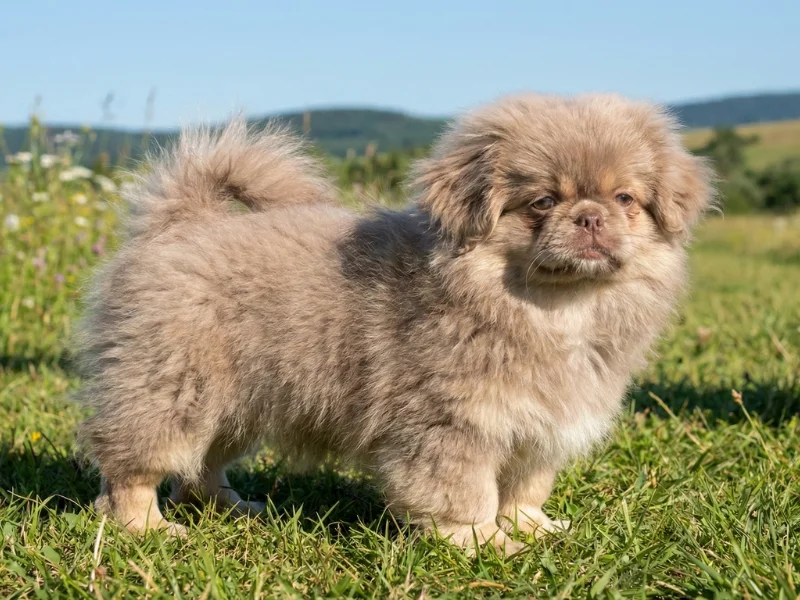
Pekingese
Other names: Épagneul Pékinois, Épagneul de Pékin, Pekingese, Peking Palasthund
Imagine a miniature lion strutting about with royal dignity: that is the Pekingese! This small Chinese companion dog, weighing between 3 and 5 kg and standing 15 to 25 cm tall, displays a compact and sturdy silhouette that surprises with its solidness. Its appearance evokes that of a lion in miniature form,... Read more
Are you a breeder or owner of a Pekingese?
Create your free account and request your dog's pedigree in just a few clicks. Use our tools to manage your kennel and select your breeding stock in the best conditions.
Are you a breeder or owner of a Pekingese?
Create your free account, manage your kennel and pedigree requests with our tools.
Create my accountHistory & Origin
T he roots of the Pekingese reach deep into ancient Chinese history, dating back more than two millennia. Representations on bronze artifacts from 2000 years before our era already bear witness to its presence.
In the Middle Kingdom, this small dog enjoyed sacred status at the imperial court, particularly during the Tang (618-907) and later Qing (1644-1912) dynasties.
Legend has it that the breed was born from an impossible love between a lion and a marmoset, inheriting the nobility of the former and the flat face of the latter.
Reserved exclusively for the imperial family within the Forbidden City of Beijing, the Pekingese was so precious that anyone who dared to steal or harm one faced the death penalty.
The emperors regarded the breed as a spiritual guardian, and its sale outside Chinese borders remained strictly forbidden. This exclusivity jealously preserved this national treasure for centuries.
The destiny of the Pekingese changed dramatically in 1860 during the Second Opium War. When Anglo-French troops invaded and looted the Summer Palace in Beijing, most of the Pekingese were killed to prevent them from falling into enemy hands.
Fortunately, five specimens survived and were brought back to England as spoils of war. One of them was presented to Queen Victoria, who named it "Looty" (from the English word "loot").
These five survivors became the founding ancestors of all European Pekingese. The breed quickly captivated British aristocracy and gained recognition at dog shows as early as 1864.
The Kennel Club officially recognized the breed in 1898. In France, the Pekingese enjoyed its golden age during the interwar period, becoming the fashionable companion dog.
We offer professionals the opportunity to register their Pekingese with the FBKC, a modern club that recognizes the breed with efficient online tools and four-generation pedigrees.
Description
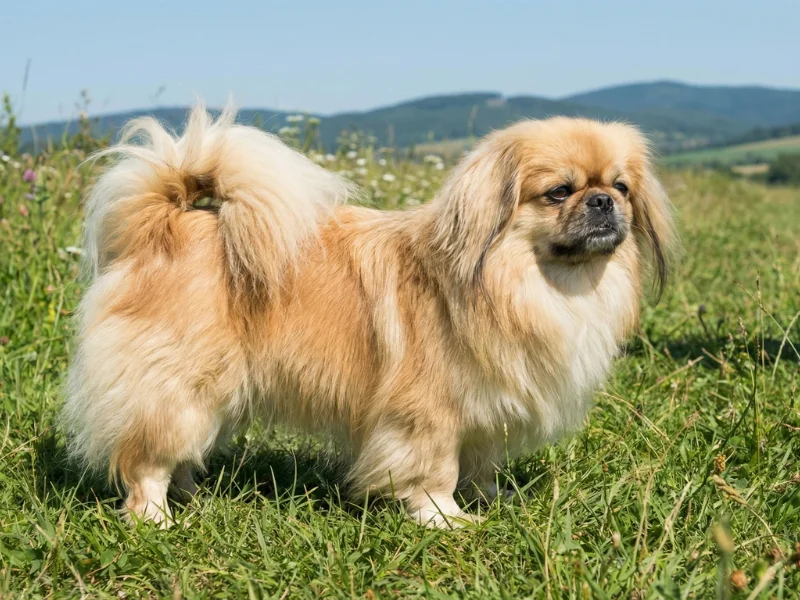
I magine a miniature lion strutting about with royal dignity: that is the Pekingese! This small Chinese companion dog, weighing between 3 and 5 kg and standing 15 to 25 cm tall, displays a compact and sturdy silhouette that surprises with its solidness. Its appearance evokes that of a lion in miniature form, with a luxuriant mane that forms an impressive ruff around its neck and falls generously over its shoulders.
Its massive head, disproportionate to its body, immediately draws attention with its flat profile and large, round, dark-colored eyes that shine with intelligence.
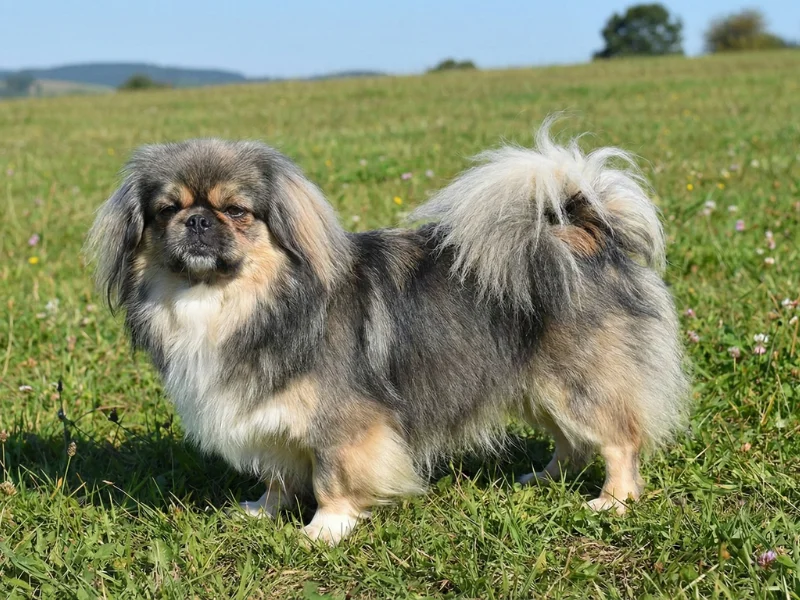
Its heart-shaped ears, adorned with long silky feathering, delicately frame its expressive face. The black nose contrasts with its coat, which may display practically any color, from white to black, including fawn, gray, or parti-color - only albino and liver are excluded.
Its long, straight coat, accompanied by a thick, soft undercoat, gives it the appearance of an elegant little plush toy. Its high-set tail, slightly curved over the back and adorned with abundant feathering, completes this distinctive silhouette. Despite its short, slightly bowed legs, this little aristocrat moves with a proud and confident gait.
In terms of temperament, the Pekingese possesses a strong-willed character combining unwavering loyalty to its owner with confident independence.
Courageous and alert, this miniature guardian does not hesitate to sound the alarm to protect its territory, proving that bravery is not dependent on size.
Personality
T he Pekingese cultivates an independent character while remaining unfailingly loyal to its owner. This small dog with an assertive temperament knows exactly what it wants and does not hesitate to express it.
Beneath its plush toy appearance lies a courageous watchdog who never hesitates to sound the alarm when an unfamiliar presence appears, regardless of the intruder's size.
In daily life, it remains relatively calm and particularly enjoys quiet moments in its favorite armchair. With its family, it reveals sincere affection though in a reserved manner, often preferring quality over quantity in its displays of devotion.
With strangers, it adopts a reserved and wary attitude, assessing each situation with its natural intelligence. Its limited patience with young children and its need for attention from its owners make it the ideal companion for single individuals or couples without young children.
Photo Gallery


Breed Characteristics
General Information
- Category: Approval
- Origin: China
- FCI Recognition: Yes (Group 9)
- Est. monthly upkeep: 70-90
- Daily exercise: 30 minutes
Key Facts
- Height: 15.00 to 25.00 cm
- Weight: 3.00 to 5.00 kg
- Life expectancy: 12 to 15 years
- Average price: 1000.00 to 1500.00 €
-
Grooming frequency:9/10
Training Tips
Training the Pekingese ideally begins at 2-3 months of age with an approach based on gentle firmness and patience. His independent character demands absolute consistency in established rules, without giving in to his attempts at manipulation. Early socialization is essential to diminish his natural wariness toward strangers and promote harmonious coexistence with other animals. Positive methods work better than force with this proud dog who may sulk for extended periods if he feels unjustly treated.
Health & Common Conditions
General Health
The Pekingese possesses a robust constitution for its size, with an encouraging life expectancy of 13 to 15 years. Its nature as an indoor companion allows it to age gracefully when provided with a suitable environment.
However, its brachycephalic structure requires particular attention to extreme temperatures, which it tolerates poorly. Summer heat and harsh winter cold necessitate specific precautions to maintain respiratory comfort.
Regular veterinary monitoring proves beneficial in keeping this breed in optimal condition. Annual check-ups allow for early detection of potential concerns and enable care adjustments as the dog ages.
A balanced diet and maintaining ideal body weight contribute significantly to longevity. With proper care and proactive prevention, the Pekingese fully enjoys its years alongside its family.
Common Conditions
Like many flat-faced breeds, the Pekingese may develop brachycephalic obstructive airway syndrome, which manifests as snoring, noisy breathing, or difficulty during exertion.
Their prominent eyes represent a particular area of vulnerability, being susceptible to corneal ulcers, infections, and keratoconjunctivitis sicca. Daily cleaning effectively prevents most ocular complications.
Dental problems frequently affect this breed, with a risk of premature tooth loss without rigorous oral hygiene. Progressive retinal atrophy, patellar luxation, and hernias may also affect certain individuals.
Breeding females often experience difficult deliveries requiring cesarean section. Fortunately, early screening and regular preventive care allow most of these conditions to be effectively managed, providing the Pekingese with a long and comfortable life.
Care & Living Environment
Daily Care
Le long, dense coat of the Pekingese requires daily brushing to prevent mat formation and maintain its silky appearance. This routine also helps remove debris accumulated during outings and allows for checking the overall condition of the skin. Professional grooming every two months ideally complements at-home maintenance.
The eyes require daily cleaning with an appropriate solution to prevent infections. The facial folds should be cleaned regularly with lukewarm water to prevent irritation. Tooth brushing, ideally daily but at minimum three times per week, prevents tartar buildup.
The nails require monthly trimming, while the ears need weekly inspection and cleaning. Baths may be given once to twice per month maximum using gentle products specifically formulated for dogs, taking care to dry thoroughly afterward to prevent any skin problems.
Recommended Living Environment
The Pekingese thrives perfectly in an apartment setting, where its low activity level and small size find their ideal balance. It particularly appreciates comfortable interiors with cozy spaces in which to lounge.
A stable temperature between 64 and 72°F suits it perfectly, away from drafts and excessive heat sources.
A small balcony or terrace is a pleasant bonus but by no means necessary, as this breed far prefers the cozy comfort of its home to vast outdoor spaces.
Recommended Activities
Gentle scent tracking pleasantly stimulates his mental capabilities.
Avoid intense or prolonged athletic activities that are suited neither to his conformation nor to his naturally calm temperament. Play sessions should remain moderate and appropriate for weather conditions.
Frequently Asked Questions
The Pekingese is better suited to families without young children or to single individuals. Its independent character and limited patience with the commotion of toddlers make it a more appropriate companion for quiet households. It shows remarkable loyalty to its owners and is affectionate in its own way. With respectful adults, it develops deep bonds and becomes a faithful companion who appreciates the tranquility of home. Its natural vigilance makes it an excellent watchdog despite its small size.
Daily brushing represents the ideal routine for maintaining the beauty of the Pekingese coat. This regular attention prevents mat formation in the long, dense coat while removing accumulated dirt and debris. Allow approximately 10 to 15 minutes each day for this grooming session. Professional grooming every two months perfectly complements this home maintenance routine. The eyes also require daily cleaning to prevent infections, while baths may be given once or twice per month.
The Pekingese may experience respiratory difficulties related to its flattened muzzle, manifesting as snoring or noisy breathing. Its prominent eyes require careful monitoring to prevent ulcers and infections. Dental problems frequently affect this breed without rigorous oral hygiene. Progressive retinal atrophy and patellar luxation may also affect certain individuals. Fortunately, regular veterinary checkups and preventive care make it possible to manage these conditions and ensure a long, comfortable life.
Training the Pekingese requires patience and consistency given its independent temperament. This intelligent small dog knows exactly what it wants and can be stubborn. Gentle methods based on positive reinforcement work far better than force with this proud breed, which can sulk for extended periods. Early socialization starting at 2 to 3 months of age greatly facilitates its adaptation. Kind firmness and clear rules allow for good results. Its attachment to its owner represents a valuable asset in learning basic training fundamentals.
The apartment represents the ideal living environment for the Pekingese, who particularly appreciates indoor comfort. Its low activity level and small size adapt perfectly to urban life. It is satisfied with short daily walks of 15 to 20 minutes and much prefers lounging in its favorite armchair. A stable temperature between 18 and 22 degrees suits it perfectly. This indoor dog par excellence does not require significant outdoor space. Its sedentary lifestyle makes it the perfect companion for people living in the city or in restricted spaces.
Expert Rating
Overall rating for the Pekingese
This overall rating is calculated from 7 key criteria: activity level, trainability, guarding ability, child and animal friendliness, grooming frequency and barking level.
Activity level
Trainability
Sociability
Guarding ability
Latest registered Pekingese
Dogs of this breed recently added to the FBKC registry
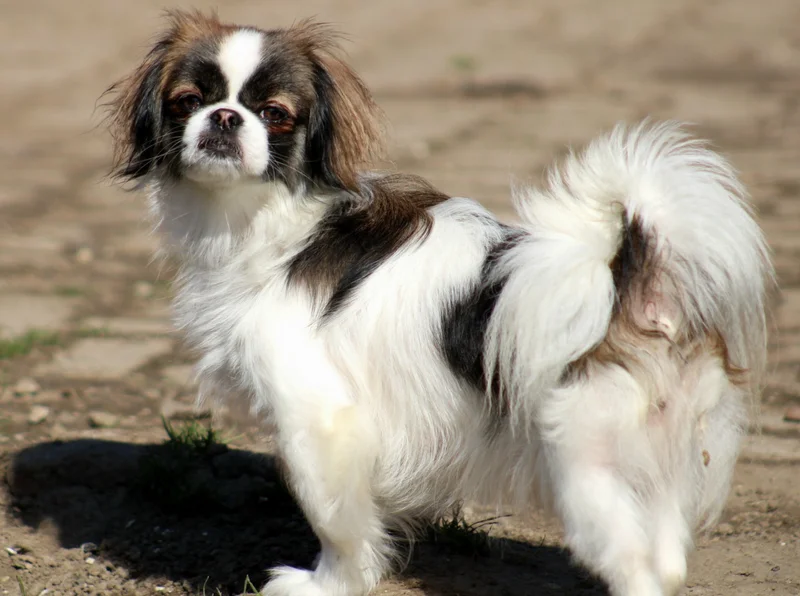
Samira
BLANC ET FAUVE
France
Breeds from the Same Group
Discover other dog breeds from the same group