
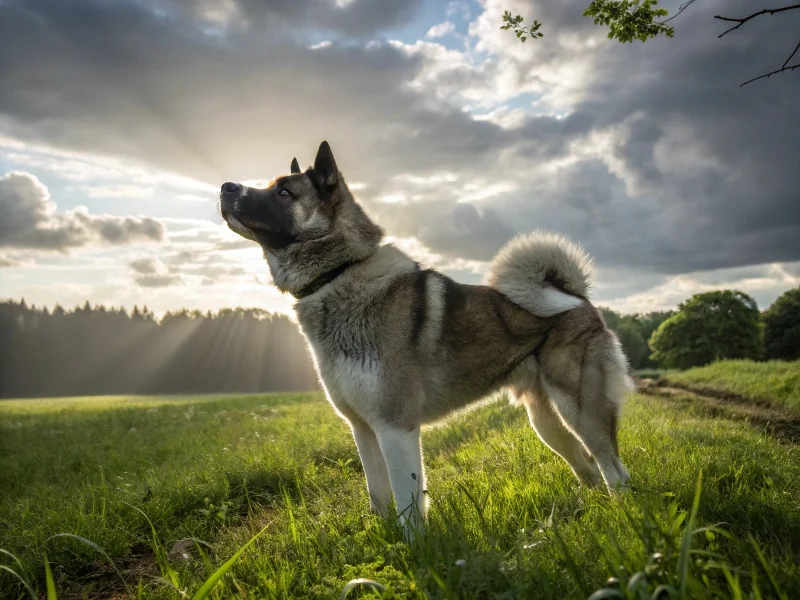
American Akita
Other names: Grand Chien Japonais, Great Japanese Dog
The American Akita commands attention at first glance with its impressive physical power and natural nobility. With its broad head reminiscent of a polar bear and heavy bone structure, it exudes a quiet strength that leaves no one indifferent.
Its triangular eyes, small and dark, survey the surround... Read more
Are you a breeder or owner of a American Akita?
Create your free account and request your dog's pedigree in just a few clicks. Use our tools to manage your kennel and select your breeding stock in the best conditions.
Are you a breeder or owner of a American Akita?
Create your free account, manage your kennel and pedigree requests with our tools.
Create my accountHistory & Origin
T he epic of the American Akita finds its roots in the Akita region of northern Japan, where its ancestors, the Akita Matagis, hunted bear and large game.
The story took a decisive turn during World War II, a dark period when the breed came close to extinction. To save these dogs and use them for military purposes, breeders crossed them with German Shepherds, thereby increasing their size and altering their conformation.
At the end of the conflict, American soldiers stationed in Japan fell in love with these robust dogs and brought several specimens back to the United States.
It was on American soil that the breed followed a distinct evolution from that of Japan. While Japanese breeders strived to restore the original Spitz-type, Americans continued to select dogs with heavy bone and a powerful build, particularly favoring black-masked specimens.
This divergence in breeding selection eventually created two distinctly different types of dogs, though sharing the same historical ancestry.
The official separation of the two breeds is a recent event in canine history.
It was not until 2006 that the Fédération Cynologique Internationale recognized the existence of two distinct breeds: the Akita Inu (the Japanese type) and the Great Japanese Dog, subsequently renamed the American Akita.
Today, the breed enjoys growing popularity, prized for its unique appearance that bears witness to this transpacific journey and this history of resilience.
Description
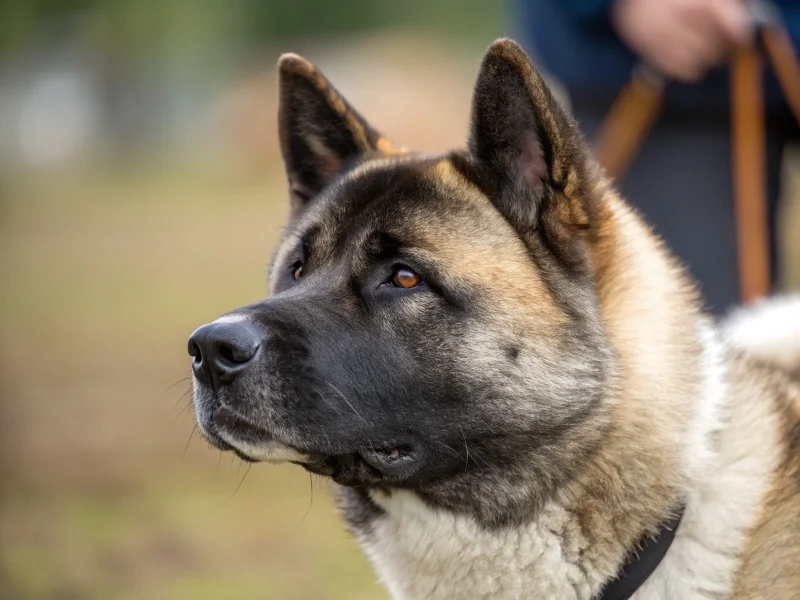
T he American Akita commands attention at first glance with its impressive physical power and natural nobility. With its broad head reminiscent of a polar bear and heavy bone structure, it exudes a quiet strength that leaves no one indifferent.
Its triangular eyes, small and dark, survey the surroundings with constant vigilance, while its plush tail carried proudly over the back adds a touch of elegance to its massive silhouette.
Unlike its Japanese cousin, it displays a more varied color palette, often including a characteristic black mask that accentuates its intense expression.
This large dog possesses a complex and fascinating personality, blending great independence with unwavering loyalty toward its family circle.
Calm by nature indoors, it is a very quiet breed that seldom barks, preferring to observe silently before acting if the situation requires. It is a dignified companion that forms deep bonds with its humans, often showing itself to be highly protective of them.
It enjoys companionship but maintains a certain independence, not seeking affection at every moment.
Despite its intimidating size, the American Akita can display surprising gentleness with family members. It is known for its almost cat-like cleanliness and composed behavior in the home.
However, its dominant temperament requires an iron fist in a velvet glove; it respects a fair and consistent leader but can prove quite stubborn if it does not see the purpose behind commands. It is a loyal life partner for those who understand and respect its proud nature.
Personality
T he American Akita is distinguished by a natural dignity combined with unwavering loyalty to its household. This large dog forms a deep and exclusive bond with its owners, often appearing indifferent toward strangers without being unnecessarily aggressive.
In daily life, it appreciates calm surroundings and the presence of its family, communicating more through subtle body language than through excessive barking.
Its independent temperament requires mutual understanding, as it does not obey blindly but rather cooperates with intelligence.
Highly protective, it watches over its territory with a silent vigilance that provides reassurance. However, one must remain attentive during encounters with other dogs, as its dominant instinct can sometimes complicate cohabitation with other canines of the same sex.
Photo Gallery


Breed Characteristics
General Information
- Category: Guard
- Origin: Japan
- FCI Recognition: Yes (Group 5)
- Est. monthly upkeep: 90
- Daily exercise: 60 minutes
Key Facts
- Height: 61.00 to 71.00 cm
- Weight: 35.00 to 60.00 kg
- Life expectancy: 10 to 13 years
- Average price: 1500.00 to 2500.00 €
-
Grooming frequency:7/10
Training Tips
Training must begin as soon as the puppy arrives, favoring a firm but gentle approach based on positive reinforcement. Brutality is counterproductive with this proud dog, who would immediately shut down. Early and ongoing socialization is the key to managing his dominant temperament and ensuring harmonious relationships with other dogs.
Health & Common Conditions
General Health
Built on a solid foundation, the American Akita is a hardy dog that withstands cold climates particularly well thanks to its dense coat.
Its natural robustness often allows it to enjoy good longevity for a dog of this size, provided its ideal weight is maintained. It does not mind inclement weather and enjoys long outdoor excursions.
However, its rapid growth requires particular attention to preserve its bone structure. Quality nutrition during its youth promotes harmonious development of its powerful frame.
Routine veterinary visits help ensure everything is in order and confirm standard vaccination protocols.
Common Conditions
The American Akita is a robust breed, but is predisposed to certain health conditions. The joints are commonly affected by hip or elbow dysplasia.
This breed is also susceptible to autoimmune diseases, such as sebaceous adenitis (a skin condition), and ocular disorders including progressive retinal atrophy. Additionally, the breed's large size makes it prone to gastric dilatation-volvulus (bloat).
Care & Living Environment
Daily Care
Although hardy, this giant breed may be prone to hip dysplasia, common in large breeds. It is therefore recommended to limit jumping and strenuous activity during growth.
Certain breed-specific autoimmune conditions, such as sebaceous adenitis affecting the skin or VKH syndrome affecting the eyes, require particular vigilance.
Gastric torsion also represents a risk to monitor; dividing meals into smaller portions and avoiding exercise after eating greatly helps prevent this condition.
Fortunately, most reputable breeders perform rigorous health screenings on breeding stock to minimize these risks and ensure healthy puppies.
Recommended Living Environment
A house with a fenced yard represents the ideal living environment, allowing him to watch over his territory. He can adapt to apartment living if his owners are readily available for long outings. He does not tolerate heat well and must always have access to a cool area in summer.
Recommended Activities
He is less enthusiastic about repetitive ball games, preferring mental challenges or calm walks by your side.
Frequently Asked Questions
The Akita Inu remains more refined with a fox-like head, while the American Akita is much more massive with heavy bone structure and a characteristic bear-like head. Although they share common origins, they now form two distinct breeds with separate standards.
Cohabitation can prove challenging, particularly between dogs of the same sex due to this breed's strong dominant instinct. Early socialization helps greatly, but the breed often retains a certain intolerance toward other dogs. Caution is advised during canine encounters at the park.
He is an absolutely loyal companion who is very patient and gentle with his family members. He enjoys family life and often becomes a benevolent guardian. His size, however, requires constant supervision around young children to avoid accidental knocking.
Apartment living remains possible as this large dog is very calm and clean indoors. He rarely barks and knows how to stay unobtrusive. This adaptation nonetheless requires considerable availability to provide him with the long daily walks essential to his overall well-being.
No, this breed is not affected by the dangerous dog law in France. It does not belong to any particular legal category. It is a classic companion dog, although its imposing size may sometimes impress newcomers on the street.
Expert Rating
Overall rating for the American Akita
This overall rating is calculated from 7 key criteria: activity level, trainability, guarding ability, child and animal friendliness, grooming frequency and barking level.
Activity level
Trainability
Sociability
Guarding ability
Latest registered American Akita
Dogs of this breed recently added to the FBKC registry

Urban Twist Angels Of Paradise
GRIS ET BLANC
France
Breeds from the Same Group
Discover other dog breeds from the same group