
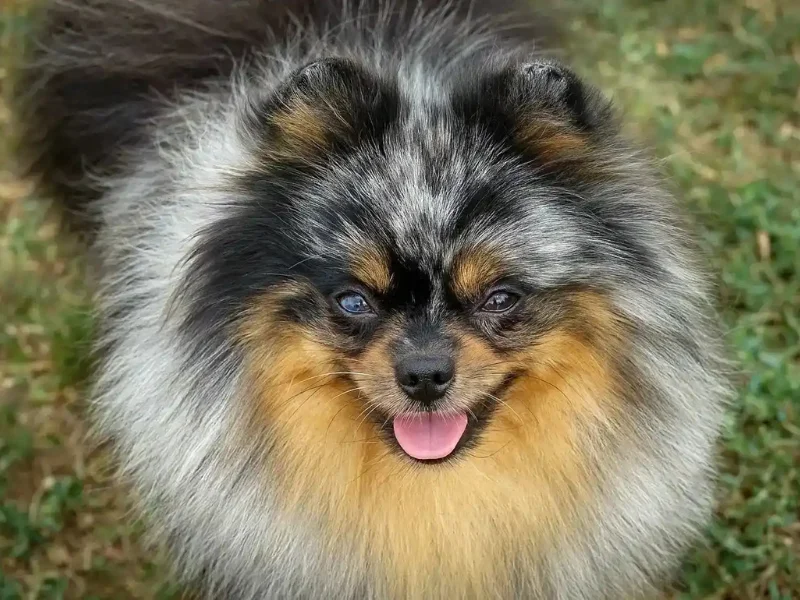
German Spitz
Other names: Loulou de Poméranie, Poméranien, Keeshond, Spitz-Loup, Grand Spitz, Spitz Moyen, Petit Spitz, Spitz Nain, Deutscher Spitz, Pomeranian
A true ball of fluff with an impish appearance, the German Spitz captivates at first glance with its abundant coat that evokes a living plush toy. This ancient breed from Central Europe is distinguished by its fairy-tale appearance where every detail exudes natural elegance.
Its double coat, consisting of a dense und... Read more
Are you a breeder or owner of a German Spitz?
Create your free account and request your dog's pedigree in just a few clicks. Use our tools to manage your kennel and select your breeding stock in the best conditions.
Are you a breeder or owner of a German Spitz?
Create your free account, manage your kennel and pedigree requests with our tools.
Create my accountHistory & Origin
T he German Spitz ranks among the oldest breeds in Central Europe, with origins that reach back into the mists of time. Cynological research reveals that its ancestors descend directly from the Peat Dog of the Stone Age, Canis familiaris palustris Rütimeyer, as well as from the Lake Dwelling Dogs.
This ancient lineage makes the Spitz the foundation stock from which numerous European breeds have descended.
Archaeological excavations have unearthed fossil remains dating back 5,000 years, suggesting that these primitive dogs may have been crossed with wolves.
Modern genetic studies confirm that Spitz breeds belong to the group of canine breeds most closely related to the wolf, likely representing the oldest type of domestic dog.
Over the centuries, the Spitz evolved from a herding and farm guard dog in Germanic regions to a prized companion of the aristocracy. The turning point came in the 18th century when the toy variety, named the Pomeranian, conquered European courts.
Illustrious figures such as Mozart, Michelangelo, Émile Zola, Marie-Antoinette, and Queen Victoria of England succumbed to the charm of these small dogs. The popularity of the Toy Spitz at the Victorian British court greatly contributed to the development of the breed as we know it today.
The Fédération Cynologique Internationale officially recognized the German Spitz on January 1, 1957, establishing a unified standard for its five size varieties (FCI Standard No. 97, Group 5, Section 4).
In France, registration in the Stud Book began in 1935 for the medium and small varieties, followed by the Keeshond in 1937 and the Giant Spitz in 1986.
Our FBKC club offers Spitz breeders a modern alternative with greater freedoms. We recognize all Spitz varieties and provide online registration with issuance of four-generation pedigrees, accompanied by powerful breeding management tools to select your breeding stock.
Description
A true ball of fluff with an impish appearance, the German Spitz captivates at first glance with its abundant coat that evokes a living plush toy. This ancient breed from Central Europe is distinguished by its fairy-tale appearance where every detail exudes natural elegance.
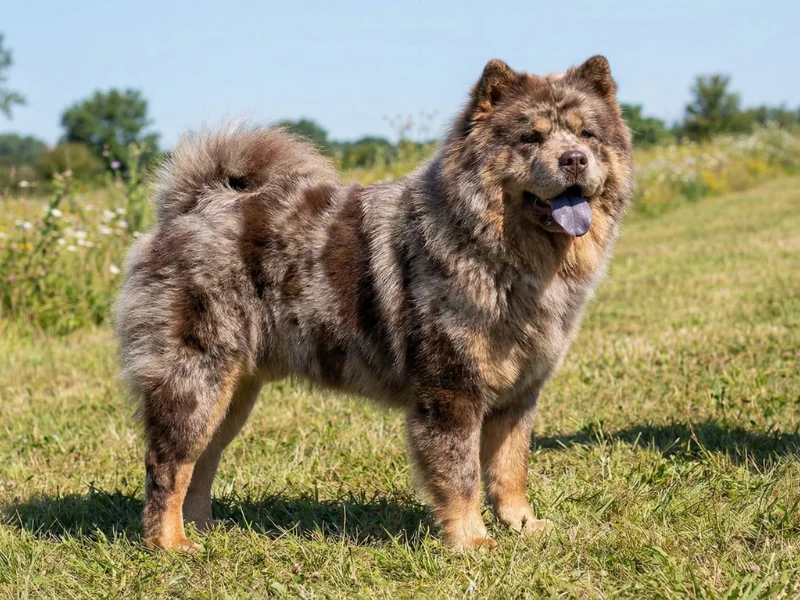
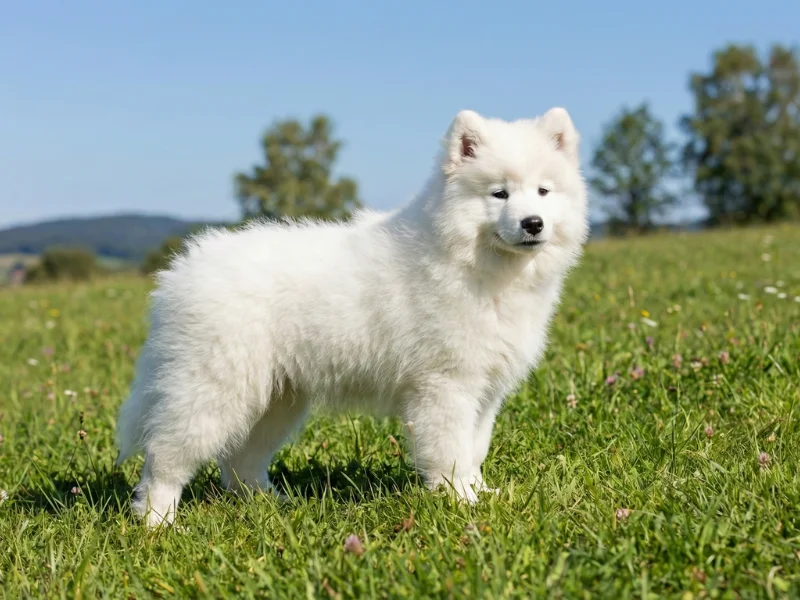
Its double coat, consisting of a dense undercoat and long, straight guard hair, forms a majestic ruff around the neck reminiscent of a miniature lion's mane. The bushy tail, carried proudly curled over the back, completes this harmonious silhouette. Its wedge-shaped head with small erect, pointed ears and refined muzzle give it a striking resemblance to the fox, accentuated by bright, expressive eyes of deep black.
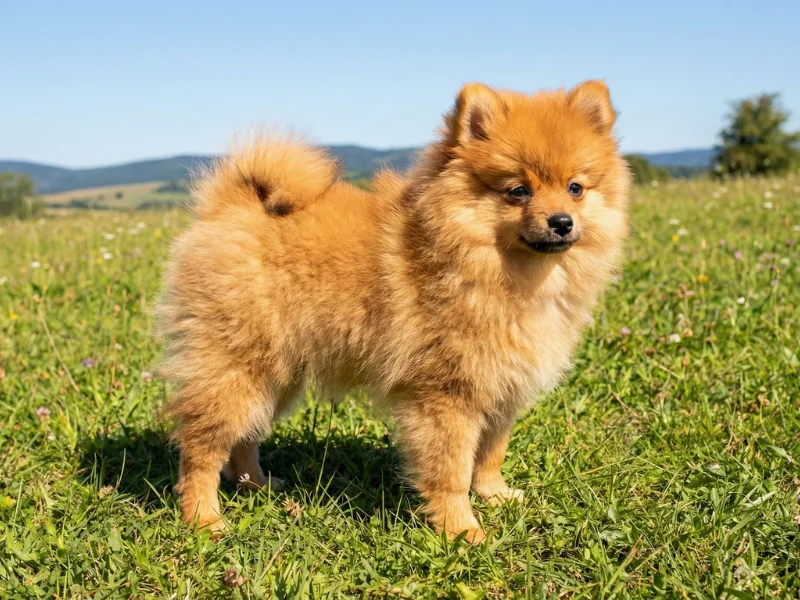
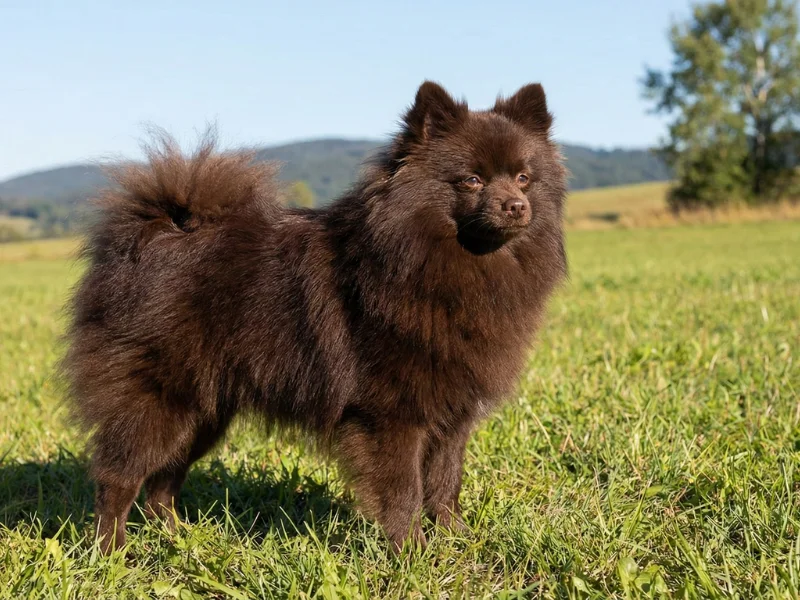
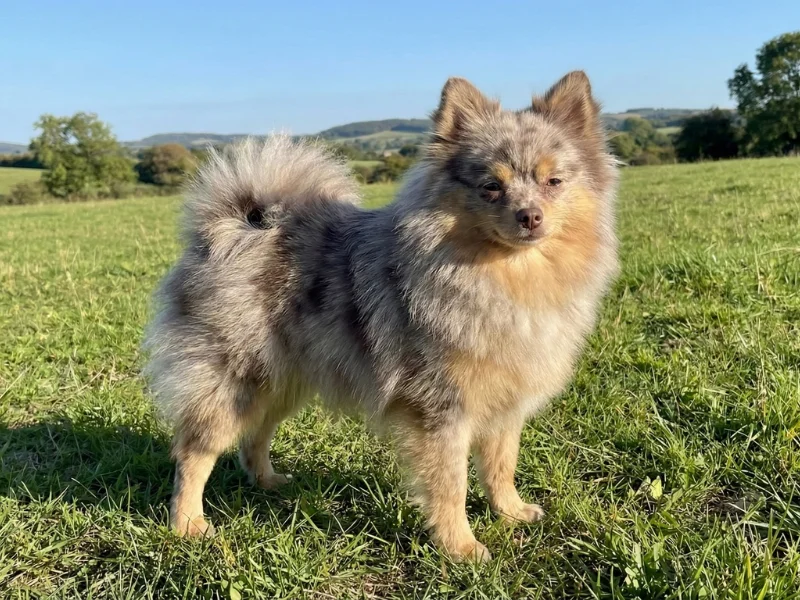
The Spitz exists in five size varieties, from the Toy Spitz (21 cm) to the Keeshond (49 cm), all sharing the same distinctive physical characteristics. Its body is inscribed in a perfect square, demonstrating balanced and well-proportioned construction. The color palette offers remarkable diversity: pure white, jet black, vibrant orange, brown, wolf-gray, cream, and even parti-colored coats.
Behind this teddy bear appearance lies a spirited temperament. Quick as lightning, the Spitz overflows with energy and curiosity. Its deep devotion to its family contrasts with its natural reserve toward strangers, making it an excellent watchdog that never hesitates to sound the alarm with its clear, piercing voice.
Personality
T he German Spitz radiates natural vivacity and deep devotion to its family. Always alert, this vigilant little guardian watches over its territory with earnest dedication, readily sounding the alarm at the slightest unusual occurrence.
Its keen intelligence enables quick learning, though it occasionally displays a certain independence inherited from its primitive ancestors.
Affectionate to the point of becoming a true velcro dog, it constantly seeks the company of its favorite humans. Its natural wariness toward strangers contrasts with its cheerful demeanor within the family home.
Playful and curious, it brims with infectious energy and particularly enjoys activities that engage its mind. This fluffy companion possesses a well-balanced temperament, readily alternating between lively animation and calm, affectionate moments close to its owner.
Photo Gallery


Breed Characteristics
General Information
- Category: Approval
- Origin: Germany
- FCI Recognition: Yes (Group 5)
- Est. monthly upkeep: 50-80
- Daily exercise: 60 minutes
Key Facts
- Height: 18.00 to 55.00 cm
- Weight: 1.50 to 22.00 kg
- Life expectancy: 12 to 16 years
- Average price: 900.00 to 3500.00 €
-
Grooming frequency:7/10
Training Tips
Begin training as soon as the puppy arrives home, around 8 weeks of age, emphasizing positive methods based on rewards and play. Early socialization proves essential to temper the breed's natural wariness. Remain firm yet kind when addressing the occasionally stubborn temperament, and promptly manage vocal tendencies through teaching the quiet command.
Health & Common Conditions
General Health
The German Spitz benefits from a robust constitution inherited from its primitive ancestors, which gives it remarkable resistance to harsh weather conditions and an appreciable lifespan of 12 to 16 years.
Its dense double coat provides effective protection from both cold and moderate heat, demonstrating its adaptation to the varied climates of Central Europe.
This hardy breed generally exhibits few health vulnerabilities, particularly in the medium to large varieties. Regular veterinary check-ups help maintain this excellent vitality throughout its life.
A balanced diet appropriate to its specific size, combined with daily physical activity, contributes to preserving its optimal condition. Weight monitoring is particularly important for the toy varieties with their fast metabolism.
Common Conditions
The German Spitz presents a limited genetic predisposition to disease, reflecting its ancestral natural selection. The larger varieties may occasionally develop hip dysplasia, while smaller specimens sometimes show sensitivity to patellar luxation, where the joint can slip out of its normal groove.
Some smaller individuals exhibit dental fragility requiring attentive oral hygiene. The round eyes, particularly in the toy varieties, may present excessive tearing requiring regular cleaning.
Fortunately, early screening by responsible breeders and appropriate veterinary care help prevent or effectively manage these rare concerns, ensuring a long and fulfilling life.
Care & Living Environment
Daily Care
The German Spitz's double coat requires regular brushing two to three times a week to maintain its natural beauty and prevent knots from forming in the dense undercoat. During the two annual shedding periods, in spring and autumn, daily brushing becomes necessary to manage significant hair loss.
Contrary to appearances, the coat possesses remarkable self-cleaning properties that naturally repel dirt. Baths therefore remain occasional, generally spaced several months apart.
Weekly maintenance includes checking and cleaning the ears, brushing the teeth two to three times per week, and monthly nail trimming. The eyes deserve daily attention, particularly in lighter-colored individuals prone to tear staining.
Recommended Living Environment
The German Spitz adapts remarkably well to apartment living as well as house living, provided he receives sufficient daily outings.
His resistance to inclement weather allows him to enjoy a fenced yard, though this is not essential.
However, be mindful of frequent barking which may pose problems in dense urban environments with noise-sensitive neighbors.
Recommended Activities
Tracking games and obedience work pleasantly engage his cognitive abilities. Interactive play sessions, hide-and-seek with toys, and varied trick training exercises satisfy his quick and curious mind.
Frequently Asked Questions
The price of a German Spitz varies according to its size and lineage, ranging between 700 and 2500 euros. The toy varieties, highly sought after, often command the highest prices. A responsible breeder registered with pedigree guarantees the health and socialization of the puppy. This price generally includes initial vaccinations and microchipping. The initial investment is accompanied by a monthly budget of 30 to 70 euros for food and routine care.
The German Spitz can become a wonderful companion for children provided early socialization and appropriate supervision are in place. Its playful and affectionate nature creates strong bonds with young family members. For the toy varieties, increased vigilance is required with toddlers due to their delicate size. Children over 8 years of age particularly appreciate this energetic little companion who loves participating in their daily games and adventures.
The German Spitz enjoys remarkable longevity, typically living between 12 and 16 years. This excellent life expectancy reflects the robust constitution inherited from its primitive ancestors. The toy varieties often reach the upper end of this range. A balanced diet, regular exercise, and preventive veterinary care contribute to maximizing this longevity. Its sound genetic heritage allows it to remain active and cheerful well into its senior years.
The German Spitz experiences two significant shedding periods in spring and autumn, during which hair loss becomes considerable. Daily brushing is then necessary to manage this seasonal shedding and prevent mats. The rest of the year, two to three brushings per week are quite sufficient. His coat possesses self-cleaning properties that limit the accumulation of dirt. Despite his dense coat, maintenance ultimately remains manageable with a well-established regular routine.
The German Spitz adapts perfectly to apartment living thanks to its compact size and great adaptability. Its daily exercise requirement of one hour can be met through enriching urban walks. The main consideration remains its tendency to bark frequently, a natural watchdog trait that may pose problems with noise-sensitive neighbors. Early training in bark control significantly reduces this characteristic. City or country, it thrives wherever its family resides.
Expert Rating
Overall rating for the German Spitz
This overall rating is calculated from 7 key criteria: activity level, trainability, guarding ability, child and animal friendliness, grooming frequency and barking level.
A 10-point bonus is added as this breed is among the most popular!
Activity level
Trainability
Sociability
Guarding ability
Latest registered German Spitz
Dogs of this breed recently added to the FBKC registry
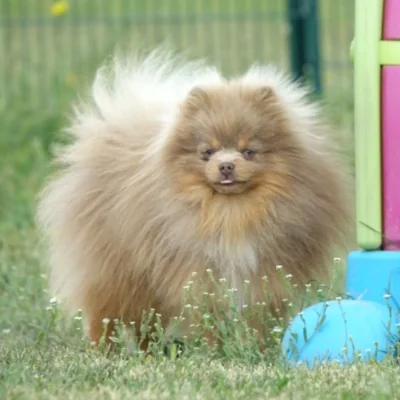
Sotchi Evrik Taysh
LILAC TAN
France

Dahlia (Gomez) Mex.FCI
CHOCOLATE
France

Lars
CREAM
France
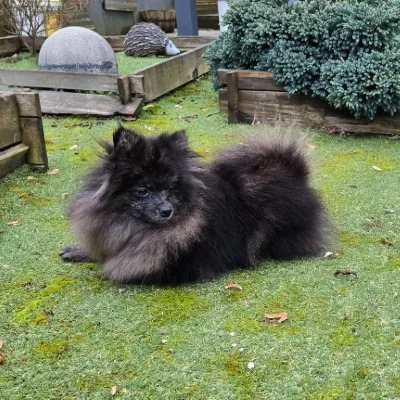
Oum-Paloumpa du Domaine du Mont Tournier
BLACK MERLE
France
Breeds from the Same Group
Discover other dog breeds from the same group