
Siberian Husky
Other names: Husky de Sibérie, Husky Sibérien, Siberian Husky, Chien Tchouktche
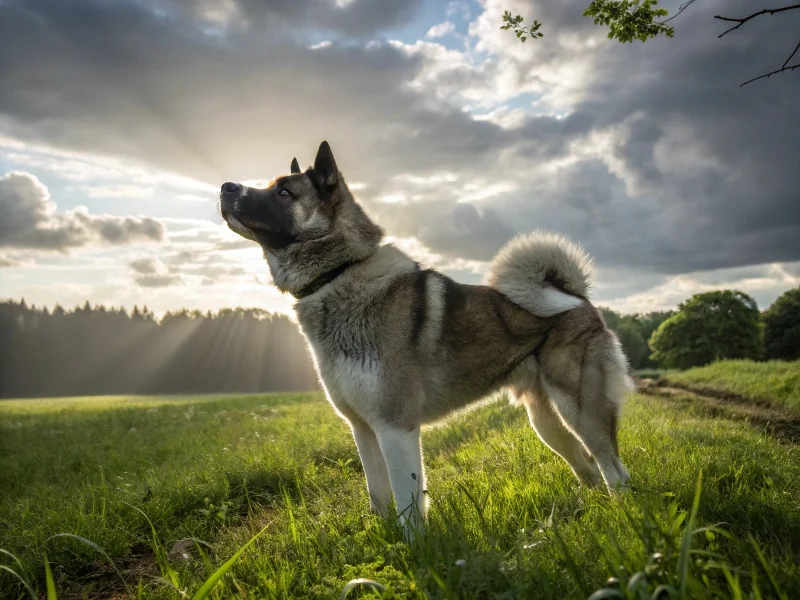
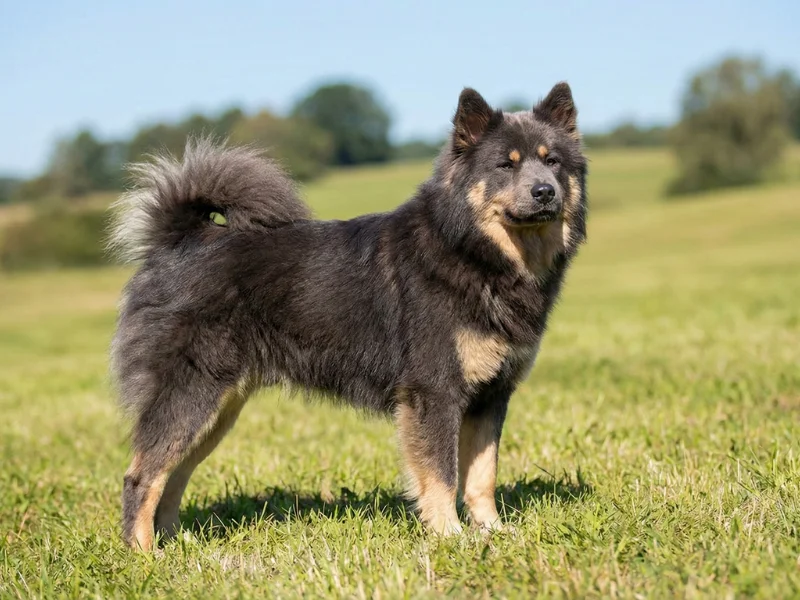
Wolf-like gaze and adventurer's soul: the Siberian Husky captivates immediately with its wild and elegant appearance. This ancient medium-sized breed charms with its athletic and well-balanced silhouette, perfectly designed for endurance over long distances.
Standing between 50 and 60 centimeters at... Read more
Are you a breeder or owner of a Siberian Husky?
Create your free account and request your dog's pedigree in just a few clicks. Use our tools to manage your kennel and select your breeding stock in the best conditions.
Are you a breeder or owner of a Siberian Husky?
Create your free account, manage your kennel and pedigree requests with our tools.
Create my accountHistory & Origin
T he history of the Siberian Husky has its roots in ancient times, dating back to approximately 2000 years before the common era.
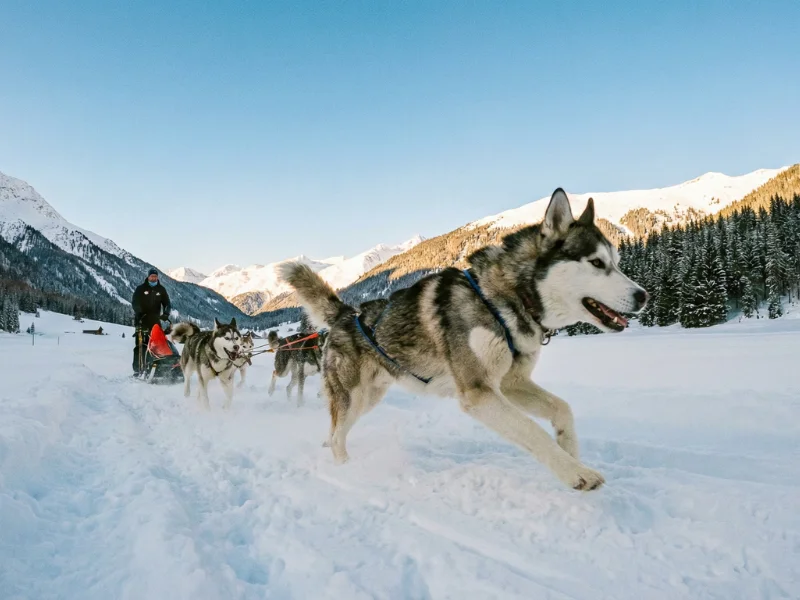
In the frozen expanses of eastern Siberia, Russia, the Chukchi people developed this exceptional sled dog adapted to the extreme conditions of the Kolyma River basin to Kamchatka.
Geographically isolated, the Chukchi methodically perfected their breeding program, systematically eliminating aggressive individuals to produce a versatile dog.
This rigorous selection gave rise to a unique companion, capable of pulling sleds over long distances while remaining gentle enough to watch over children and share the warmth of family dwellings.
The Chukchi thus developed a dog of legendary endurance, able to travel miles in extreme cold while consuming little food, a vital quality for this nomadic hunting people.
In the early twentieth century, a Russian fur trader imported the first Siberian Huskies to Alaska to participate in the famous 408-mile All Alaska Sweepstakes race in 1909.
Despite their small size compared to the local Malamutes, who dismissively nicknamed them "Siberian rats," these dogs finished in third place. The following year, three Husky teams swept the top three places, proving their superiority in speed and endurance.
In 1925, the Nome "serum run" brought the breed into legend.
When a diphtheria epidemic threatened this isolated Alaskan village, twenty mushers and over one hundred Huskies transported the vital serum in just five days instead of the usual twenty.
Leonhard Seppala and his lead dog Balto became national heroes, with a statue erected in Central Park in their honor. The Siberian Husky Club of America was founded in 1938, and the breed obtained official recognition in 1966 by the FCI.
Since 1991, following the fall of the USSR, the Husky has returned to Russia, thus completing an epic journey around the world.
Register your Siberian Husky with our club! A modern alternative to traditional organizations, offering greater freedom and responsibility to dedicated breeders.
Description
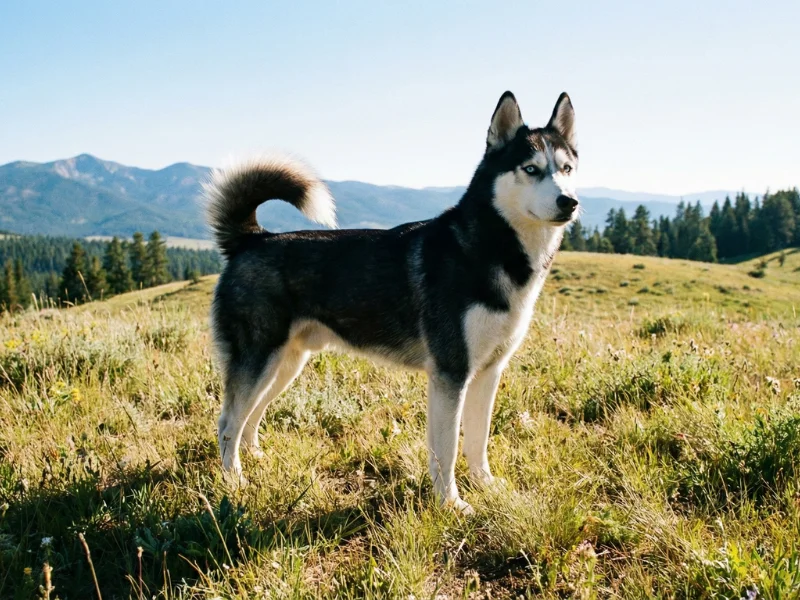
W olf-like gaze and adventurer's soul: the Siberian Husky captivates immediately with its wild and elegant appearance. This ancient medium-sized breed charms with its athletic and well-balanced silhouette, perfectly designed for endurance over long distances.
Standing between 50 and 60 centimeters at the withers and weighing from 16 to 27 kilograms depending on sex, it conveys an impression of controlled power without ever appearing heavy.
Its thick double coat protects it from extreme temperatures, forming a remarkable insulating mantle. Its medium-length coat comes in an infinite palette of colors: pure white, jet black, wolf gray, golden sable, or bicolor combinations enhanced by characteristic facial markings.
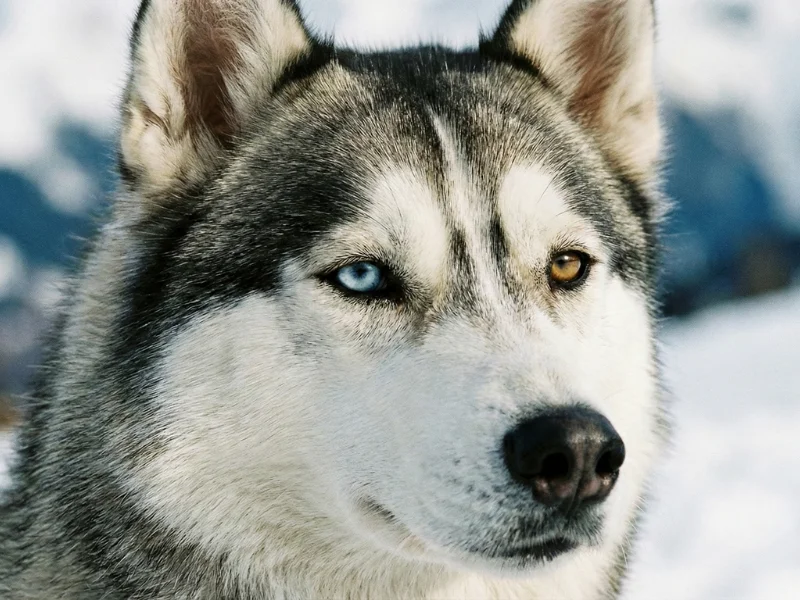
Its almond-shaped eyes are its most fascinating feature, gleaming with piercing glacier blue, deep brown, or displaying the heterochromia that adds to its charm.
Its rounded head extends into a muzzle that tapers toward the black nose. Its triangular, slightly rounded ears stand proudly erect on top of its skull, constantly alert.
Its bushy sickle-shaped tail curves gracefully when excited, evoking the Chukchi legend that tells of its birth from the love between a wolf and the moon.
Beyond its captivating physical appearance, the Husky radiates boundless energy and a unique temperament. Independent yet sociable, playful yet stubborn, affectionate yet prone to wandering, it embodies endearing contradictions.
Its gentle and friendly disposition toward everyone, including strangers, makes it a poor watchdog but an exceptional family companion. Intelligent and sensitive, it nonetheless requires an owner who understands its deep-rooted nature as a Nordic pack dog.
Personality
T he Siberian Husky radiates infectious energy and a unique temperament that never fails to captivate. Independent by nature, he retains the adventurous spirit of his Nordic ancestors, displaying an insatiable curiosity for everything around him.
His remarkable sociability extends to absolutely everyone, greeting strangers with the same exuberant joy as members of his own family.
In daily life, this playful and affectionate companion loves participating in family activities, following his humans from room to room with touching devotion.
His keen intelligence sometimes manifests in mischievous ways, finding creative solutions to achieve his goals, whether opening a door or discovering a hidden treat. This quick-wittedness can also make him stubborn, deciding on his own terms whether he deems it worthwhile to obey or not.
With children, he demonstrates legendary patience inherited from millennia of shared life with Chukchi families.
His need for companionship runs deep, tolerating prolonged solitude very poorly.
A pack dog at heart, he thrives in the presence of other dogs, turning every canine encounter into a moment of exuberant play.
Photo Gallery


Breed Characteristics
General Information
- Category: Work
- Origin: Russia
- FCI Recognition: Yes (Group 5)
- Est. monthly upkeep: 60-90
- Daily exercise: 120-180 minutes
Key Facts
- Height: 48.00 to 61.00 cm
- Weight: 16.00 to 28.00 kg
- Life expectancy: 11 to 15 years
- Average price: 800.00 to 1500.00 €
-
Grooming frequency:7/10
Training Tips
Siberian Husky training begins at eight weeks of age and requires infinite patience given the breed's independent temperament. Positive reinforcement based on rewards and play yields better results than correction with this free thinker. Early and intensive socialization remains essential, exposing the dog to various situations, people, and animals. Recall constitutes the major challenge requiring dedicated daily training. Accept that this breed will never display the instant obedience of other breeds, as its northern nature drives it to think before complying.
Health & Common Conditions
General Health
The Siberian Husky possesses a robust and hardy constitution that reflects millennia of natural selection in the extreme conditions of Siberia.
This ancient breed handles climatic variations remarkably well, withstanding intense cold perfectly thanks to its insulating double coat. Contrary to popular belief, it also tolerates moderate heat fairly well, as its coat acts as a bidirectional insulator.
Its unique metabolism and sound genetics give it a commendable longevity, generally living between 12 and 14 years, with some individuals reaching 16 years.
However, this breed may show sensitivity to skin parasites and requires regular parasite prevention. Gastric torsion prevention involves feeding smaller, more frequent meals and avoiding intense exercise after eating.
To optimize long-term health, annual veterinary examinations including ophthalmologic evaluations are recommended.
A balanced diet suited to its high activity level and sustained daily exercise actively contribute to its vitality. With proper care, this resilient northern breed enjoys a lifetime of excellent health.
Common Conditions
Although generally healthy, the Siberian Husky may be predisposed to certain hereditary eye conditions such as juvenile cataracts, progressive retinal atrophy, and corneal dystrophy.
These conditions present as lens opacity or progressive vision loss, typically detectable through regular ophthalmologic examinations. Fortunately, early screening allows for appropriate management.
Like most medium-sized dogs, this breed may develop hip dysplasia, a joint malformation resulting in lameness or locomotor difficulties.
Glaucoma also affects certain lines, causing pain and vision loss if not promptly treated.
Some individuals may exhibit digestive disorders related to pancreatic insufficiency, causing occasional gas and diarrhea.
Rigorous selection of breeding stock with comprehensive health testing, combined with quality nutrition and attentive veterinary care, enables the vast majority of Huskies to fully enjoy their natural vitality for many years.
Care & Living Environment
Daily Care
The Siberian Husky's coat requires varying levels of maintenance depending on the season. Throughout most of the year, weekly brushing is sufficient to remove dead hair and maintain the natural cleanliness of its self-cleaning coat.
Bathing should remain infrequent, no more than three to four times per year, to preserve the protective oils that ensure the water-resistance of its double coat.
Twice a year, in spring and fall, the spectacular seasonal shedding occurs during which the Husky loses phenomenal amounts of undercoat.
Daily brushing then becomes essential during these intense three weeks to manage this flood of fur and prevent hair from taking over the entire house.
Never shave or clip a Husky, even in summer, as its coat naturally regulates body temperature.
The triangular ears require weekly inspection and should be gently cleaned with an appropriate ear cleaning solution. Nail trimming should be performed monthly if they do not wear down naturally during activity.
Dental brushing, ideally three times per week, maintains proper oral health. After each outing in nature, promptly inspect the dense coat to detect any parasites or plant debris.
Recommended Living Environment
Le Siberian Husky thrives best in a home with a large, securely fenced yard, as his legendary escape instinct requires tall and secure barriers.
Apartment living is not recommended unless the owner is exceptionally athletic and can guarantee three hours of daily exercise. This Nordic athlete tolerates winter cold remarkably well but requires vigilance during intense summer heat.
The ideal environment combines generous outdoor space with proximity to activity areas such as parks, forests, or dog sport facilities.
Recommended Activities
Long mountain hikes fulfill his need for exploration and adventure. Swimming provides complete energy expenditure particularly welcome in summer.
Tracking games engage his keen intelligence, while improvised obstacle courses maintain his motivation and natural agility intact.
Frequently Asked Questions
The Siberian Husky possesses a deep-rooted ancestral exploration instinct embedded in its genes. For millennia in Siberia, these dogs traveled dozens of miles daily, developing an insatiable thirst for adventure and a remarkable ability to navigate vast territories. This breed naturally views fences as mere challenges to overcome, digging under or jumping over them with impressive determination. Its lack of territorial attachment means it will not spontaneously return home like other breeds.
The Siberian Husky communicates primarily through melodious howling rather than traditional barking. This characteristic vocalization is reminiscent of wolves and represents the breed's natural mode of expression, inherited from ancestors who communicated this way within sled dog teams. These vocal concerts can surprise neighbors in urban environments, especially when the dog expresses boredom or loneliness. Some Huskies even develop genuine vocal conversations with their owners, stringing together expressive grumbles and varied modulations that are absolutely fascinating.
The Siberian Husky is distinguished from the Malamute by its more moderate size and different purpose. Weighing between 16 and 28 kilograms compared to 34 to 45 for the Malamute, the Husky favors speed and endurance over long distances rather than raw power. Physically, the Husky displays finer features, ears set closer together, and frequently striking blue eyes, while the Malamute exhibits a massive build, exclusively brown eyes, and a plumed tail carried over the back in contrast to the characteristic sickle curve of the Husky.
The Siberian Husky experiences two spectacular shedding seasons annually in spring and fall, during which it literally loses phenomenal amounts of undercoat. During these intense three weeks, you could almost knit an entire sweater with the fur collected daily. Daily brushing becomes absolutely necessary during these periods to manage this deluge of hair and prevent it from taking over the entire house. Between shedding seasons, hair loss remains moderate with simple weekly maintenance, as the self-cleaning coat naturally repels dirt.
The Siberian Husky is probably one of the worst guard dogs imaginable due to its excessive sociability toward absolutely everyone. For millennia, the Chukchi systematically eliminated any aggressive dog, creating a breed with an exceptionally friendly temperament even toward strangers. A Husky will typically greet a burglar with joyful bounds and enthusiastic vocalizations, too happy to meet someone new. Its lack of territorial instinct and natural trust make it a wonderful companion but totally ineffective at protecting your home.
Expert Rating
Overall rating for the Siberian Husky
This overall rating is calculated from 7 key criteria: activity level, trainability, guarding ability, child and animal friendliness, grooming frequency and barking level.
Activity level
Trainability
Sociability
Guarding ability
Latest registered Siberian Husky
Dogs of this breed recently added to the FBKC registry
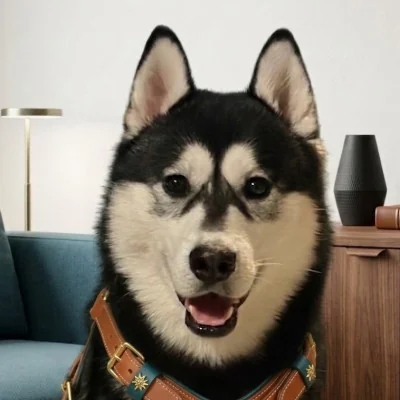
Vlad
BLACK AND WHITE HUSKY MARKING
France
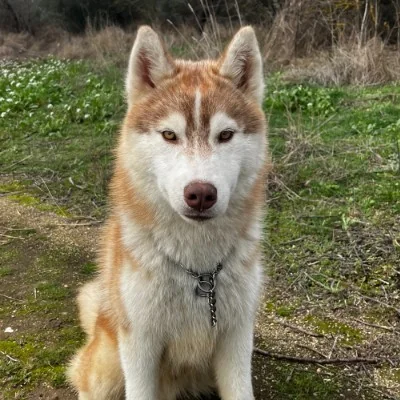
Ash dit Atlas
S.PL.Man.Mar
France
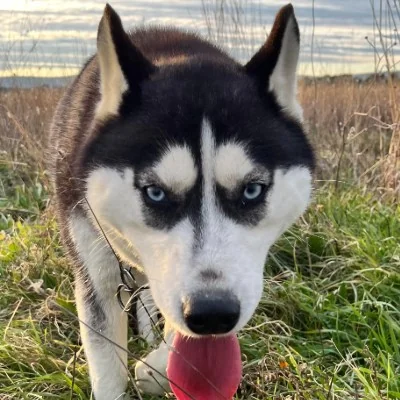
Ume
S.Pl.Man.Cha.Noi.
France
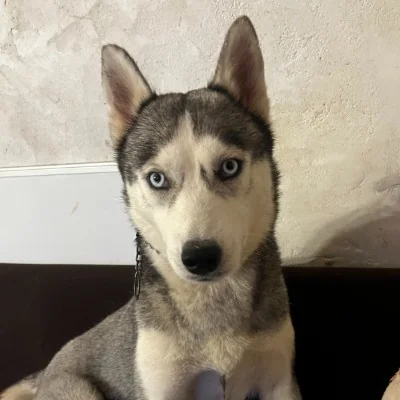
Uska
Gri.
France
Breeds from the Same Group
Discover other dog breeds from the same group