
Bernese Mountain Dog
Other names: Dürrbachler, Berner Sennenhund, Bernese Mountain Dog
An imposing giant with a tender heart, the Bernese Mountain Dog captivates with its spectacular tricolor coat and gentle, soulful expression. A very large breed, males stand between 64 and 70 centimeters at the withers while females measure 58 to 66 centimeters, with weight ranging from 40 to 70 kilograms. ... Read more
Are you a breeder or owner of a Bernese Mountain Dog?
Create your free account and request your dog's pedigree in just a few clicks. Use our tools to manage your kennel and select your breeding stock in the best conditions.
Are you a breeder or owner of a Bernese Mountain Dog?
Create your free account, manage your kennel and pedigree requests with our tools.
Create my accountHistory & Origin
T he history of the Bernese Mountain Dog has its roots in the Swiss mountains, more specifically in the canton of Bern from which it takes its name. Its exact origins are debated among canine specialists. Some claim it descended from Tibetan mastiffs brought by Roman legions during the conquest of Switzerland in the first century BC, used as war dogs and livestock guardians.
Other theories, supported by the discovery in 1924 of canine skulls in a lake dwelling near Lake Zurich, suggest that the breed is much older and native to Helvetia for several millennia. In any case, by the Middle Ages, these sturdy dogs were assisting Bernese farmers in the villages of Dürrbach and Burgdorf.
Their versatility was impressive: they guarded farms and livestock in the high alpine pastures, protected merchants during their travels, and most notably, pulled milk carts to the cheese dairies, earning them the affectionate nickname of "the poor man's horse." In 1899, the La Berna association brought together the first dedicated breeders. Four specimens were shown at an exhibition in 1902, marking the beginning of official recognition.
In 1907, the Swiss Dürrbachler Club was established to promote the breed, then called Dürrbachler after the hamlet of Dürrbach. It was not until 1913 that the name was standardized to Bernese Mountain Dog, aligned with the other Swiss mountain dogs.
The breed suffered losses during World War II but was preserved through the introduction of Newfoundland bloodlines in 1949 to soften its temperament.
Today recognized by the FCI since the early 20th century and classified in Group 2, the Bernese Mountain Dog has become a prized companion dog while retaining its working abilities.
Register your Bernese Mountain Dog with our club and enjoy a modern alternative offering greater freedom to breeders, with innovative breeding management features.
Description
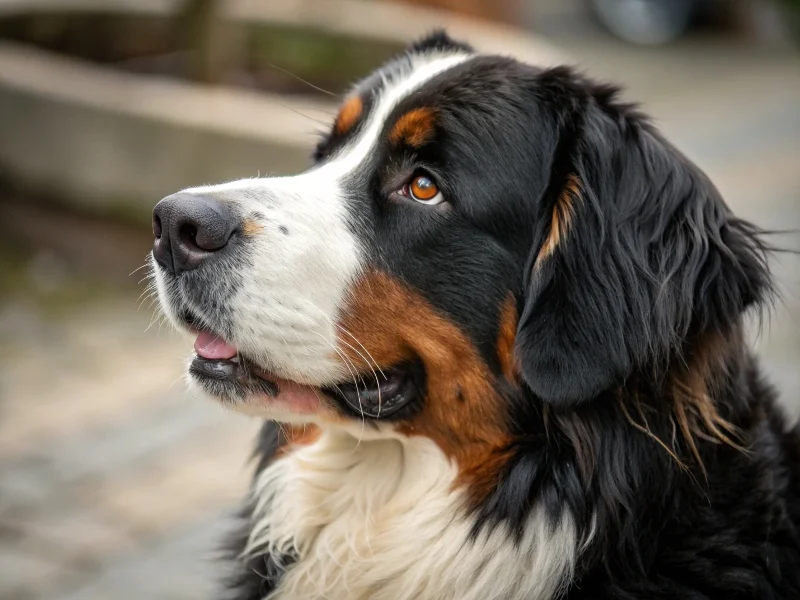
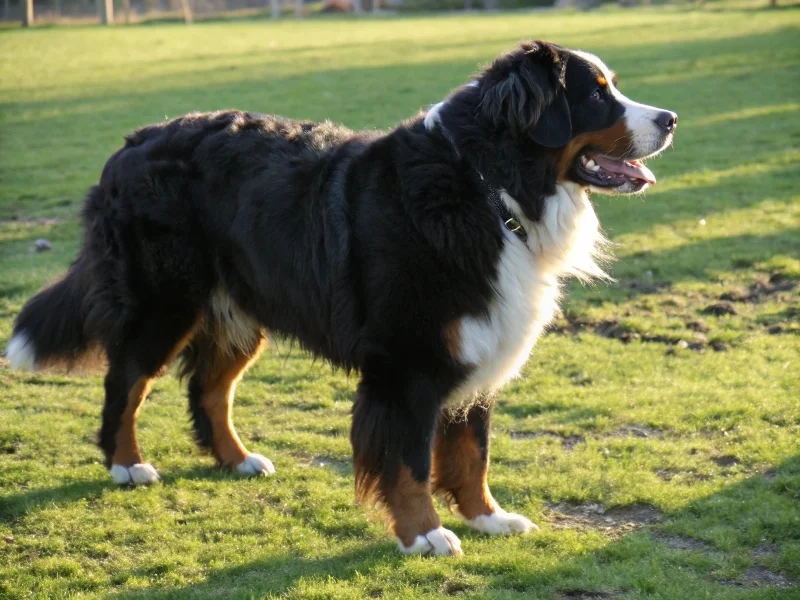
A n imposing giant with a tender heart, the Bernese Mountain Dog captivates with its spectacular tricolor coat and gentle, soulful expression. A very large breed, males stand between 64 and 70 centimeters at the withers while females measure 58 to 66 centimeters, with weight ranging from 40 to 70 kilograms. Its powerful body, well-proportioned and slightly longer than tall, conveys an impression of harmonious sturdiness without heaviness.
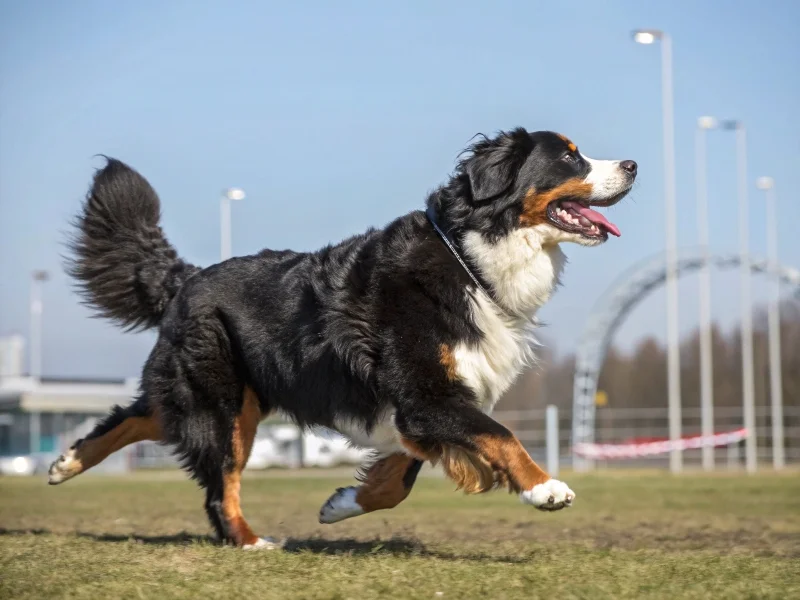
Its long, lustrous coat, straight or slightly wavy, displays a deep black ground color enhanced by rust and white markings placed with precision. The white chest marking forms a distinctive Swiss cross on the forechest, while a white blaze runs up the forehead, passes between the eyes, and extends down the muzzle. Rust patches adorn the area above the eyes, while rust also appears on the cheeks, legs, and under the tail. The feet are tipped with white.
Its massive, short head features a black nose, a slightly rounded skull, and triangular drop ears with rounded tips. Its dark brown, almond-shaped eyes express gentle intelligence and benevolent alertness. Its bushy tail, carried low at rest, rises to back level when the dog is animated.
Its temperament reveals an exceptional companion: calm, affectionate, and legendarily patient, particularly with children. Loyal to the point of becoming a devoted shadow, this breed displays a profound need for closeness with its owners. Naturally protective without aggression, it remains reserved yet courteous with strangers, exhibiting the quiet confidence inherited from its ancestors who guarded Alpine farms.
Personality
T he Bernese Mountain Dog embodies pure gentleness and patience. This gentle giant with a heart of gold develops a deep bond with its family, becoming a true velcro dog that follows its owners from room to room. Its affectionate nature is expressed through a constant desire for closeness and cuddles, despite its imposing size.
Calm and composed, this breed displays remarkable patience with children, tolerating their play with an admirable level of forbearance. Naturally protective without being aggressive, it remains reserved with strangers while staying courteous, announcing their presence with a deep, clear bark.
Intelligent and blessed with an excellent memory, this breed learns easily but retains a certain sensitivity that requires a gentle approach to training. Its guardian instinct remains evident, watching attentively over its territory and family members without ever displaying unnecessary aggression.
Photo Gallery


Breed Characteristics
General Information
- Category: Shepherd
- Origin: Switzerland
- FCI Recognition: Yes (Group 2)
- Est. monthly upkeep: 80-120
- Daily exercise: 60 minutes
Key Facts
- Height: 58.00 to 70.00 cm
- Weight: 35.00 to 70.00 kg
- Life expectancy: 8 to 11 years
- Average price: 1000.00 to 2000.00 €
-
Grooming frequency:6/10
Training Tips
Training begins at two months of age using methods based on positive reinforcement, gentleness, and encouragement. This sensitive breed does not tolerate harsh treatment and learns best through praise. Early socialization develops a balanced temperament and limits excessive wariness. Adolescence requires patience and reassurance, a period during which the dog may lose confidence. Its slow maturation, both physical and mental, requires consistency without rushing.
Health & Common Conditions
General Health
The Bernese Mountain Dog possesses a robust and hardy constitution, perfectly suited to cold climates thanks to its dense coat. It admirably tolerates cold and humidity, a legacy of its Swiss mountain ancestors. Its balanced temperament also contributes to its overall well-being.
Unfortunately, this breed has a shorter life expectancy than other large breeds, ranging between 7 and 10 years. This reduced longevity is partly explained by certain genetic predispositions related to its imposing size. Maintaining an optimal weight remains fundamental to preserving its joints.
Regular veterinary check-ups, from an early age, allow for early detection of potential health conditions. A quality diet suited to large breeds and moderate physical activity support its overall health. Vigilance after meals helps prevent the risk of gastric torsion.
Common Conditions
The breed exhibits a predisposition to hip and elbow dysplasia, joint conditions commonly seen in large dogs. Screening radiographs of breeding stock and maintaining optimal weight help limit these risks. Controlled growth during the first months protects the developing joints.
Gastric torsion constitutes a potentially fatal veterinary emergency. It presents with a distended abdomen, restlessness, and unproductive attempts to vomit.
Dividing meals into smaller portions and avoiding intense physical activity before and after feeding significantly reduce this risk.
Histiocytosis, a cancerous disease of particular concern in the breed, unfortunately affects certain lines. Attentive veterinary monitoring and selecting a responsible breeder who performs all recommended health testing constitute the best prevention. Current veterinary advances offer increasingly effective treatment options.
Care & Living Environment
Daily Care
The Bernese Mountain Dog requires weekly brushing to maintain a healthy, long, and lustrous coat while preventing mat formation.
This frequency increases considerably during the two annual shedding seasons in spring and fall, periods during which daily brushing becomes necessary to manage the heavy hair loss.
Bathing should remain occasional, approximately every two to three months, to preserve the coat's natural protective oils. The pendant ears require weekly inspection and cleaning to prevent infections, a common concern with this ear type.
Nail trimming should be performed when nails can be heard clicking on the floor, typically monthly. Regular dental care prevents tartar buildup.
During summer months, special attention is required as the dense coat makes this breed sensitive to heat, necessitating constant access to shaded areas and fresh water.
Recommended Living Environment
The Bernese Mountain Dog thrives ideally in a house with a yard offering outdoor space to survey its territory. Apartment living remains feasible if daily outings are sufficient, although its imposing size complicates this option.
Its dense coat provides admirable protection from cold but makes the breed sensitive to high temperatures, requiring a cool environment in summer.
Recommended Activities
Search and tracking games stimulate his intelligence without overexerting him. Activities should remain moderate, emphasizing quality over intensity, while avoiding overly athletic exercises that place excessive strain on his joints.
Frequently Asked Questions
The Bernese Mountain Dog is a large-sized dog. Males stand between 64 and 70 cm at the withers with a weight of 50 to 60 kg. Females are slightly smaller, measuring 58 to 66 cm and weighing 40 to 50 kg. This imposing breed reaches its adult size at approximately 18 to 24 months of age.
The Bernese Mountain Dog possesses a gentle and affectionate temperament. This is a calm, patient dog that is deeply devoted to its family. It adores children and is protective without being aggressive. Sociable with other animals, it may sometimes appear reserved with strangers but remains friendly once trust is established.
The life expectancy of the Bernese Mountain Dog ranges between 7 and 10 years on average. This relatively short lifespan is attributed to the breed's large size and predisposition to certain health conditions. A proper diet, regular veterinary checkups, and moderate physical activity can help promote longevity and quality of life.
Yes, the Bernese Mountain Dog has a thick double coat that requires regular maintenance. He sheds year-round with two heavy shedding periods in spring and fall. Weekly brushing becomes daily during shedding seasons to remove dead hair and maintain a healthy coat.
The Bernese Mountain Dog is an excellent family dog. Its gentle and patient temperament makes it an ideal companion for households with children. It thrives in a home with a yard but can also adapt to apartment living if its exercise needs are met. Its protective and loyal nature makes it an attentive and reassuring guardian.
Expert Rating
Overall rating for the Bernese Mountain Dog
This overall rating is calculated from 7 key criteria: activity level, trainability, guarding ability, child and animal friendliness, grooming frequency and barking level.
A 10-point bonus is added as this breed is among the most popular!
Activity level
Trainability
Sociability
Guarding ability
Latest registered Bernese Mountain Dog
Dogs of this breed recently added to the FBKC registry

Sia Des Légendes du Triskel
BLACK TAN AND WHITE
France
Twix
BLACK TAN AND WHITE
France
Breeds from the Same Group
Discover other dog breeds from the same group