
German Pinscher
Other names: Pinscher moyen, Deutscher Pinscher, German Pinscher
Elegant as an aristocrat and energetic as an athlete, the German Pinscher embodies the quintessence of the versatile guard dog. This medium-sized companion, standing between 45 and 50 cm at the withers and weighing 14 to 20 kg, displays a perfectly square silhouette where every muscle is defined beneath his... Read more
Are you a breeder or owner of a German Pinscher?
Create your free account and request your dog's pedigree in just a few clicks. Use our tools to manage your kennel and select your breeding stock in the best conditions.
Are you a breeder or owner of a German Pinscher?
Create your free account, manage your kennel and pedigree requests with our tools.
Create my accountHistory & Origin
T he roots of the German Pinscher trace back to the ancient history of Europe, possibly dating to the peat bog dogs domesticated nearly 5,000 years ago.
The earliest authenticated visual depictions of similar dogs appear in paintings from the Middle Ages and Renaissance, bearing witness to this breed's ancestral presence in Germanic regions. As early as the 18th century, these versatile dogs faithfully accompanied German farmers and coachmen.
At the turn of the 19th century, the German Pinscher established itself as an indispensable farm dog, valued for its formidable efficiency in hunting rodents and guarding property.
Its very name reflects this function: "Pinscher" means "biter" in Old High German, describing its technique for cornering rats and mice. At that time, it shared its origins with the Schnauzer, then considered a "wire-haired Pinscher," with the two breeds distinguished only by coat texture.
The official standard was established in 1896, marking the formal recognition of the breed and its definitive separation from the Schnauzer.
The breed had already appeared in the German Stud Book as early as 1880. Tragically, the two World Wars nearly sounded the death knell for this ancient lineage. After 1945, the German Pinscher came close to extinction, with only a handful of surviving specimens.
A dedicated breeder named Werner Jung undertook a rigorous breeding program in the 1950s that saved the breed. His meticulous work led to official recognition by the FCI in 1955.
Today, although still rare and classified as a vulnerable breed in 2003, the German Pinscher is experiencing renewed interest, particularly in France, which has become one of the leading producing countries, thus perpetuating the legacy of this ancient ratter turned modern companion.
We offer the opportunity to register your German Pinscher with FBKC, a modern alternative to traditional clubs. Our club recognizes the breed and issues pedigrees spanning four generations.
Description
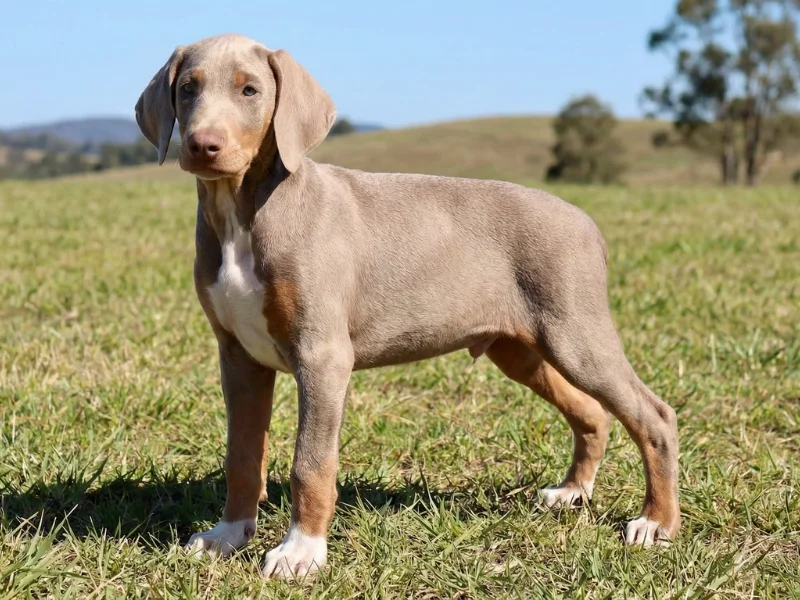
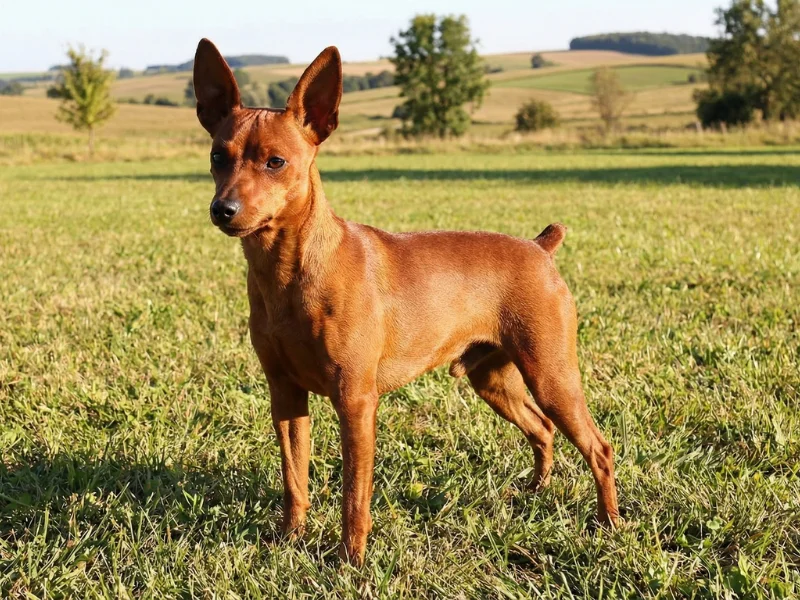
E legant as an aristocrat and energetic as an athlete, the German Pinscher embodies the quintessence of the versatile guard dog. This medium-sized companion, standing between 45 and 50 cm at the withers and weighing 14 to 20 kg, displays a perfectly square silhouette where every muscle is defined beneath his short, glossy coat.
His harmonious construction immediately evokes that of his descendant, the Doberman Pinscher, in a more compact and proportionate version.
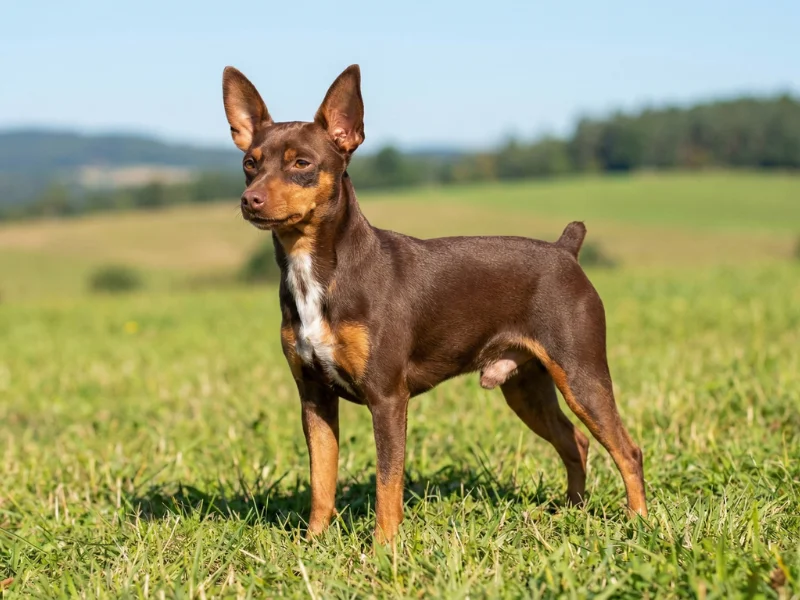
His short, lustrous coat fits perfectly over his athletic form, leaving no doubt about his well-developed musculature. The coat may display two distinct variations: either a solid color ranging from stag red to dark red-brown, or a striking bicolor of jet black enhanced with tan markings located above the eyes, on the throat, chest, legs, and under the tail.
This complete absence of undercoat gives him that characteristic glossy appearance while greatly facilitating his grooming needs.
His elongated, strong head is characterized by a flat forehead, dark-colored oval eyes expressing keen intelligence, and V-shaped ears folding forward. His expression conveys both vigilance and confidence.
The proud carriage of his body, supported by straight legs and a moderately broad chest, lends a natural grace to his every movement.
In terms of temperament, the German Pinscher proves to be an intelligent bundle of energy endowed with exemplary loyalty.
Protective without being aggressive, lively without being nervous, he perfectly combines the qualities of a guard dog with those of a devoted family companion. His strong-willed character, however, requires an experienced hand to positively channel his natural drive.
Personality
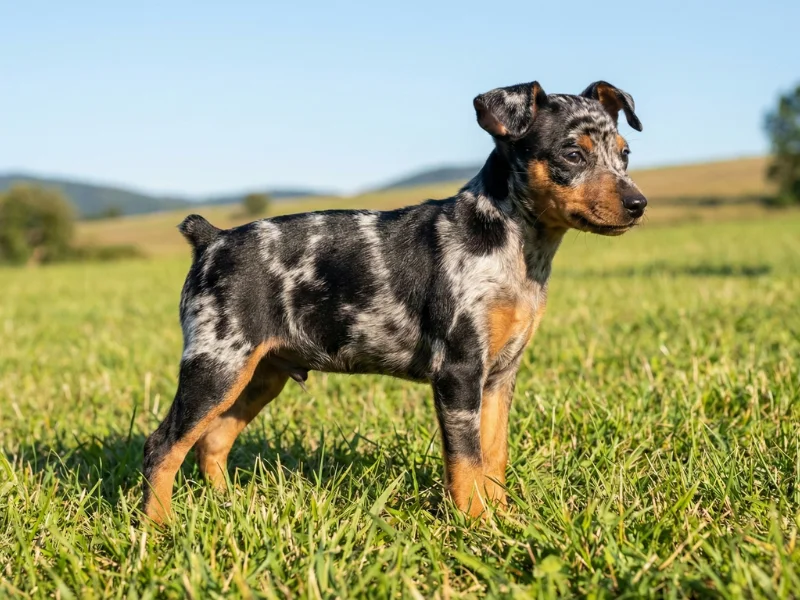
T he Miniature Pinscher embodies liveliness in a small, self-assured body. This energetic and fearless dog is never intimidated by its diminutive size and displays a confident personality that commands respect.
Deeply devoted to its owner, it develops remarkable loyalty while maintaining a certain independence of character.
In daily life, this little athlete proves to be a cheerful and playful companion who loves participating in all family activities.
Its keen intelligence allows it to learn quickly, although it may occasionally display some stubbornness once it has made up its mind. With strangers, it shows natural wariness and does not hesitate to sound the alarm with conviction, making it an excellent watchdog.
Despite its spirited temperament, it knows how to be gentle and affectionate with its family, readily seeking tender moments on the lap of its favorite human.
Its quick wit and mischievous nature make it a true little clown that brightens everyday life, though it requires firm training to channel its strong-willed character and prevent it from taking over the family hierarchy.
Photo Gallery


Breed Characteristics
General Information
- Category: Approval
- Origin: Germany
- FCI Recognition: Yes (Group 2)
- Est. monthly upkeep: 50-70
- Daily exercise: 45 minutes
Key Facts
- Height: 25.00 to 30.00 cm
- Weight: 4.00 to 6.00 kg
- Life expectancy: 12 to 15 years
- Average price: 900.00 to 1500.00 €
-
Grooming frequency:2/10
Training Tips
Training the Miniature Pinscher should ideally begin at 2 to 3 months of age with a firm yet positive approach based on play and reward. His keen intelligence facilitates learning, although his independent nature requires consistency and patience. Early socialization is essential to temper his natural wariness toward strangers and to encourage good relations with other dogs. Do not tolerate any growling from the time of acquisition and clearly establish the family hierarchy to prevent him from becoming dominant or an excessive barker.
Health & Common Conditions
General Health
The Miniature Pinscher benefits from a robust and hardy constitution that grants it a remarkable longevity of up to 15 years under proper conditions.
Its natural vitality and boundless energy reflect overall sound health, inherited from thoughtful selective breeding that has avoided the excesses of intensive breeding practices. This sturdy little dog handles physical exercise well despite its compact size.
However, its short coat without undercoat makes it particularly sensitive to extreme temperatures. Cold, dampness, and inclement weather can quickly cause discomfort, requiring protective clothing during winter outings. Its small size may also predispose it to certain joint vulnerabilities that warrant careful monitoring.
Regular veterinary checkups help keep this dynamic companion in peak condition. Annual wellness visits including vaccinations, deworming, and general examinations help prevent potential health concerns.
A balanced diet suited to its fast metabolism and maintaining optimal body weight protect its delicate joints and ensure a long, active life for this energetic little athlete.
Common Conditions
The main health concerns in the Miniature Pinscher involve the musculoskeletal system, particularly patellar luxation, which causes lameness and pain when the kneecap displaces from its normal position.
Legg-Calvé-Perthes disease, affecting the femoral head through progressive degeneration, also occurs in some individuals. Congenital elbow and shoulder luxation are among other possible orthopedic conditions.
Regarding ocular health, corneal disorders such as corneal dystrophy or progressive retinal atrophy may occur. Aseptic necrosis of the femoral head represents another condition to monitor.
Dermatological issues, particularly calluses due to sensitive skin, sometimes require specific care. Acral mutilation syndrome and mucopolysaccharidosis remain rare.
Fortunately, early screening allows detection of most of these conditions. Genetic testing available through responsible breeders, regular veterinary care, and appropriate physical activity contribute greatly to maintaining the health of this dynamic little dog throughout its life.
Care & Living Environment
Daily Care
Grooming the Miniature Pinscher is particularly straightforward thanks to its short, smooth coat that sheds very little. Weekly brushing with a soft-bristle brush is more than sufficient to remove dead hair and maintain the natural sheen of the coat.
Occasional massages with a grooming mitt stimulate the sebaceous glands and help prevent skin problems.
Bathing should remain occasional, once or twice per quarter at most, as excessive frequency can dry out the breed's sensitive skin. Dental care deserves particular attention, ideally daily or at minimum three times weekly, to prevent tartar buildup and the dental problems common in this breed. Nails require monthly trimming if they do not wear down naturally.
Regular ear cleaning and inspection after each outing help detect parasites or foreign objects. The eyes also require careful monitoring.
Paw pads need frequent inspection. During cold weather, an appropriate coat protects this cold-sensitive breed during outings. These simple yet consistent grooming practices ensure comfort and well-being for this low-maintenance companion.
Recommended Living Environment
The Miniature Pinscher adapts perfectly to apartment living thanks to its small size and minimal shedding. It appreciates comfortable indoor spaces where it can easily stay warm.
A house with a fenced yard is a welcome bonus but by no means essential. Its sensitivity to cold makes it an indoor dog that far prefers the cozy comfort of home to prolonged outdoor exposure.
City or country living suits this breed equally well, provided it receives regular and stimulating daily outings.
Recommended Activities
Tracking and scent work games stimulate his keen intelligence. Interactive indoor games such as treat-dispensing toys or obedience exercises strengthen the handler-dog bond.
Moderate canicross activities suit his endurance level. Simply avoid overly lengthy activities in cold or damp weather to protect this cold-sensitive little companion.
Frequently Asked Questions
The German Pinscher possesses remarkable intelligence that greatly facilitates the learning of basic commands. However, his strong-willed character and natural self-assurance require an experienced handler capable of establishing firm boundaries from an early age. His independent temperament can make him somewhat stubborn when faced with commands he deems uninteresting. Consistent training based on positive reinforcement and patience yields excellent results with this lively dog who learns quickly but chooses his moments.
Size constitutes the main difference between these two varieties. The German Pinscher or medium Pinscher stands 45 to 50 cm at the withers and weighs 14 to 20 kg, while the Miniature Pinscher reaches only 25 to 30 cm and weighs 4 to 6 kg. Their ears also differ, being pendant in the medium variety and often erect in the miniature. Despite these physical variations, they share the same energetic and courageous temperament. Both display a harmonious square build and a short, glossy coat. Their lively character and loyalty to their family remain identical regardless of their size.
The German Pinscher develops a deep attachment to its family and greatly prefers the company of its humans to prolonged solitude. It tolerates reasonable absences of a few hours if its training has gradually prepared it for this from an early age. Excessively long periods of isolation can lead to boredom and undesirable behaviors such as excessive barking or destructive tendencies. An enriched environment with interactive toys and prior exercise helps better manage time spent alone. This is a companion that truly thrives with owners who are present and available.
Ce athletic and energetic dog requires a minimum of one hour of daily exercise spread across multiple outings. Its origins as a ratter and farm dog give it remarkable endurance and a constant need for physical and mental stimulation to maintain its balance. Agility, canicross, and long brisk walks are perfectly suited to its sporting temperament. Without sufficient activity, it may develop behavioral issues. Tracking games and obedience exercises ideally complement its energy expenditure by engaging its keen intelligence and natural liveliness.
The German Pinscher can live harmoniously with respectful children who understand the boundaries that must not be crossed with an animal. His patience is limited when faced with rough handling or loud noises, which requires supervision of interactions with very young children. When properly socialized from an early age, he becomes a dynamic play companion for older children capable of participating in his training. His boundless energy and playful nature are well suited to an active family. Clear rules established from the start ensure harmonious and safe cohabitation for everyone.
Expert Rating
Overall rating for the German Pinscher
This overall rating is calculated from 7 key criteria: activity level, trainability, guarding ability, child and animal friendliness, grooming frequency and barking level.
Activity level
Trainability
Sociability
Guarding ability
Latest registered German Pinscher
Dogs of this breed recently added to the FBKC registry

Sugana
NOIR ET FEU
France
Savine
NOIR ET FEU
France
Breeds from the Same Group
Discover other dog breeds from the same group