

Continental Bulldog
Other names: Conti, Continental Bulldog, Old Type Pickwick Bulldog
A true combination of power and gentleness, the Continental Bulldog captivates with its athletic silhouette that stands in contrast to that of its English cousin.
This medium-sized molossoid breed displays a compact, muscular body, nearly square in proportion, where every line reflects a structure c... Read more
Are you a breeder or owner of a Continental Bulldog?
Create your free account and request your dog's pedigree in just a few clicks. Use our tools to manage your kennel and select your breeding stock in the best conditions.
Are you a breeder or owner of a Continental Bulldog?
Create your free account, manage your kennel and pedigree requests with our tools.
Create my accountHistory & Origin
T he history of the Continental Bulldog begins in 1966 in Switzerland thanks to the passion and determination of Imelda Angehrn, an English Bulldog breeder deeply concerned about the numerous health problems afflicting this breed.
Devoted to the exceptional character of the bulldog yet aware of its physical suffering caused by excessive aesthetic selection, she undertook rigorous selective breeding within her kennel to create a more dynamic, more athletic breed that was above all less prone to disease.
In the 1980s, this awareness intensified in response to the respiratory, joint, and dermatological problems affecting modern English Bulldogs.
In 2000, with authorization from the Swiss Kennel Club, Imelda Angehrn launched a program of controlled crossbreedings between carefully selected English Bulldogs, Old English Bulldogs, and an infusion of Bullmastiff.
The ambitious goal was to restore the original bulldog type as it existed before show breeding dramatically transformed its conformation. Initially named "Old Type Pickwick Bulldog," these dogs embodied the desire to reconcile health and temperament.
Official recognition came in 2004 when the Swiss Kennel Club renamed the breed "Continental Bulldog" to clearly distinguish it from the English Bulldog. This name also emphasizes its continental European origin and its ambition to become a healthy alternative to the traditional bulldog.
France recognized the breed in July 2014, followed by Germany, Belgium, Sweden, the Czech Republic, Hungary, Poland, Slovakia, and Estonia. Today, approximately ten European countries welcome this breed, which awaits recognition by the Fédération Cynologique Internationale.
The journey was long and demanding: it required establishing a breeding population of at least 8 distinct lines with a minimum of 2 males and 6 females sharing no common ancestors over three generations, representing more than 1,000 registered dogs.
This success reflects an exemplary breeding program that places animal welfare at the heart of its priorities, creating a bulldog capable of breathing freely, moving with ease, and fully enjoying life as a family companion.
Register your Continental Bulldog with FBKC to benefit from a modern alternative offering breeders greater flexibility and innovative kennel management features.
Description
A true combination of power and gentleness, the Continental Bulldog captivates with its athletic silhouette that stands in contrast to that of its English cousin.
This medium-sized molossoid breed displays a compact, muscular body, nearly square in proportion, where every line reflects a structure carefully designed for health and mobility.
Taller and more streamlined than the traditional English Bulldog, it nonetheless retains the characteristic power of bulldogs while breathing freely, even at a gallop.
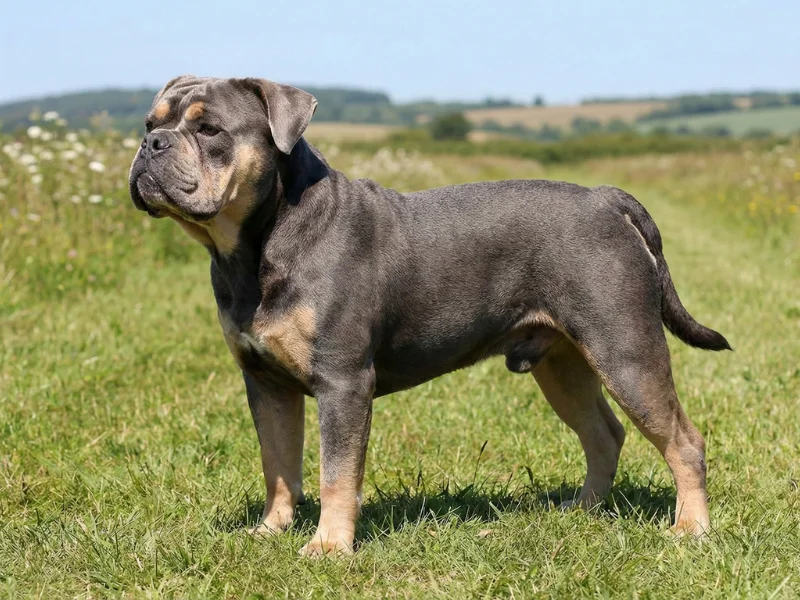
The head of the Continental Bulldog exhibits harmonious proportions, broad without excess, adorned with moderate wrinkles that enhance its expression without distorting it.
Its well-developed, non-upturned muzzle allows for easy breathing, while its round, well-defined eyes, neither sunken nor protruding, shine with intelligence and mischief.
The high-set ears are carried in rose or button style, adding a touch of elegance to its profile. Its short, smooth, and glossy coat, sometimes featuring a fine undercoat, comes in all colors accompanied by a black nose: solid, brindle, or combined with white, with or without a black mask.
The temperament of the Conti, as it is affectionately nicknamed by its admirers, perfectly blends balance and joie de vivre. Far from the image of an aggressive molossoid, this companion dog proves attentive, confident, and decidedly sociable.
Calm indoors where it enjoys cuddles, it reveals itself to be lively and curious outdoors, always ready to play and discover new adventures. Its deep attachment to its family makes it a faithful companion that tolerates prolonged solitude poorly but gets along wonderfully with children and other animals.
Personality
T he Continental Bulldog radiates a balanced temperament that is the essence of its charm. Calm and composed in the home, this gentle giant loves cuddle time on the family sofa, following its humans from room to room with touching devotion.
Outdoors, its personality transforms: lively, curious, and always ready to play, it demonstrates surprising agility for a molosser-type breed.
Its natural sociability is one of its greatest assets. Confident without being arrogant, it greets visitors with enthusiasm and readily makes new acquaintances.
Its legendary gentleness with children is remarkable, tolerating their games with admirable patience while remaining protective. Far from the image of an aggressive molosser, this family dog enjoys the company of other animals when properly socialized from an early age.
Its intelligence and willingness to learn greatly facilitate training. Attentive to its handler's commands, it readily accepts obedience lessons and adapts remarkably well to various circumstances. The only drawback: its sensitivity to prolonged solitude.
This endearing companion requires regular human presence and only truly thrives when surrounded by its family, sometimes displaying mild anxiety during extended absences.
Photo Gallery




Breed Characteristics
General Information
- Category: Approval
- Origin: Switzerland
- FCI Recognition: Yes (Group 2)
- Est. monthly upkeep: 60-90
- Daily exercise: 60 minutes
Key Facts
- Height: 42.00 to 46.00 cm
- Weight: 20.00 to 30.00 kg
- Life expectancy: 10 to 12 years
- Average price: 1500.00 to 2500.00 €
-
Grooming frequency:2/10
Training Tips
Training the Continental Bulldog ideally begins at 8 weeks of age with a gentle yet firm approach. His intelligence and eagerness to please facilitate learning basic commands within a few weeks. Positive reinforcement with food rewards yields excellent results with this food-motivated breed. Early socialization with people, children, other dogs, and various animals develops a well-balanced temperament. Pay particular attention to gradually acclimating the dog to alone time to prevent separation anxiety.
Health & Common Conditions
General Health
The Continental Bulldog displays a remarkable robustness that stands in stark contrast to the chronic health problems of its English cousin.
Created specifically to improve the quality of life for bulldogs, this breed breathes freely even during sustained exertion, tolerates physical exercise better, and handles temperature variations more effectively. Its life expectancy of 12 to 13 years attests to its sound constitution.
Rigorous selection practiced by conscientious breeders minimizes hereditary genetic defects.
Its well-developed muzzle and open nostrils allow for easy breathing, while its longer legs facilitate mobility without placing undue stress on the joints. Its skin features moderate wrinkles that generally do not lead to chronic dermatitis as seen in other brachycephalic breeds.
Annual veterinary examinations remain essential nonetheless to monitor weight, as this food-motivated breed tends to gain weight easily without regular exercise. Monitoring the ears, eyes, and skin folds prevents minor infections.
Selecting a recognized breeder who conducts health testing on breeding stock ensures the acquisition of a healthy puppy carrying the best genetic predisposition for a long and happy life.
Common Conditions
Although considerably healthier than the English Bulldog, the Continental Bulldog may exhibit certain predispositions common to molossoid breeds. Hip and elbow dysplasia is among the concerns to monitor, though its occurrence remains moderate thanks to strict screening of breeding stock.
Radiographic evaluations allow for early identification of this joint malformation and appropriate adjustment of physical activity.
Dermatological issues remain possible, particularly in skin folds if hygiene is not maintained rigorously. Some individuals may develop food or environmental allergies manifesting as itching and skin redness.
Brachycephalic syndrome, while significantly reduced compared to the English Bulldog, warrants vigilance during extreme heat or intense exertion.
Responsible breeders systematically perform genetic testing on their breeding stock and provide health certificates attesting to the absence of major hereditary defects.
The European Convention on Pet Animal Breeding and Swiss animal protection law strictly regulate the breeding of this breed. With appropriate veterinary care, a balanced diet, and regular exercise, the Continental Bulldog fully enjoys its years in excellent condition.
Care & Living Environment
Daily Care
The short, smooth coat of the Continental Bulldog requires minimal maintenance, a welcome relief for owners who are not inclined toward marathon grooming sessions.
A weekly brushing with a soft-bristle brush is more than sufficient to remove dead hair and maintain the natural shine of the coat. The frequent absence of an undercoat considerably reduces shedding in the home.
Regular inspection of the skin folds, particularly around the muzzle, prevents the accumulation of moisture and debris that can cause irritation.
Gentle cleaning with a soft wipe or damp cotton pad, followed by thorough drying, keeps these areas healthy. The ears benefit from weekly checks and cleaning with an appropriate ear solution when necessary.
Dental care two to three times per week helps limit tartar buildup, while nails require monthly trimming when they become too long. The eyes should be gently cleaned as needed with a gauze pad moistened with saline solution.
The paw pads deserve inspection after each outing, particularly on rough terrain. This simple and quick grooming routine keeps your Conti in top condition without excessive demands.
Recommended Living Environment
The Continental Bulldog adapts remarkably well to apartment living thanks to its calm indoor temperament and medium size. A house with a fenced yard represents the ideal setting, offering personal space for exploration.
This dog tolerates heat moderately due to its brachycephalic structure, requiring a cool area during summer months.
Well suited to both urban and rural environments, thriving with active families or individuals seeking a well-balanced companion.
Recommended Activities
Retrieving games and interactive play sessions stimulate his intelligence and strengthen the bond with his owner. Fun obedience training and adapted agility courses suit his playful temperament.
Woodland walks, scent games, and supervised swimming sessions during hot summer days delight this curious and energetic companion.
Frequently Asked Questions
The Continental Bulldog originated in Switzerland in 1966 thanks to breeder Imelda Angehrn. Developed to offer a healthier alternative to the English Bulldog, the breed resulted from controlled crosses between English Bulldogs, Old English Bulldogs, and Bullmastiffs. The breed was recognized in Switzerland in 2004 and subsequently in France in 2014.
Le Continental Bulldog breathes freely thanks to its well-developed muzzle and open nostrils. Unlike the English Bulldog, it does not suffer from severe brachycephalic syndrome. It can run, play, and exercise without respiratory difficulties even during sustained physical activity. Its improved health makes it a much more active breed.
The Continental Bulldog excels as a family dog thanks to its legendary gentleness with children. Patient and tolerant, it endures their play with remarkable good nature while remaining protective. Its balanced temperament and calm nature make it an ideal companion for households with children of all ages seeking a gentle molossoid breed.
The price of a Continental Bulldog puppy ranges from 1500 to 2500 euros depending on the lineage, the breeder's reputation, and conformity to the breed standard. This recent and rigorously selected breed justifies this price through health testing, veterinary care, and a strict breeding program ensuring healthy and well-balanced puppies.
The Continental Bulldog adapts perfectly to apartment living thanks to its calm indoor temperament and medium size. One hour of daily exercise is sufficient to meet its needs. Quiet and not prone to barking, it is naturally respectful of neighbors. Its composed demeanor is ideally suited to urban environments with regular outings.
Expert Rating
Overall rating for the Continental Bulldog
This overall rating is calculated from 7 key criteria: activity level, trainability, guarding ability, child and animal friendliness, grooming frequency and barking level.
Activity level
Trainability
Sociability
Guarding ability
Parent Breeds
Discover the breeds that make up the Continental Bulldog

About this crossbreed
The Continental Bulldog represents a visionary breeding project initiated in 1966 by Swiss breeder Imelda Angehrn to create a healthier bulldog.
Controlled crosses between English Bulldogs selected for soundness, Old English Bulldogs, and Bullmastiff blood were aimed at recovering the functional conformation of the ancestral bulldog while eliminating the respiratory, joint, and dermatological problems of the modern English Bulldog.
Today, the Continental Bulldog stands as a stabilized breed with its own official standard, recognized in Switzerland since 2004 and in France in 2014.
Rigorous selection over multiple generations has established the desired characteristics: elongated muzzle, open nostrils, longer legs, moderate wrinkling, and optimal respiratory capacity.
Over 1,000 registered dogs form a genetically stable population distributed across a minimum of 8 distinct lines.
Although originating from initial crosses, this breed is no longer considered a hybrid in the modern sense but rather a purebred in its own right with pedigrees recognized by approximately ten European countries.
Latest registered Continental Bulldog
Dogs of this breed recently added to the FBKC registry

Bluey Des Hydres des Mares **PET HOME**
FAWN MERLE
France

Albert Des Hydres des Mares
FAWN
France

Trinity du Domaine des Pictons
FAWN
France
Breeds from the Same Group
Discover other dog breeds from the same group