
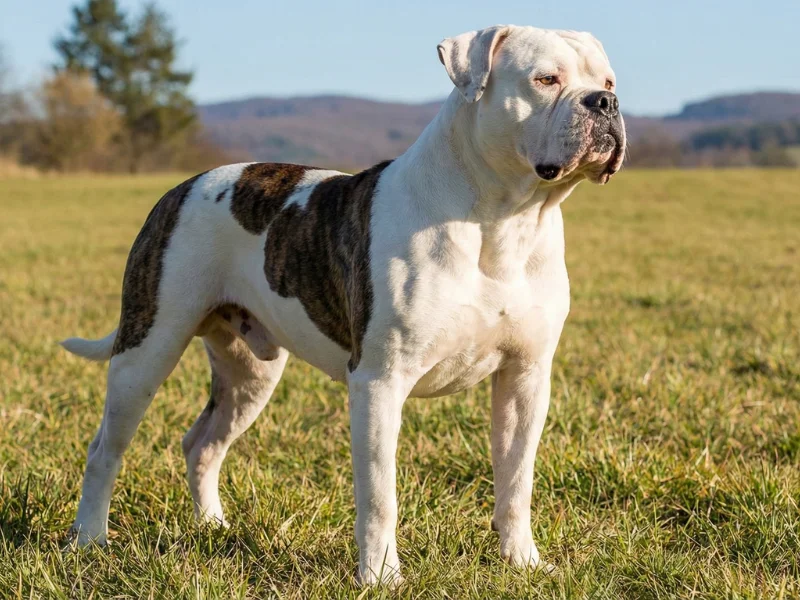
American Bulldog
Other names: American Bulldog, Boul'Am, Bulldog Américain, AM Bulldog, AmBull
Imagine a calm strength on four legs, capable of following you through the mountains then snuggling up beside you as evening falls. The American Bulldog embodies this fascinating duality: an athletic and powerful silhouette concealing a heart as tender as velvet.
This medium-sized molossoid breed displays impressive ... Read more
Are you a breeder or owner of a American Bulldog?
Create your free account and request your dog's pedigree in just a few clicks. Use our tools to manage your kennel and select your breeding stock in the best conditions.
Are you a breeder or owner of a American Bulldog?
Create your free account, manage your kennel and pedigree requests with our tools.
Create my accountHistory & Origin
T he history of the American Bulldog begins well before the birth of the United States, somewhere in the English countryside of the 17th century. Its ancestors, the sturdy Old English Working Bulldogs, accompanied British farmers in their daily tasks: herding livestock, protecting property, and driving cattle.
When English colonists undertook the great crossing to the New World, these faithful working companions naturally made the journey with them. Once settled in the southeastern American states, primarily Georgia, Alabama, and Florida, these dogs had to adapt to the particular conditions of the continent.
Farmers progressively selected the most powerful and athletic specimens, thus creating a truly American breed, built to withstand the harshness of agricultural life.
Fate nearly took a tragic turn after the Civil War. The population of these valuable workers declined dangerously through the 1940s, coming close to complete extinction.
Fortunately, two visionary enthusiasts refused to accept this disappearance: John D. Johnson and Allan Scott traveled through the most remote regions of the Old South to save the last remaining representatives of the breed.
Their divergent visions gave rise to the two current types. Johnson developed the Bully, more massive and guardian-oriented, while Scott shaped the Standard, preserving the original athletic abilities.
First registered in 1970 by the National Kennel Club, this revived breed has since enjoyed growing success, now valued as a family companion as much as for its working qualities and formidable guarding abilities.
Join our club and register your American Bulldogs with greater freedom! A modern alternative offering responsible breeders innovative management tools and resources.
Description
I magine a calm strength on four legs, capable of following you through the mountains then snuggling up beside you as evening falls. The American Bulldog embodies this fascinating duality: an athletic and powerful silhouette concealing a heart as tender as velvet.
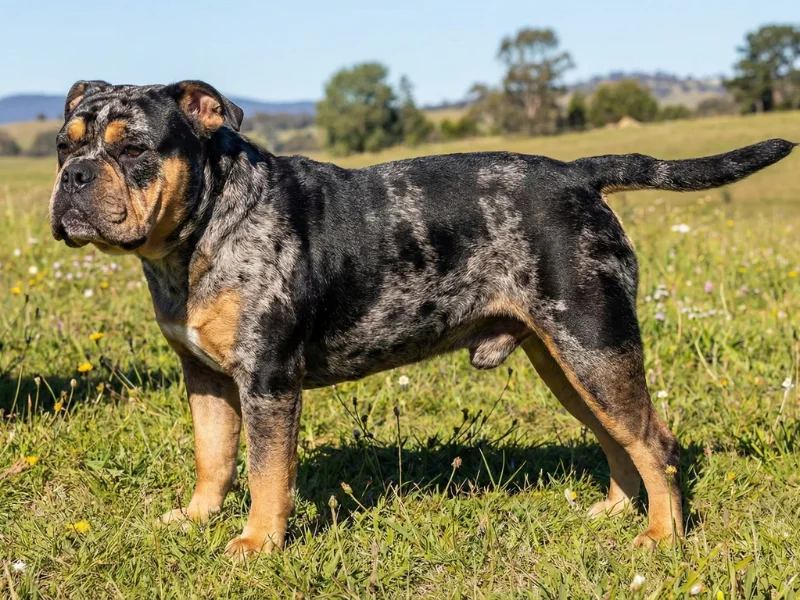
This medium-sized molossoid breed displays impressive musculature without ever veering into exaggeration. Its compact and well-proportioned body reveals its primary vocation as a versatile working dog.
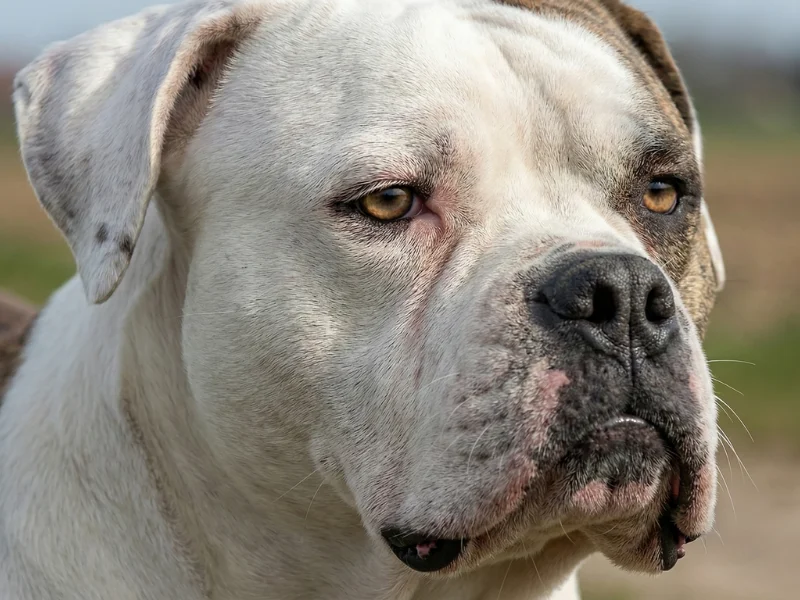
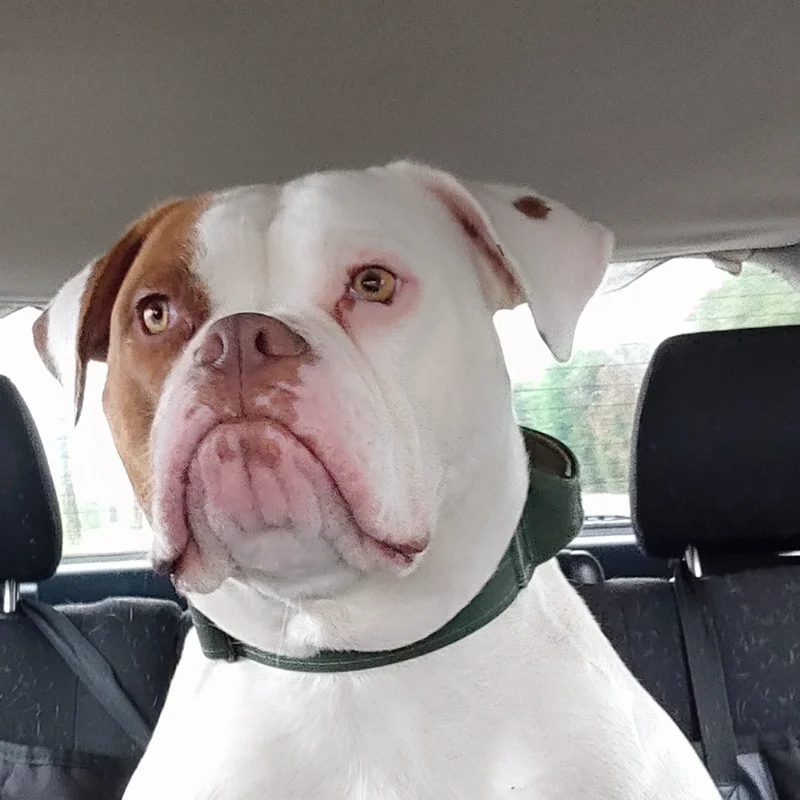
The head, broad and square, immediately draws the eye with its well-defined stop and slightly undershot lower jaw that gives it that characteristically determined expression. Its small dark eyes, often compared to pieces of coal, contrast with the gentleness of its gaze.
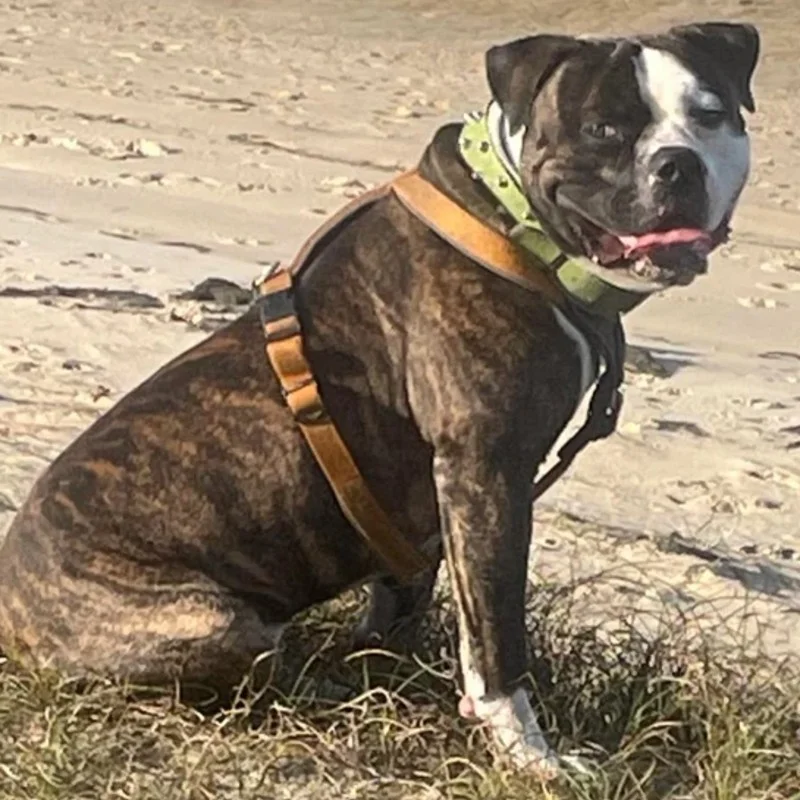
Two major types are distinguished within this breed: the Bully type, more stocky with a short muzzle reminiscent of its English cousin, and the Standard type, more streamlined and athletic while retaining its power. The majority of today's representatives are hybrids combining the qualities of both lines.
Its short, harsh coat, generally white with or without colored patches, requires only minimal maintenance. This light-colored coat, carried with pride, further accentuates its natural presence.
Behind this imposing build lies a companion overflowing with affection, always ready for adventure but equally happy to share your couch. A true athlete with a big heart who finds happiness only when closest to its family.
Personality
T he American Bulldog embodies pure loyalty. This devoted companion develops a deep attachment to his family, to the point of following his owner like an affectionate shadow hence his affectionate nickname of "Velcro dog".
His playful and jovial side brings a contagious energy to the home, turning every day into an adventure.
With children, he displays remarkable patience and an unexpected gentleness given his imposing stature. However, his natural power requires supervision during play with very young children.
Around strangers, he adopts a reserved and watchful attitude, making him a naturally effective guardian without excessive aggression. This unique combination of family devotion and protective vigilance perfectly characterizes this big-hearted molossoid breed.
Photo Gallery


Breed Characteristics
General Information
- Category: Guard
- Origin: USA
- FCI Recognition: No
- Est. monthly upkeep: 50-70
- Daily exercise: 60 minutes
Key Facts
- Height: 53.00 to 67.00 cm
- Weight: 30.00 to 55.00 kg
- Life expectancy: 11 to 14 years
- Average price: 1000.00 to 1500.00 €
-
Grooming frequency:2/10
Training Tips
Begin socialization at 8 weeks to shape a well-balanced adult. This intelligent molossoid breed learns quickly but possesses a strong-willed temperament requiring consistency and firm yet gentle guidance. Positive training methods based on rewards yield excellent results with this sensitive breed. Establish hierarchical rules clearly yet gently, avoiding any harshness that would break its trust. Early exposure to various environments, people, and other dogs prevents future shyness or aggression.
Health & Common Conditions
General Health
The American Bulldog typically displays a robust constitution inherited from its working ancestors. Its weather resistance and energetic temperament reflect overall sound health. This natural vigor allows the breed to fully enjoy an active life alongside its family for 11 to 14 years.
Nevertheless, as with any large-sized dog, certain precautions are warranted. Regular veterinary examinations enable early detection of breed-specific predispositions.
A balanced diet tailored to the dog's activity level, combined with diligent preventive care, gives your companion the best chance of aging gracefully and maintaining optimal condition.
Common Conditions
Hip and elbow dysplasia represents the primary health concern in this large-sized breed. This joint malformation can limit mobility if not detected early. Radiographic screening at 12-18 months of age allows for appropriate adjustment of physical activity.
White-coated specimens sometimes show a predisposition to congenital deafness, detectable within the first weeks of life. The Bully type, being more brachycephalic, may present respiratory difficulties related to its shortened muzzle.
Cataracts also affect certain individuals as they age. Fortunately, responsible breeding practices that prioritize health-tested breeding stock greatly minimize these risks, thus offering excellent prospects for long-term health.
Care & Living Environment
Daily Care
Here is a low-maintenance companion when it comes to grooming! His short, harsh coat requires only weekly brushing to remove dead hair and maintain its natural sheen.
This simple routine is more than sufficient, with slightly increased frequency during spring and fall shedding seasons.
Nails deserve monthly attention to prevent discomfort during movement. Regular ear cleaning prevents infections, particularly in individuals with drop ears. Tooth brushing, ideally three times per week, preserves dental health.
The facial wrinkles of the Bully type require daily wiping to prevent skin irritation. After active outings, simply check the paw pads and you're all set!
Recommended Living Environment
This athletic breed thrives best in a house with a securely fenced yard where it can expend its boundless energy. Apartment living remains feasible for dedicated owners who can provide multiple lengthy outings daily.
This breed tolerates climate variations well but appreciates the warmth of a cozy home at day's end.
Its strong need for family closeness requires a regular human presence this companion deeply dislikes extended periods of solitude, which can trigger anxiety and destructive behaviors.
Recommended Activities
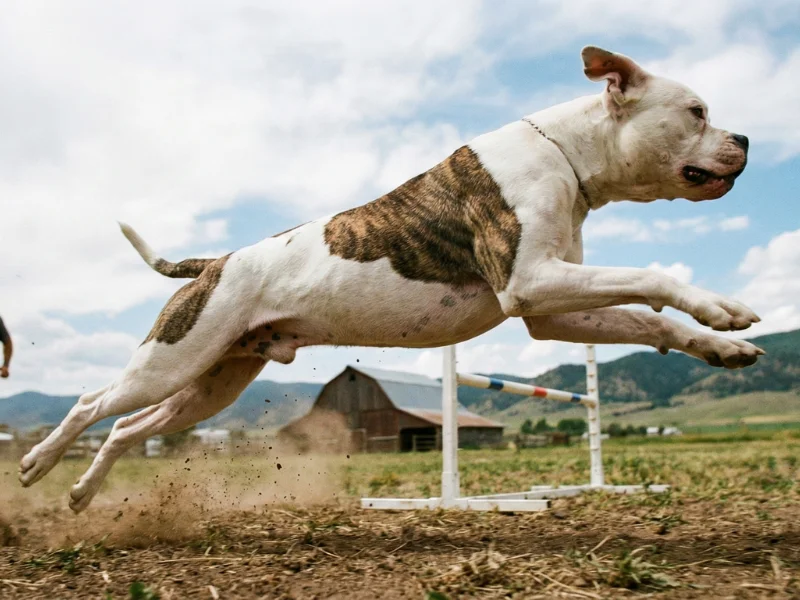
Swimming provides a complete workout that is particularly beneficial for his joints. Tracking games and obedience exercises strengthen your bond. Plan for a minimum of 1.5 to 2 hours of varied daily activity for this tireless working dog.
Frequently Asked Questions
An American Bulldog puppy registered with recognized breed associations typically costs between 1000 and 1500 euros. This price varies depending on the bloodline, the type (Bully or Standard), and the breeder's reputation. Add approximately 50 to 70 euros monthly for quality nutrition. Also plan for an annual veterinary budget covering vaccinations, parasite prevention, and routine health examinations. The initial investment also includes essential supplies such as a heavy-duty leash, food and water bowls, and a bed appropriate for the breed's size.
However, his natural power requires supervision during interactions with toddlers, whom he might inadvertently knock over in his enthusiasm. Early socialization ensures harmonious and safe cohabitation for everyone.
Apartment living remains possible if you are highly available to meet his exercise needs. This athlete requires a minimum of 1.5 to 2 hours of daily activity, divided into several vigorous outings. Without sufficient physical exertion, he is likely to develop anxiety and destructive behaviors. The ideal remains a house with a fenced yard where he can burn off energy freely. His proximity to his family matters more than the available space. This velcro dog tolerates prolonged solitude poorly, regardless of the size of the home.
Globally robust, this breed nevertheless shows a predisposition to hip and elbow dysplasia, common in large-format dogs. Early radiographic screening allows for appropriate adjustment of physical activity. White-coated individuals may suffer from congenital deafness. The Bully type, being more brachycephalic, sometimes experiences respiratory difficulties related to its short muzzle. Cataracts affect some aging individuals. Responsible breeding that tests breeding stock considerably reduces these hereditary risks.
The Bully type displays a stockier, more compact build, with a short muzzle and a very pronounced stop reminiscent of the English Bulldog. More massive in structure, it excels as a guard dog and family companion, favoring power over endurance. The Standard type is distinguished by its more athletic and streamlined appearance, while retaining its impressive musculature. Its longer muzzle provides better respiratory recovery, making it more suited for sustained athletic activities. Today, the majority are hybrids combining both bloodlines.
Expert Rating
Overall rating for the American Bulldog
This overall rating is calculated from 7 key criteria: activity level, trainability, guarding ability, child and animal friendliness, grooming frequency and barking level.
Activity level
Trainability
Sociability
Guarding ability
Latest registered American Bulldog
Dogs of this breed recently added to the FBKC registry
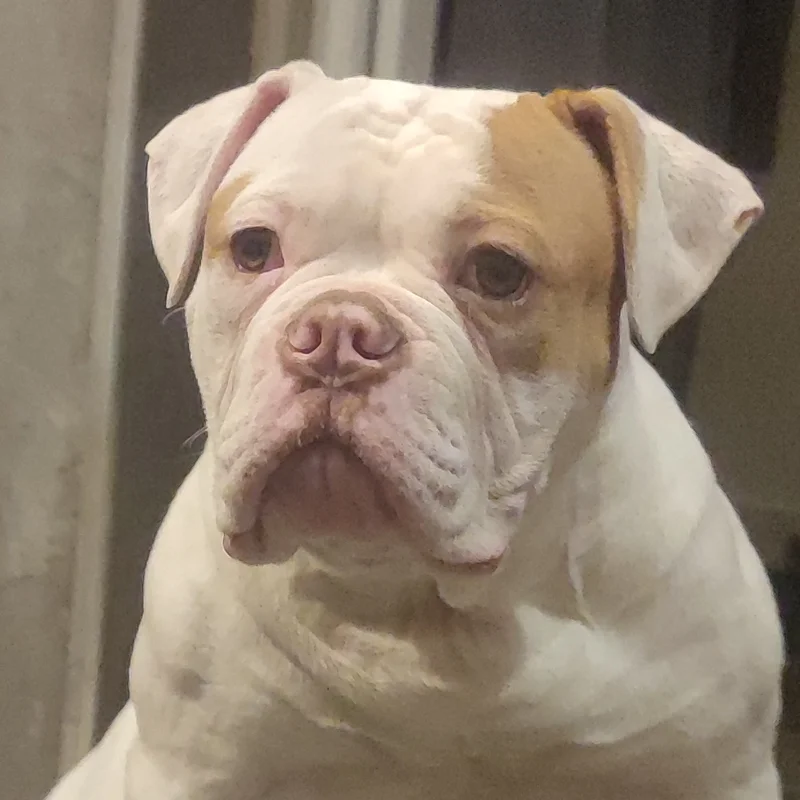
Nabisso Boul'Am Milos
RED WHITE
France

Tyson
FAWN AND WHITE
France
GazteAbulls Uzzi
BRINDLE AND WHITE
France
Tobby
BRINDLE AND WHITE
France
Other Non-FCI Recognised Breeds
Discover other breeds not officially recognised by the FCI