
Labradoodle
Other names: Labrapoodle, Australian Labradoodle, Cobberdog
The Labradoodle is one of those dogs that leaves no one indifferent: an athletic and elegant silhouette, an expression sparkling with intelligence, and a temperament that seems tailor-made for family happiness.
Born from a cross between the Labrador Retriever and the Poodle, it inherits the best of both worlds. Its b... Read more
Are you a breeder or owner of a Labradoodle?
Create your free account and request your dog's pedigree in just a few clicks. Use our tools to manage your kennel and select your breeding stock in the best conditions.
Are you a breeder or owner of a Labradoodle?
Create your free account, manage your kennel and pedigree requests with our tools.
Create my accountHistory & Origin
T he history of the Labradoodle begins at the turn of the 1970s, when a blind woman living in Hawaii contacted the Australian Guide Dog Association with a very particular request: she wanted a guide dog, but her husband suffered from severe allergies to dog hair.
The Australian organization took on the challenge and entrusted the mission to Wally Conron, an experienced breeder. After numerous trials with more than thirty different Poodles, he achieved his goal by crossing a Labrador Retriever with a Standard Poodle from Sweden.
The litter produced three puppies, including Sultan, the first Labradoodle in history, who would be the only one hypoallergenic enough to join the Hawaiian household. Sultan served this couple for ten remarkable years.
The name "Labradoodle," a combination of Labrador and Poodle, was partly a marketing strategy to attract buyers reluctant to adopt a crossbred dog. The gamble exceeded all expectations: the breed enjoyed meteoric international popularity.
In 1998, the Australian Labradoodle Association was established, followed in 2004 by the Australian Labradoodle Association of America.
Today, the breed is not recognized by the Fédération Cynologique Internationale (FCI), but its popularity continues to grow. In 2020, the ALAA already recorded more than 88,000 dogs across 41 states and 10 countries.
The Labradoodle has also inspired an entire generation of designer crosses, from the Goldendoodle to the Cockapoo, permanently changing the landscape of dog breeding worldwide.
Register your Labradoodle with FBKC: four-generation pedigree, modern breeding tools, freedom of selection. An innovative alternative to the traditional club.
Description
T he Labradoodle is one of those dogs that leaves no one indifferent: an athletic and elegant silhouette, an expression sparkling with intelligence, and a temperament that seems tailor-made for family happiness.
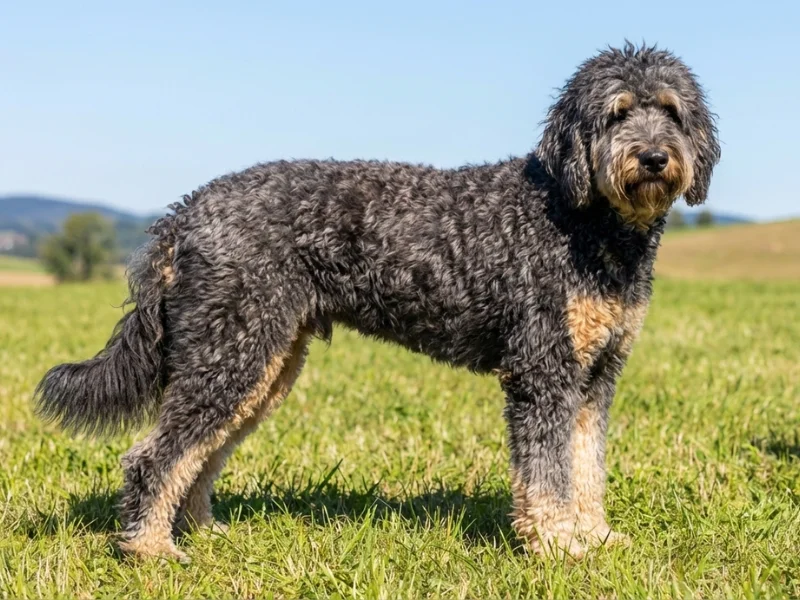
Born from a cross between the Labrador Retriever and the Poodle, it inherits the best of both worlds. Its body is compact and well-proportioned, with a muscular back and a confident gait that reveals its natural energy.
Depending on the size of the Poodle used in the cross, it comes in three varieties: miniature (35 to 41 cm, 7 to 12 kg), medium (41 to 51 cm, 12 to 20 kg), and standard (53 to 62 cm, up to 30 kg).
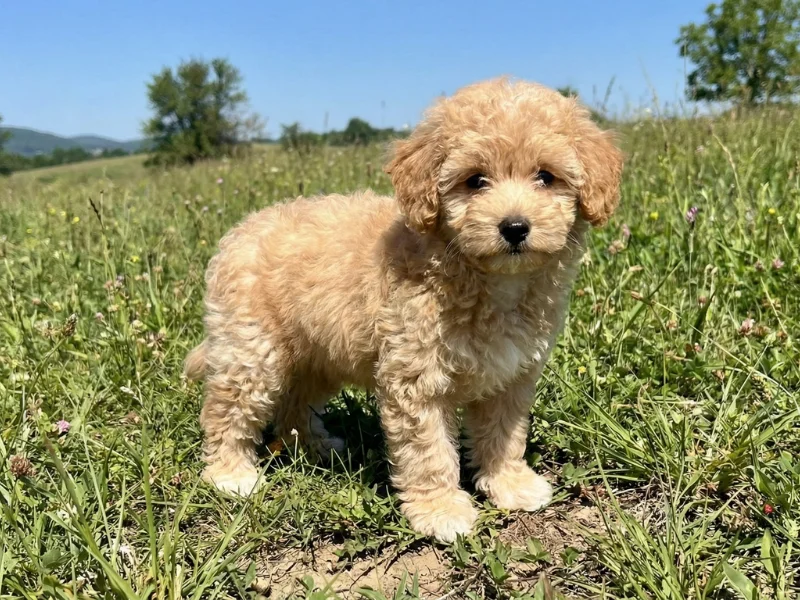
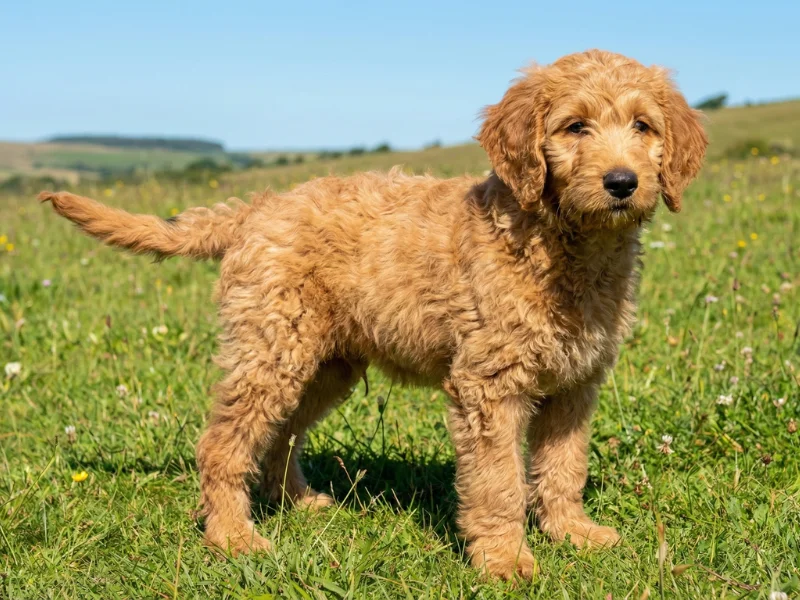
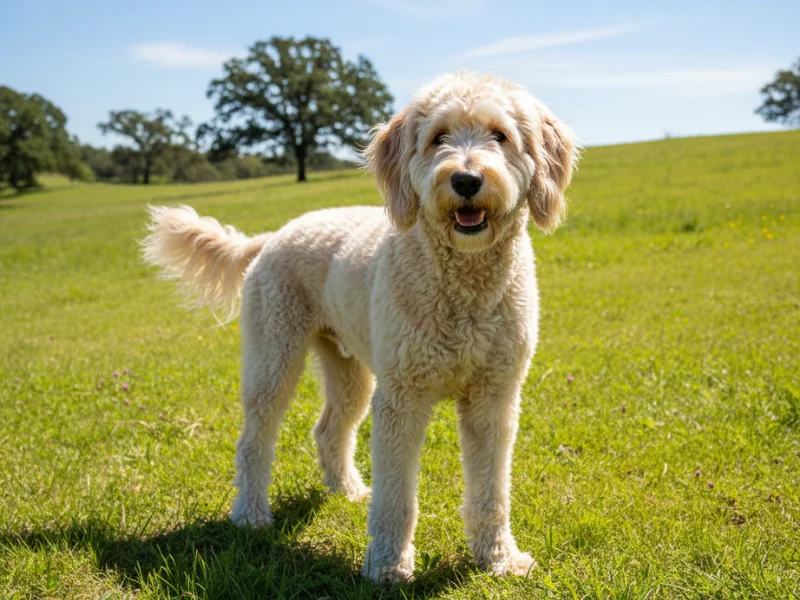
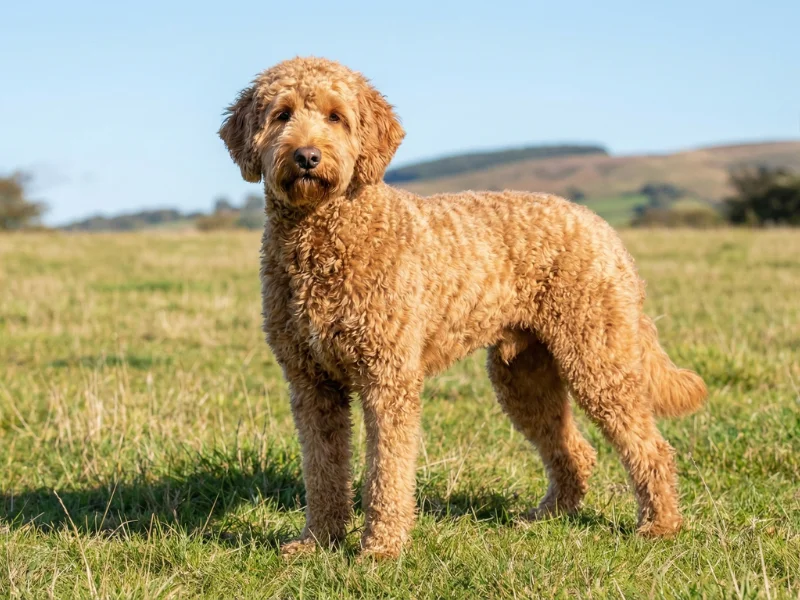
Its coat, one of its most notable characteristics, can appear in three forms: curly, wavy, or straight. The colors are numerous—black, chocolate, cream, apricot, caramel, red, or even silver, offering a visual palette that delights breed enthusiasts. This coat sheds very little, making it a particularly valued companion for individuals sensitive to allergies.
Its expressive eyes, pendant ears, and gentle yet lively bearing perfectly encapsulate its temperament: affectionate, sociable, and always ready to participate in family life.
This four-legged companion adapts to a wide variety of households, from families with children to individuals with disabilities whom it can assist with devotion.
Personality
T he Labradoodle is a dog radiating joy and benevolence, whose communicative good mood brightens every home he joins. Naturally affectionate and sociable, he develops deep bonds with all family members, including children, whom he accompanies with touching patience.
In daily life, he proves curious, playful, and always eager for a new adventure. His intelligence inherited from the Poodle and Labrador translates into great receptivity to his owner's requests. However, he may require regular mental stimulation: without adequate occupation, this spirited companion sometimes finds his own diversions.
Photo Gallery


Breed Characteristics
General Information
- Category: Approval
- Origin: Australia
- FCI Recognition: No
- Est. monthly upkeep: 80-120
- Daily exercise: 60 minutes
Key Facts
- Height: 35.00 to 62.00 cm
- Weight: 7.00 to 30.00 kg
- Life expectancy: 12 to 15 years
- Average price: 1000.00 to 3500.00 €
-
Grooming frequency:10/10
Training Tips
Training the Labradoodle can begin as early as 8 weeks of age, using positive reinforcement-based methods. Intelligent and eager to please, this breed progresses rapidly. Early socialization with other animals and strangers is strongly recommended to ensure lasting behavioral balance.
Health & Common Conditions
General Health
The Labradoodle is overall a robust dog, benefiting from the hybrid vigor conferred by its crossbreeding. Its life expectancy is between 12 and 15 years, which testifies to a globally solid constitution when properly monitored.
Regular veterinary check-ups, a balanced diet appropriate to its size, and sufficient daily physical activity contribute greatly to maintaining its vitality. It is important to monitor its weight and ear cleanliness, two sensitive points in this breed.
An annual health examination remains the best way to anticipate any potential issues.
Common Conditions
Like any breed, the Labradoodle can inherit certain genetic predispositions from its parent breeds. The most frequently observed conditions are hip and elbow dysplasia, which can lead to joint pain detectable through early radiographic examination.
Progressive retinal atrophy, Addison's disease, and epilepsy are also among the conditions to monitor. Recurrent ear infections are common due to their pendulous ears and dense coat. Genetic testing of breeding stock and regular veterinary care can significantly reduce these risks.
Care & Living Environment
Daily Care
Grooming the Labradoodle requires regular attention, particularly regarding its curly or wavy coat. Weekly brushing prevents mat formation, while clipping every two to three months keeps the coat clean and well-ventilated.
The pendant ears warrant weekly inspection and cleaning to prevent infections.
Nails should be trimmed once a month, and dental brushing two to three times per week completes the grooming routine. After each outdoor excursion, a quick check of the paws and coat remains a sound practice.
Recommended Living Environment
The Labradoodle adapts to various living environments, from a city apartment to a country home with a yard. In an apartment, the miniature and medium varieties adjust well provided they receive sufficient daily outings.
A secure outdoor space remains a real asset for their well-being.
Recommended Activities
Agility and scent work challenges engage his intellect. At home, interactive toys and training sessions for new tricks fulfill his need for mental stimulation.
Frequently Asked Questions
Yes, the Labradoodle is often recommended for people with allergies. Its curly or wavy coat sheds very little, reducing the amount of allergens in the environment. Before adoption, spend time with the dog to verify your personal tolerance.
The Labradoodle is an affectionate, playful, and highly sociable dog. It naturally gets along well with children, other animals, and strangers. Curious and intelligent, it enjoys learning and participating in daily family life with great enthusiasm.
Le Labradoodle comes in three sizes. The miniature variety stands between 35 and 41 cm and weighs 7 to 12 kg. The medium version reaches 51 cm and 20 kg. The standard variety can exceed 60 cm and weigh up to 30 kg depending on the parents used in the cross.
The Labradoodle's coat requires weekly brushing to prevent matting, particularly in curly-coated varieties. Clipping every two to three months is recommended. The pendant ears require regular cleaning to prevent infections and maintain good hygiene.
The Labradoodle ranks among the breeds that are easiest to train. Inheriting the intelligence of the Poodle and the biddability of the Labrador, it learns quickly and has a natural desire to please. Positive reinforcement methods based on rewards yield excellent results from an early age.
Expert Rating
Overall rating for the Labradoodle
This overall rating is calculated from 7 key criteria: activity level, trainability, guarding ability, child and animal friendliness, grooming frequency and barking level.
Activity level
Trainability
Sociability
Guarding ability
Parent Breeds
Discover the breeds that make up the Labradoodle
About this crossbreed
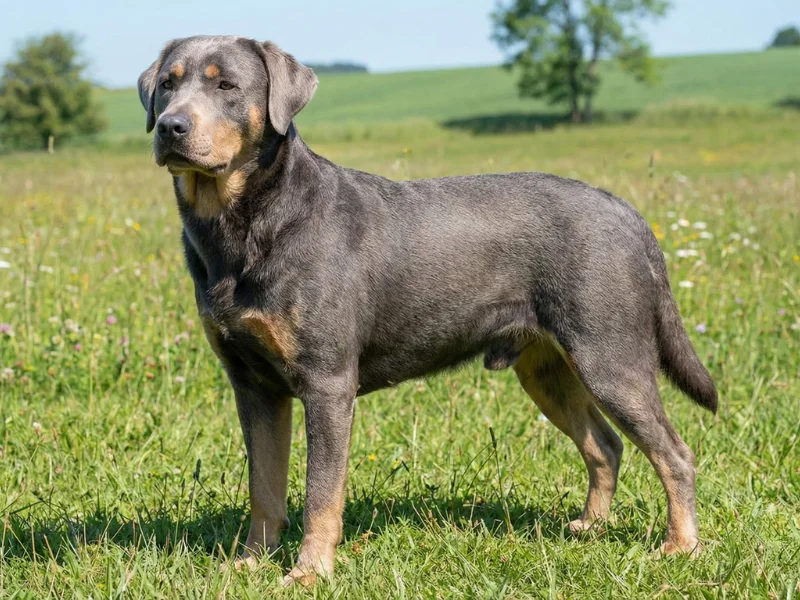
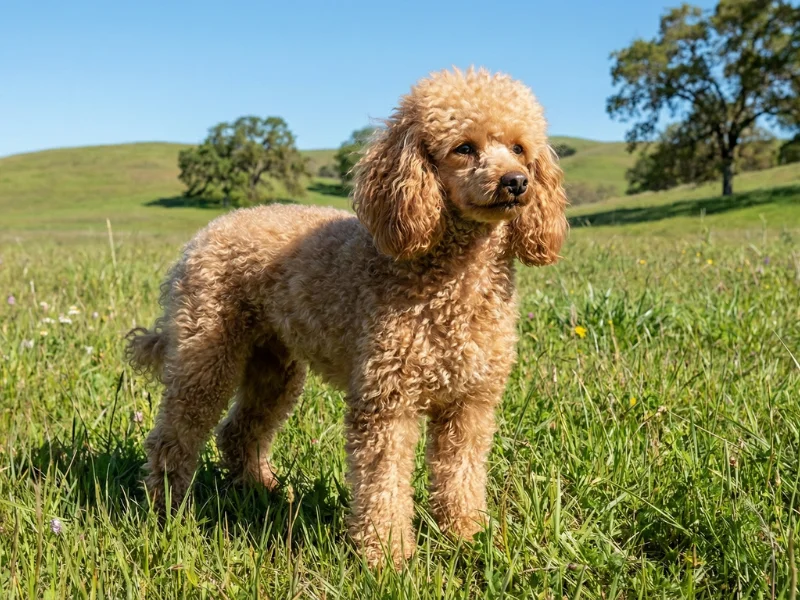
The Labradoodle was developed through an intentional and carefully planned cross between the Labrador Retriever and the Poodle, designed to combine the gentle temperament and dependability of the Labrador with the low-shedding coat and remarkable intelligence of the Poodle.
The original goal was to produce a hypoallergenic guide dog suitable for individuals with allergies.
In practice, the Labradoodle inherits the sociable and affectionate nature of the Labrador, combined with the keen intelligence and low-shedding qualities of the Poodle.
The consistency of these traits varies depending on the generation of the cross, with earlier generations being the most uniform. Major kennel club organizations such as the FCI do not yet officially recognize this hybrid breed.
Our club, the FBKC, officially recognizes the Labradoodle and offers breeders the opportunity to register their dogs, obtain a four-generation pedigree, and access modern breeding management tools, an innovative alternative that provides professionals with greater freedom and responsibility.
Other Non-FCI Recognised Breeds
Discover other breeds not officially recognised by the FCI