


Presa Canario
Other names: Dogo Canario, Perro de Presa Canario, Canary Mastiff, Canary Catch Dog, Canarian Dogo
There is no ignoring the powerful silhouette of the Presa Canario. This Molosser-type dog from the Canary Islands commands respect at first glance, thanks to its chiseled musculature and stocky build. Males stand 24 to 26 inches (60 to 66 cm) at the shoulder, females 22 to 24 inches (56 to ... Read more
Are you a breeder or owner of a Presa Canario?
Create your free account and request your dog's pedigree in just a few clicks. Use our tools to manage your kennel and select your breeding stock in the best conditions.
Are you a breeder or owner of a Presa Canario?
Create your free account, manage your kennel and pedigree requests with our tools.
Create my accountHistory & Origin
T he origins of the Presa Canario reach deep into the pre-Hispanic mists of the Canary Islands. Long before Europeans arrived, a rugged cattle dog already roamed the archipelago: the Bardino Majorero. This native ancestor, adapted to the rocky terrain of the islands, faithfully served local shepherds. The story took a decisive turn in the 15th century, when Spanish colonists landed with their own European Molossers. The crossing of these two lines gave birth to a unique dog, both powerful and agile.
During the 16th and 17th centuries, the breed thrived on the islands of Tenerife and Gran Canaria. Municipal records from that era, the well-known "Cedularios del Cabildo", regularly mention these dogs in their duties of cattle guarding and property protection.
Unfortunately, the breed then went through a dark period: used in dog fighting and gradually neglected, it came close to extinction by the middle of the 20th century. Only a handful of dedicated enthusiasts kept the bloodline alive on its native archipelago.
The revival came in the 1970s, driven by breeders determined to save this cynological treasure. Their patient work led to the establishment of the official standard in 1989.
International recognition arrived in 2001 under the name Dogo Canario, then definitively in 2011. In December 2018, at the request of the Real Sociedad Canina de España, the name officially became Presa Canario.
Today the animal symbol of Gran Canaria, the breed is gradually winning over Molosser enthusiasts across Europe and the Americas.
Description
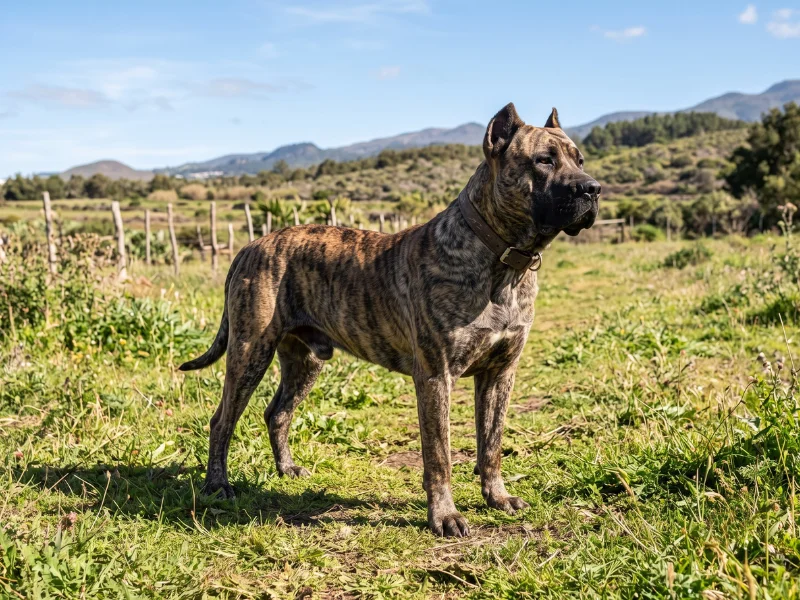
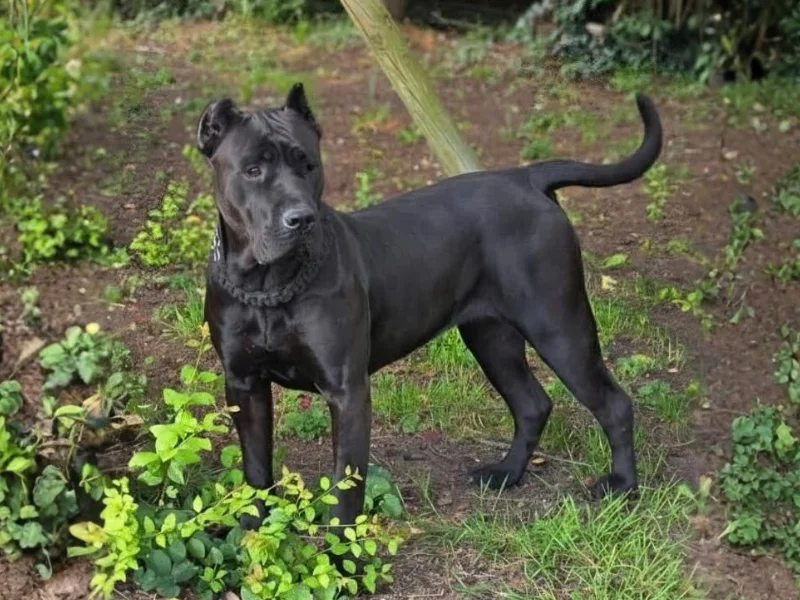
T here is no ignoring the powerful silhouette of the Presa Canario. This Molosser-type dog from the Canary Islands commands respect at first glance, thanks to its chiseled musculature and stocky build. Males stand 24 to 26 inches (60 to 66 cm) at the shoulder, females 22 to 24 inches (56 to 62 cm), with a weight ranging from 88 to 143 pounds (40 to 65 kg). Its fawn or brindle coat, sometimes marked with white on the chest, covers a rectangular body with harmonious proportions.
The massive, almost cube-shaped head is the signature feature of the breed. Its broad skull and powerful muzzle evoke the quiet strength of great guardian dogs.
The ears, traditionally set drop, frame a dark and penetrating gaze that hints at an attentive intelligence. Its thick skin forms a few symmetrical folds around the neck, while its short and coarse coat requires little grooming. Every detail of its morphology tells the story of centuries of working selection.
Behind this impressive appearance lies a companion of remarkable loyalty. The Presa Canario shows unwavering devotion to its family, staying gentle and composed on a daily basis. Naturally watchful, it assesses every situation calmly, never rushing to react.
This strong-minded dog thrives with consistent training and an experienced handler who knows how to channel its energy. Well socialized from an early age, it becomes a steady guardian and a balanced partner with a firm but always controlled temperament.
The FBKC recognizes the Presa Canario and allows breeders to register their dogs, obtain a 4-generation pedigree, and manage their kennel through our modern online tools.
Personality
T he Presa Canario stands out for its balanced and composed temperament in daily life. Loyal to its family, it observes the world with thoughtful calm and quiet confidence that commands respect.
Its natural guardian instinct drives it to watch over its territory without ever falling into needless agitation. At home, it enjoys the presence of its people, often content to keep watch from a strategic corner.
Gentle with its own, it stays more reserved around strangers. Early socialization turns this natural caution into sound judgment, making it a reliable companion, affectionate and quietly steady with a strong yet controlled character.
Photo Gallery




Breed Characteristics
General Information
- Category: Guard
- Origin: Spain
- FCI Recognition: Yes (Group 2)
- Est. monthly upkeep: 120
- Daily exercise: 90 minutes
Key Facts
- Height: 56.00 to 66.00 cm
- Weight: 40.00 to 65.00 kg
- Life expectancy: 9 to 11 years
- Average price: 1000.00 to 2000.00 €
-
Grooming frequency:2/10
Training Tips
Training starts at 8 weeks old, with gentleness and consistency. This intelligent dog responds well to positive reinforcement and a firm yet kind handler. Intensive socialization between 2 and 6 months, meeting people, sounds, and other dogs builds its adult balance. Early obedience classes channel its strong-minded nature and shape a reliable companion.
Health & Common Conditions
General Health
This Molosser enjoys a robust constitution forged by centuries of active life on the Canary Islands. Its powerful body offers strong general resistance, with a life expectancy of 9 to 11 years, honorable for a dog of this size. Its thick skin and short coat handle heat well but offer little protection against harsh cold.
A proper diet suited to its slow growth prevents early joint strain. Regular vet visits, weight monitoring, and annual cardiac screening help preserve its condition over time. Maintaining moderate and consistent activity extends its wellbeing throughout the years.
Common Conditions
Like many large Molossers, the Presa Canario shows a few predispositions worth monitoring. Hip and elbow dysplasia tops the list: limping, stiffness after rest, or difficulty running should raise a flag, and radiographic screening from 12 months onward is recommended.
Bloat and gastric torsion threaten dogs that eat too fast or too much at once, splitting meals into two servings helps limit this risk. Certain cardiac conditions such as dilated cardiomyopathy call for yearly echocardiogram checks.
Demodectic mange and epilepsy have been reported more rarely. Selective breeding combined with regular veterinary follow-up clearly reduces the occurrence of these disorders.
Care & Living Environment
Daily Care
Its short and coarse coat makes upkeep of this Molosser remarkably easy. A weekly brushing with a grooming mitt is enough to remove dead hair and preserve the shine of its coat. During seasonal shedding, two sessions per week become useful.
The drop ears call for weekly inspection and gentle cleaning as soon as excess wax appears. The sturdy nails partially wear down during walks but need monthly trimming. Regular tooth brushing prevents tartar buildup, while baths remain occasional: two to three per year fully cover its needs.
Recommended Living Environment
It thrives in a house with a fenced yard, ideally in the countryside or on the urban outskirts. Apartment living remains possible if long daily outings make up for the reduced space.
Its short coat calls for protection against harsh cold and vigilance during intense heat. A calm and structured environment suits it perfectly.
Recommended Activities
Moderate canicross and hiking suit it very well. Obedience and controlled guard work highlight its natural instincts while strengthening the bond with its handler.
Frequently Asked Questions
The Presa Canario originates from Spain's Canary Islands, between Tenerife and Gran Canaria. It descends from the crossing of the Majorero, prehispanic cattle dog, with sturdy European Molossers that arrived in the 16th century. The FCI recognized the breed in 2011.
The Presa Canario stands 22 to 26 inches (56 to 66 cm) tall and weighs 88 to 143 pounds (40 to 65 kg) depending on sex. This powerful muscular Molosser lives 9 to 11 years, an honorable lifespan for its size. Its fawn or brindle coat covers a well proportioned body.
Gentle and composed in its family home, the Presa Canario proves loyal and very protective of its own people. Reserved around strangers, it assesses each situation with quiet judgment. Early socialization starting at 2 months turns its watchfulness into discernment.
Sturdy overall, the Presa Canario shows certain genetic predispositions worth monitoring. Hip dysplasia leads the list, followed by gastric torsion and cardiac disorders. Early screening and an annual veterinary check up effectively help prevent these health issues.
Expect between 1500 and 3000 dollars for a puppy from a reputable and responsible breeder. Monthly budget averages 130 dollars, covering food, vet care, and basic supplies. The FBKC club lets you register your dog and receive a genuine pedigree across 4 generations.
Expert Rating
Overall rating for the Presa Canario
This overall rating is calculated from 7 key criteria: activity level, trainability, guarding ability, child and animal friendliness, grooming frequency and barking level.
Activity level
Trainability
Sociability
Guarding ability
Breeds from the Same Group
Discover other dog breeds from the same group