
Starting a New Dog Breed: Where Do You Actually Begin?
Starting a dog breed isn't a lucky cross. It's a decades-long project built on solid foundation stock, a written standard, and tight record-keeping.
The path is well mapped. Choose your base breeds with a clear goal. Write the standard before you own the dog. Watch inbreeding generation after generation. Nothing here is out of reach, but nothing can be improvised. Here are the real steps, in order.
What "Creating a Breed" Actually Means
Plenty of breeders mix up a great litter with an established breed. The difference is not academic. It drives selection, line health and the future of the whole project. Before you pick a single breeding dog, get the definitions straight.
• Breed, Type, or Just a Crossbreed?
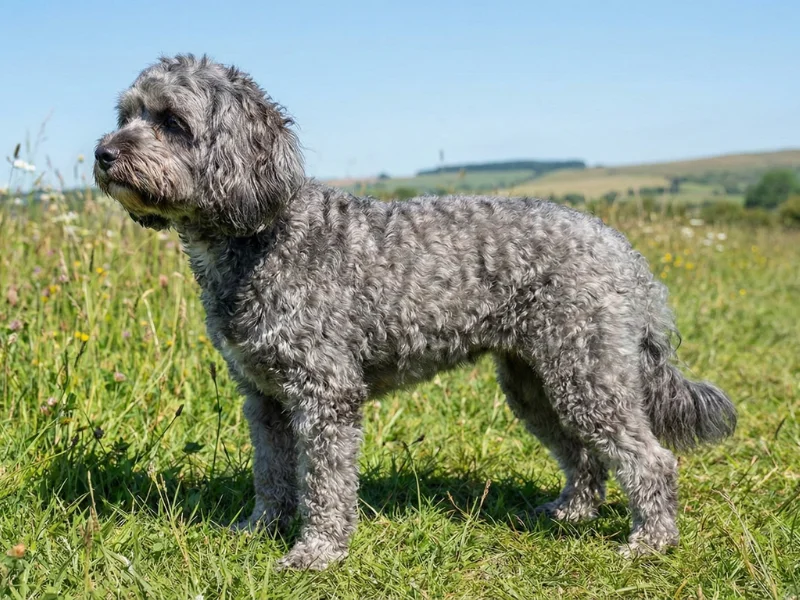
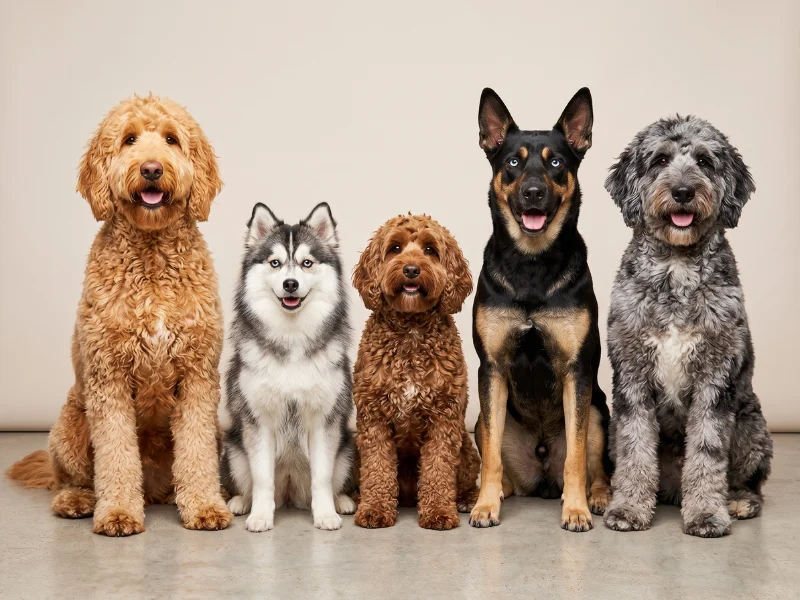
A crossbreed means two different breeds producing a litter. Nothing more. A type emerges once several breeders aim at the same profile and start getting puppies that look alike. A breed passes its traits on in a predictable, stable way, generation after generation.
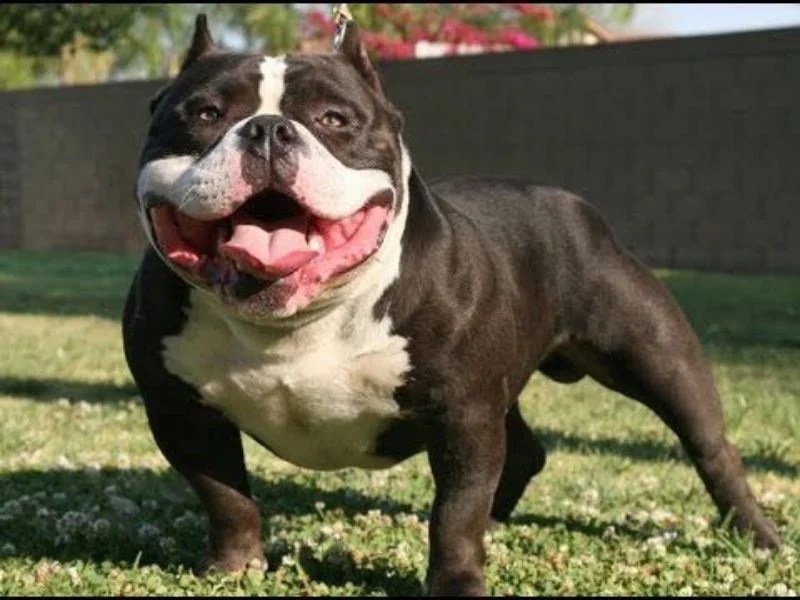
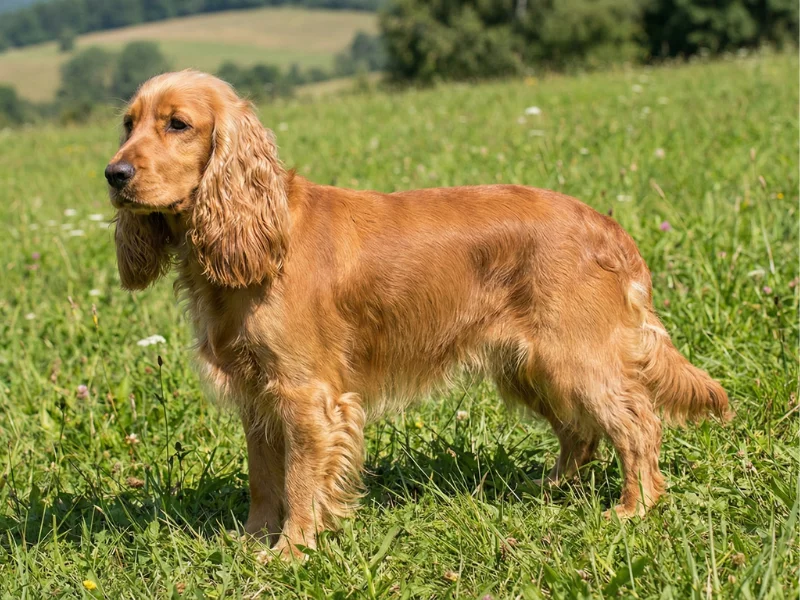
History settles the debate. The American Bully, shaped in North America during the 1990s, now has a written standard and lines that produce a recognisable type. The Cockapoo, bred since the 1960s, is still a crossbreed: puppies vary widely from one litter to the next. Sixty years count for nothing if nobody fixes the type.
• Good Reasons to Start, and Bad Ones
Strong projects answer a real gap. A working dog suited to a specific climate. A size nobody offers. A temperament no existing breed delivers. The breeder sets a clear goal first, then looks for the base breeds able to reach it. Think of it as a written brief.
Weak projects start elsewhere: a trending colour, a catchy name, demand spotted on social media. Those motives produce expensive puppies and lines dropped five years later. Health always pays the bill. Looks alone never carry a breeding programme.
• The Real Timeline: Decades, Not Litters
Do the maths. Your first litter arrives after roughly a year. Those puppies breed at around two. Then you assess their offspring, cull the ones off type, and start again. Every generation costs about three years. Seven or eight generations before a trait begins to hold.
That adds up to twenty or thirty years before a population throws consistent puppies. Breed development is measured in careers, not litters. And that timescale forces one decision straight away: open a studbook from the very first mating, or the paper trail vanishes along the way.
Plan the Project Before the First Mating
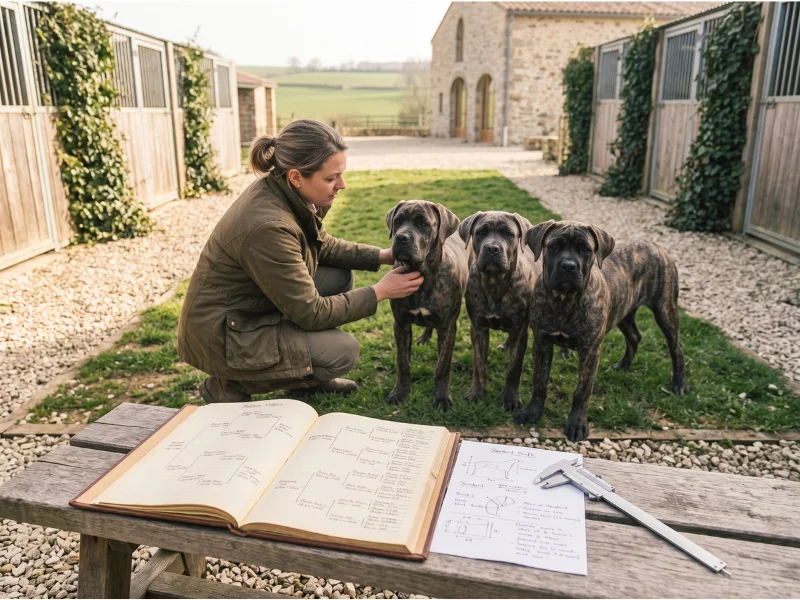
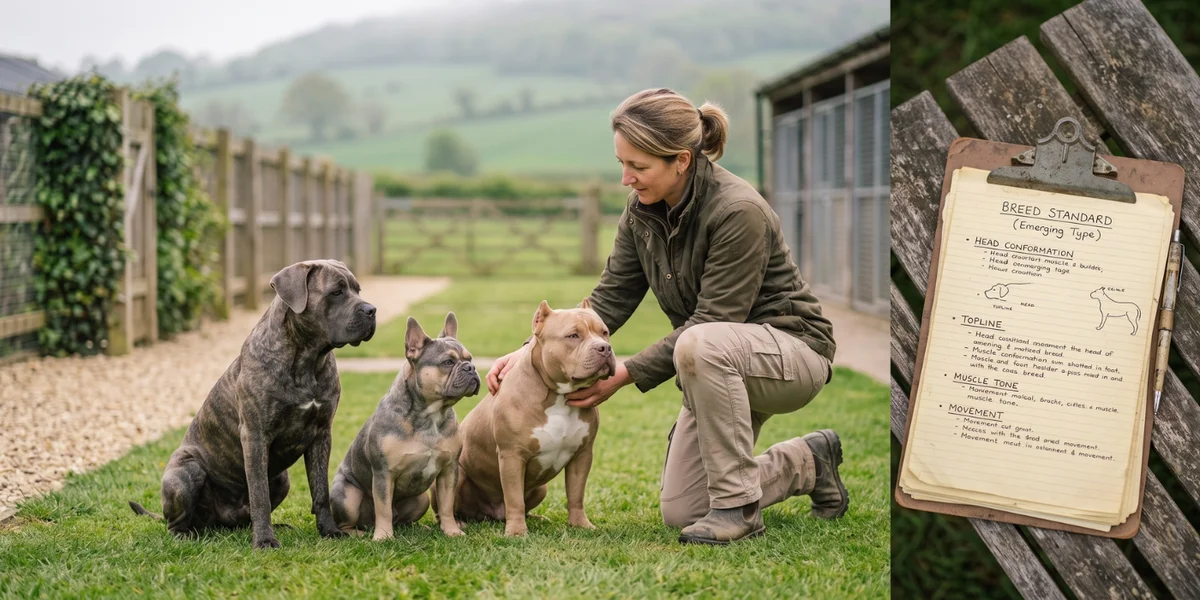
A serious breed project starts on paper, not in the kennel. Goal, build, temperament, health testing: you settle all of it before the first mating. Breeders who skip this step then spend twenty years correcting mistakes that a three page document would have prevented.
• Write the Breed Standard Before You Own the Dog
Your standard describes the ideal dog: size, bone, head, coat, gait, temperament. It also lists the faults that disqualify. Write it before the first mating. Without that document, every breeder selects on personal taste, and the population drifts in ten directions at once.
A good standard stays short and testable. Give numbers, not adjectives. “Sturdy” means nothing. “19 to 21 inches at the withers” can be measured. Then define a purpose. What is this dog actually for? That single answer will drive every selection call you make for the next thirty years.
• Choosing Your Base Breeds and What They Bring
Every base breed brings a set of strengths and a set of problems. So run two columns. On one side, the build, the temperament and the coat you want. On the other, the inherited disorders that breed already carries. Two or three breeds are usually plenty to start with.
The motives behind these crosses vary widely, and I unpack them in my article on hybrid dogs. The rule stays the same: never pair two breeds carrying the same weakness. Two lines prone to hip dysplasia give you a dysplastic population. A cross stacks risks just as fast as it stacks qualities.
• Health Risks You Can't Afford to Ignore
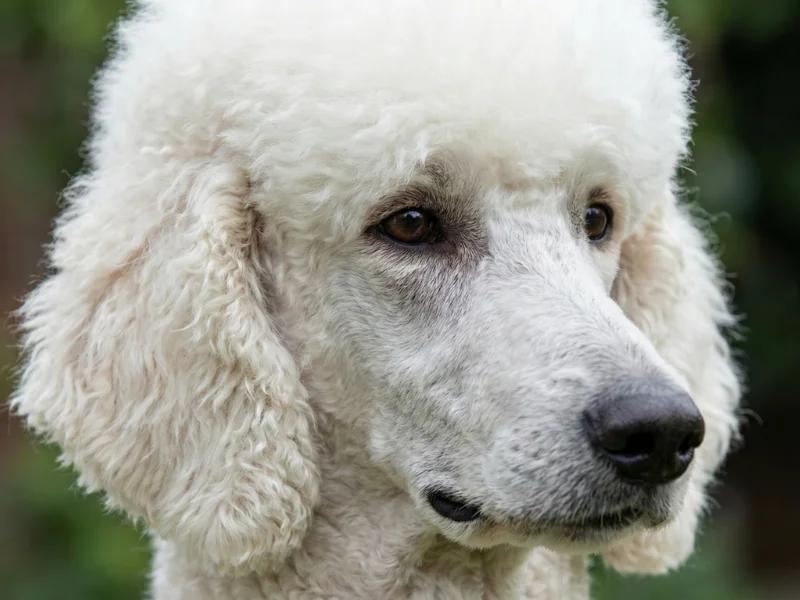
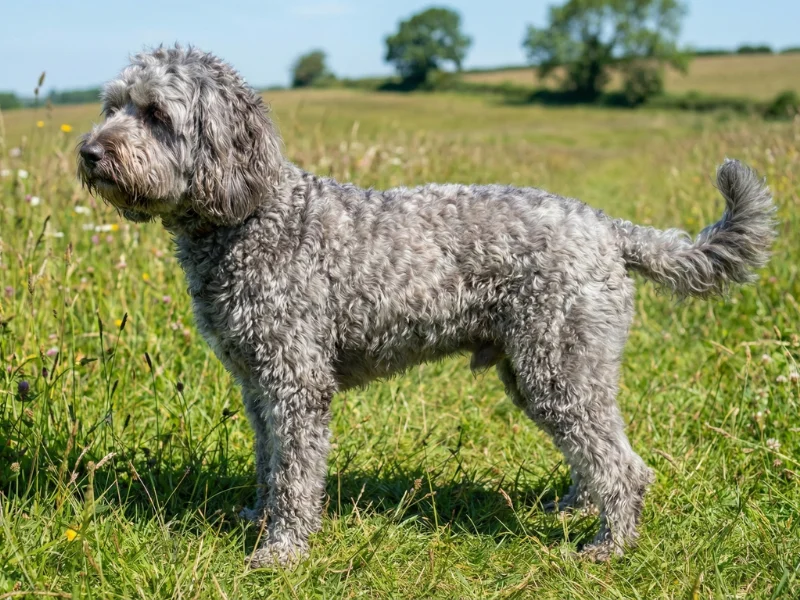
The hybrid vigour myth has collapsed. A Royal Veterinary College study published in PLOS ONE in 2024 compared 9,402 dogs: cockapoos, labradoodles, cavapoos and their progenitor breeds. Across 57 common disorders, 86.6% of comparisons showed no significant difference. Crossing protects nothing on its own.
So test. Hip and elbow scoring, eye exams, DNA panels on your base breeds: budget for all of it from year one. Drop any carrier from the programme without hesitation. One affected founder passes his defect into every line that descends from him, and nobody undoes that twenty years later.

Building the Foundation Stock
The project leaves the paper stage. Now you need dogs, and not just any dogs. The founders you pick this year will still show up in pedigrees forty years from now. Every early mistake gets copied forever. So does every good call.
• How Many Founder Dogs Do You Need?
Population genetics gives you a benchmark: the 50/500 rule. An effective population size of fifty keeps short term inbreeding depression away. Five hundred preserves long term adaptive potential. One catch: effective size always runs far below your actual headcount.
In practice, gather as many unrelated founders as you possibly can. Ten is tight. Thirty is comfortable. Above all, watch the popular sire effect: one male covering half your bitches wipes out diversity in a single generation. The Bullmastiff, a breed established for a century, sits at an effective size of just 41. Nobody is immune.
• Testing and Selecting Your First Breeding Dogs
A founder clears three filters. Health comes first: hip and elbow scores, eye exams, DNA panels, paperwork in hand. Type comes next: the dog matches the standard you wrote. Temperament comes last, assessed in real situations, never judged in a kennel run on visiting day.
Stay strict. A mediocre founder stays in your pedigrees for a hundred years. Score every dog, keep written records, photograph from every angle. Then watch the offspring: a stunning dog that throws inconsistent puppies is worth less than a decent dog that passes his qualities on. Selection is judged on what a dog produces.
• Open a Studbook from the Very First Litter
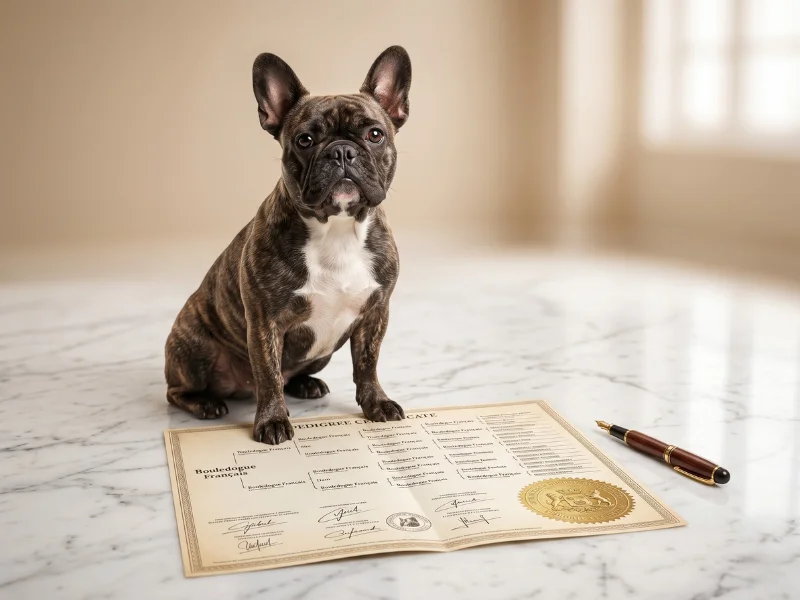
Without traceability, your work simply does not exist. A dog with no pedigree is a dog of unknown value, whatever his qualities. So register that very first litter. Parents, dates, health results, microchip: it all goes into the studbook on day one.
That database then works for you every single week. It calculates inbreeding coefficients, flags overused ancestors and proves your seriousness to buyers. FBKC gives you the tools to build a breed properly from day one: studbook, official pedigrees, litter registration and full line tracking.
Fixing the Type Across Generations
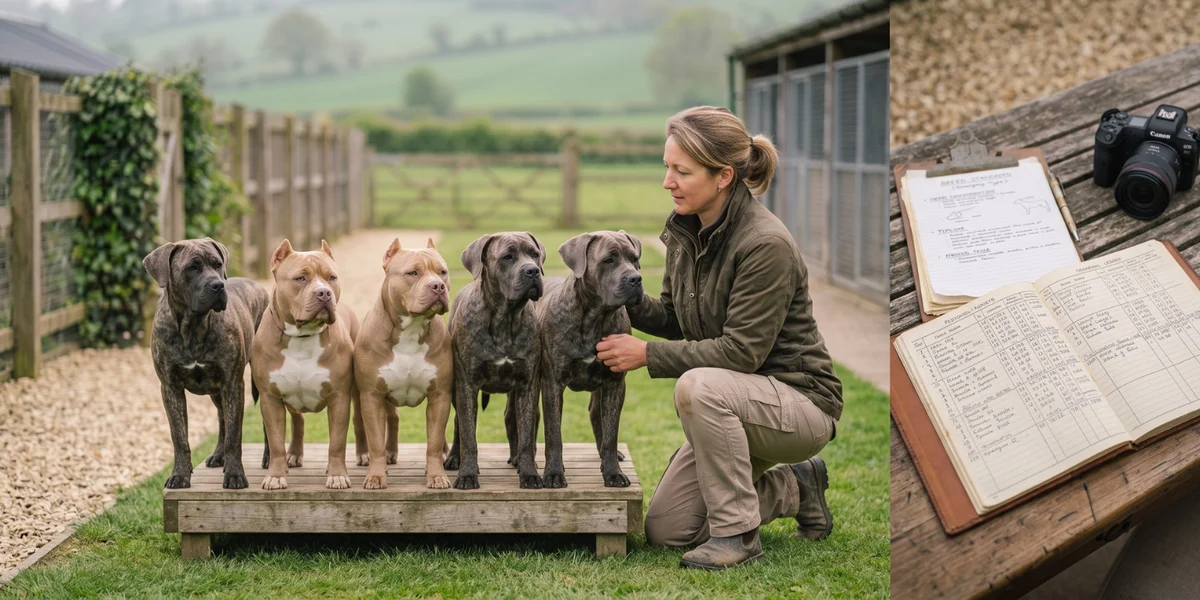
Litters follow one another. The puppies start to look alike. This is where everything gets decided, and where most projects fall apart. Select too hard and you drain the gene pool. Select too softly and nothing ever gets fixed. Good breeders balance the two for decades.
• Selecting Without Shrinking the Gene Pool
Fixing a type demands selection. Selection shrinks diversity. That is the tension you will manage for thirty years. The way out? Select on very few priority traits, never on ten at once. Three disqualifying faults, two target qualities, and you move forward without flattening the population.
Rotate your breeding dogs. Every approved male covers a limited number of bitches. Keep parallel lines that develop separately, then bring them together once diversity starts to drop. Inbreeding should not climb by more than 1% per generation. That is the ceiling serious breeding programmes work to.
• Keeping Inbreeding (COI) Under Control
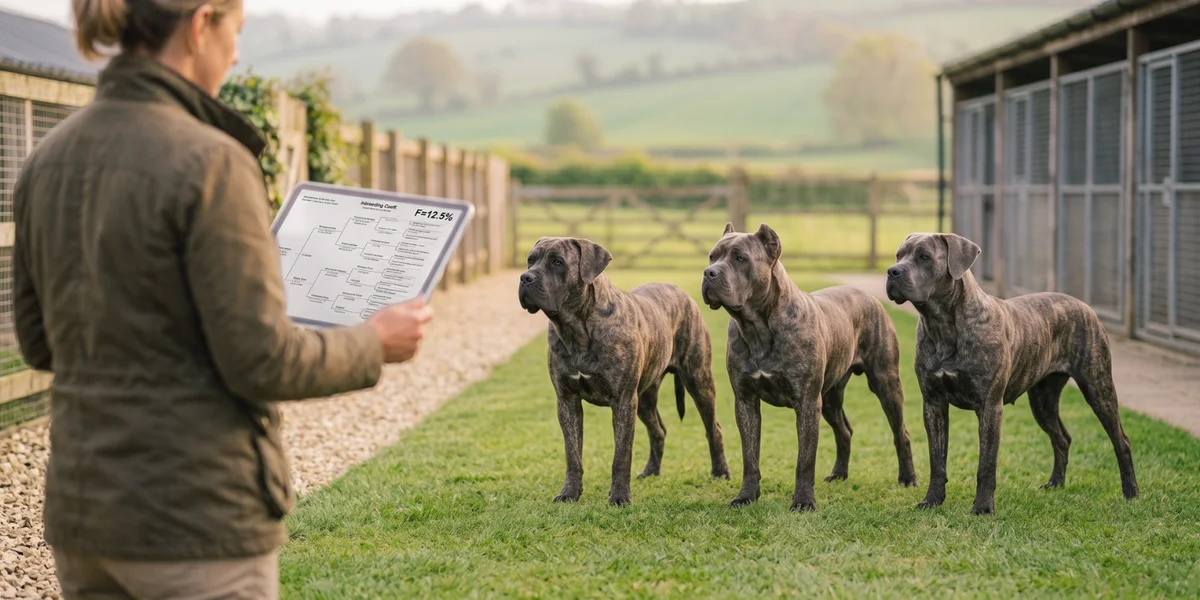
The coefficient of inbreeding, or COI, measures the odds that a dog inherits two identical copies of the same ancestral gene. The bands are well established. Below 5%, you stay in the safe zone. Between 5 and 10%, litters shrink and recessive faults surface. Past 10%, risk climbs fast.
Run the numbers before every mating, never after. GenoLab, included in your FBKC account, simulates a pairing and shows the COI of the future litter across several generations. Two minutes of checking replaces ten years of regret. For context: the purebred average sits around 20%. Your young population can do far better.
• Knowing When Your Breed Finally Breeds True
The signal never comes from a certificate. It comes from the litters. You mate two unrelated dogs from your own population, and the puppies come out true to the standard. You repeat with another pair. Same result. That is prepotency: the type passes on with no surprises.
Expect seven or eight generations before that point. Rigorous breeders then want three proofs: measurable consistency across several lines, a complete studbook covering the whole period, and stable health data. Without those three, the type is only an impression. With them, your breed exists.
Structuring Your Breed for the Long Run
A breed with no tracking disappears. Not overnight, but within two generations of careless breeders. Pedigrees go missing, lines blur, and inbreeding climbs before anyone notices. Structure is not paperwork: it is what protects twenty years of work.
• A Studbook: Your Breed's Survival Depends on It
A studbook records every dog: parents, date of birth, health results. Nothing more than that, and yet everything is there. Without it, you cannot calculate a COI, prove a parentage or spot an overused ancestor. Your population turns into a collection of dogs with no memory.
Open yours with the very first puppy, even if you work alone. A patchy register rebuilt ten years later is worthless: the gaps stay gaps. FBKC gives you the tools to build a breed properly from day one, with an official studbook that records every dog and every litter.
• Tracking Every Litter, Pedigree and Generation
Register one litter and eight puppies enter the record with their microchip, their parents and their date of birth. Multiply that by twenty years. You end up with a genealogical database that answers every question: who produces what, which line is improving, which ancestor keeps reappearing across the trees.
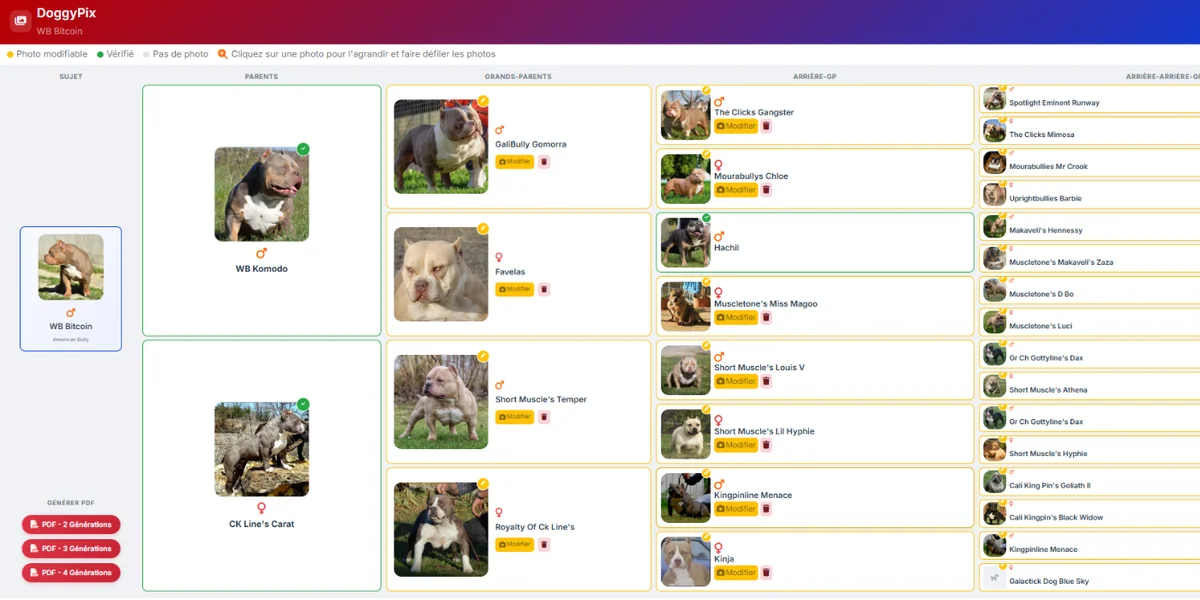
Then add the pictures. Every dog registered in your FBKC account gets its own DoggyPix gallery plus full visibility on its pedigree. Type is judged by eye as much as by numbers. Scrolling through five generations of photos tells you in thirty seconds whether your type is settling or drifting.
• Managing Inbreeding with the Right Tools
A spreadsheet stops working past the third generation. Trees overlap, the same ancestors come back through several branches, and hand calculations go wrong. You need a tool that climbs the generations automatically and tells you, before the mating, what the planned pairing will actually produce.
GenoLab does exactly that inside your account. Pick a male, pick a female, and the tool returns the COI of the future litter, the shared tree and the common ancestors. Test three pairings, keep the best one. That decision takes five minutes and shapes the next twenty years of your population.
• Bringing the First Breeders on Board
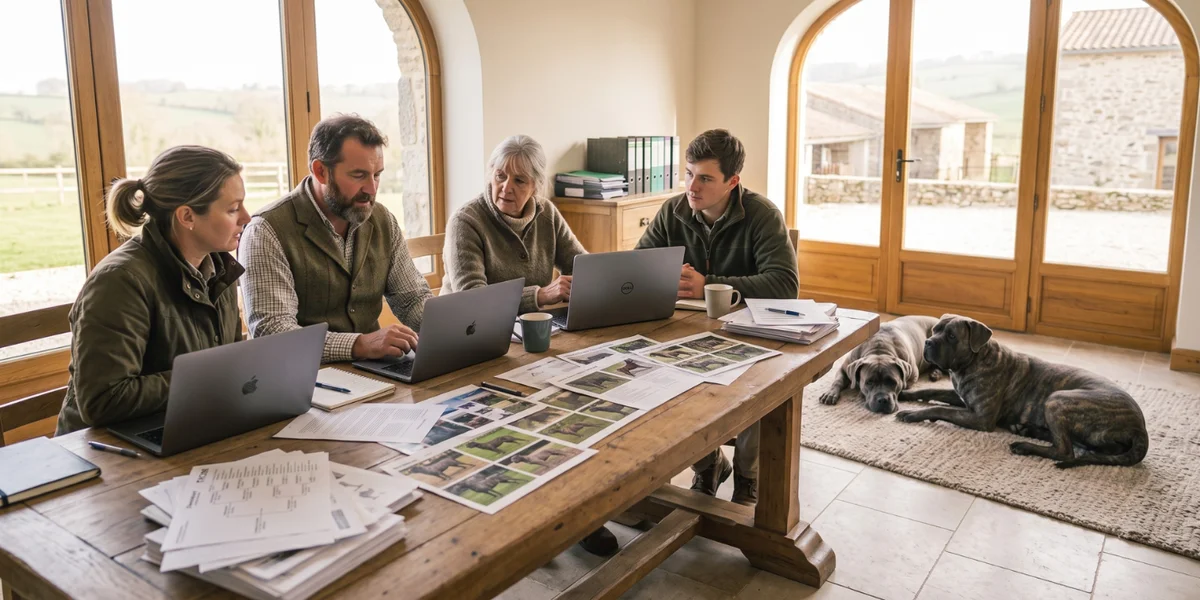
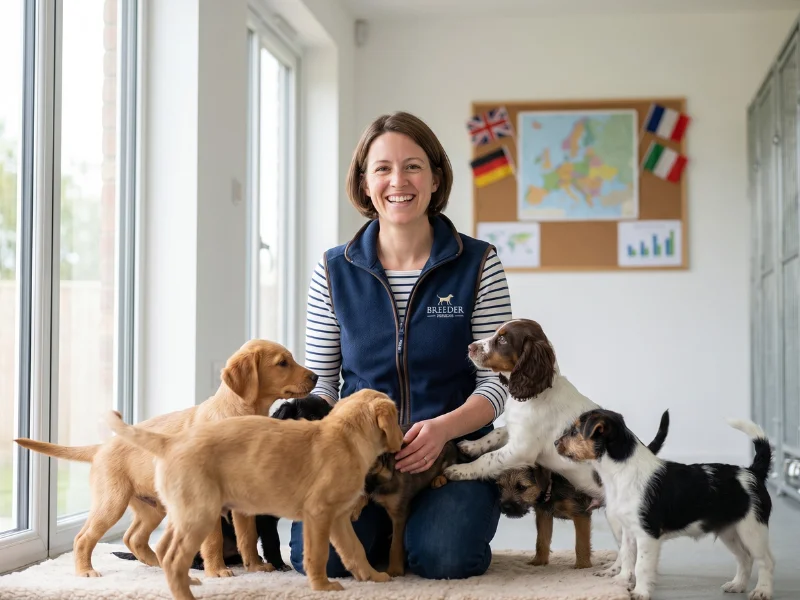
One breeder alone never makes a breed. He makes a line, and it dies with him. You need other enthusiasts who adopt the standard, run the same health tests and register their litters. Five active breeders count for far more than fifty dogs sitting in a single kennel.
So open the project up. Publish the standard. Share health results, including the bad ones. Accept that other breeders will make calls you disagree with: that is exactly where line diversity comes from. A breed stays alive when several people move it forward in parallel, around one shared register that keeps track of everything.
So, Where Do You Actually Begin?
You now know the whole path. All that remains is the first step, and it comes down to three concrete actions.
• Your First Three Moves
Write your standard this week. Two pages will do: measurements, temperament, purpose, disqualifying faults. Then list your base breeds and the inherited disorders they carry, side by side. Finally, open your studbook before you even own a puppy. Those three documents cost nothing and shape the next thirty years of your work.
The rest moves at its own pace. One generation every three years. Seven or eight generations before the type settles. Twenty to thirty years before a population throws consistent puppies. Nobody shortens that timeline, but anyone can choose to document it properly from the start.
• Don't Do This Alone with a Spreadsheet
Failed projects all share one thing: traceability lost somewhere along the way. Pedigrees go missing, COI figures turn false, lines blur into one another. Past the third generation, a homemade file stops holding up. You need a solid register and tools that run the calculations for you.
FBKC gives you the tools to build a breed properly from day one: an official studbook, registration for every dog and every litter, pedigrees, full pedigree visibility, DoggyPix galleries and the GenoLab simulator to test a pairing before the mating. Create your account, register your first founder, and start writing your breed's history with evidence behind it.
Frequently asked questions
Expect 20 to 30 years. Each generation takes about 3 years, and you need 7 or 8 before the type settles. A breed is measured in breeder careers, not in litters. Nobody shortens that timeline.
As many unrelated dogs as you can gather. Ten is tight, thirty is comfortable. The 50/500 rule sets a minimum effective population size of 50. Above all, avoid the popular sire effect: one male covering half your bitches wipes out diversity in one generation.
Aim for a COI below 5%. Between 5 and 10%, litters shrink and recessive faults surface. Past 10%, risk climbs fast. The purebred average sits around 20%. Always calculate the COI before the mating, never after.
No. A cross gives you a litter, not a breed. A breed passes its traits on predictably, generation after generation. The Cockapoo dates back to the 1960s and remains a crossbreed: with no written standard and no sustained selection, the type never settles.
Without a register you cannot calculate a COI, prove parentage or spot an overused ancestor. A studbook rebuilt ten years later leaves permanent gaps. FBKC gives you an official studbook from your very first puppy.
Breeds mentioned in this article